What they are and how they are understood today
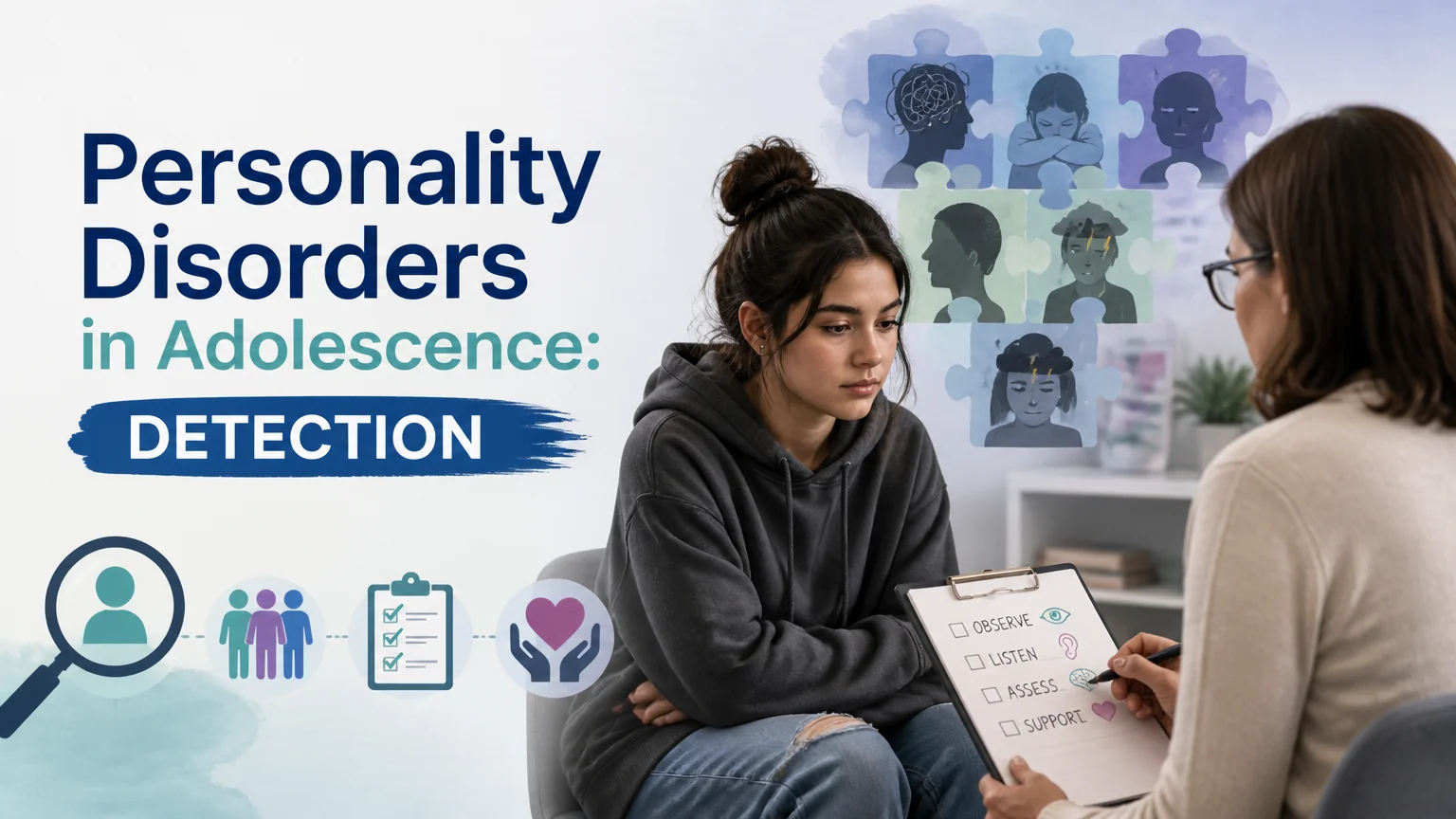
Personality disorders are persistent patterns of inner experience and behavior that deviate from the expectations of a person's culture, begin in adolescence or early adulthood, are stable over time, and cause significant distress or impairment. They affect how someone perceives others and themselves, how they regulate their emotions, how they relate to others, and how they control impulses. This is not about 'quirks' or an eccentric way of being: these are configurations of traits that become rigid and have consequences at work, in education, in relationships, and for overall wellbeing. Understanding them requires looking at life context, personal history, and available resources, avoiding stigmatizing labels and attending to cultural diversity.
Common symptoms and warning signs
Although each diagnosis has its own characteristics, there are cross-cutting signs that can guide assessment. The key is persistence, inflexibility of patterns, and their impact on daily life.
- Long-standing difficulties maintaining stable and satisfying relationships.
- Distorted or extreme perceptions of oneself or others.
- Problematic emotion regulation: intense reactivity, sudden shifts, or emotional blunting.
- Impulsivity leading to risky behaviors or hasty decisions.
- Rigid cognitive patterns ('all-or-nothing' thinking, pervasive mistrust, inflexible perfectionism).
- Chronic subjective distress (emptiness, shame, anger, intense social anxiety).
- Irregular work/academic functioning due to conflicts, disorganization, or avoidance.
Symptoms by diagnostic groups
Group A: odd or eccentric patterns
- Paranoid: pervasive distrust, malicious interpretation of others' intentions, persistent resentment.
- Schizoid: social detachment, little interest in close relationships, restricted emotional range.
- Schizotypal: ideas of reference, unusual perceptual experiences, eccentric thought and behavior, marked social anxiety.
Group B: dramatic, emotional, or erratic patterns
- Borderline: instability in relationships, self-image, and affect; impulsivity; fear of abandonment; chronic feelings of emptiness; self-harming behaviors in some cases.
- Antisocial: repeated violation of rules and others' rights, impulsivity, deceit, irresponsibility, and low empathy.
- Histrionic: attention-seeking, theatricality, shallow emotionality, and need for approval.
- Narcissistic: grandiosity, need for admiration, sensitivity to criticism, lack of empathy.
Group C: anxious or fearful patterns
- Avoidant: social inhibition, feelings of inadequacy, hypersensitivity to rejection.
- Dependent: excessive need for care, difficulty making decisions without advice, fear of separation.
- Obsessive-compulsive personality: inflexible perfectionism, mental and behavioral control, rigidity and scrupulousness (different from obsessive–compulsive disorder (OCD)).
Causes and risk factors
There is no single cause. Biological predispositions, temperament, early experiences, and social context converge. Evidence suggests a vulnerability-stress model: certain inherited or early traits interact with life events and specific environments.
Biology and temperament
- Moderate genetic components: heritability of traits such as neuroticism, impulsivity, or introversion.
- Neurobiological differences in circuits for emotion regulation, reward, and threat.
- Difficult temperaments (high reactivity, low frustration tolerance) that, without support, consolidate into rigid patterns.
Early experiences and attachments
- Invalidating or inconsistent environments, neglect, or abuse.
- Early losses, prolonged separations, or insecure attachment bonds.
- Extremes in parenting models (excessive control, emotional dysregulation, chronic hostility).
Sociocultural factors
- Stigma, discrimination, or exclusion that reinforce mistrust or avoidance.
- Socioeconomic stress, community instability, or violence.
- Cultural norms about emotion and relationships that influence the expression of traits.
How they interact
The same event does not have the same impact on everyone. The combination of inherited traits, family resources, social support, and critical experiences (positive or negative) shapes personality development. Early intervention and access to safe contexts can mitigate risks even when vulnerability exists.
Diagnosis: how it is evaluated
Diagnosis is clinical and comprehensive. It is not based on an online test or a momentary impression, but on detailed interviews, observation over time, and, when possible, collateral information. Pattern, trajectory, and functioning are assessed, not just isolated symptoms.
- Life and relationship history: development, school, work, bonds, critical events.
- Assessment of traits and domains: identity, self-direction, empathy, and intimacy.
- Specific structured or semi-structured interviews.
- Differentiation from medical conditions, neurodevelopmental disorders, and substance effects.
- Common comorbidities: depression, anxiety, trauma, substance use, and ADHD.
- Degree of impairment and distress, as well as risks (self-harm, dangerous impulsivity).
Differences from other conditions
They are distinguished from mood episodes because the pattern is more stable and generalized. They are not the same as obsessive–compulsive disorder or the autism spectrum, although there can be overlaps. The key lies in trajectory, context, and the configuration of traits, not just an isolated symptom.
Common mistakes
- Labeling during acute crises without later reassessment.
- Confusing personality traits with cultural values or responses to trauma.
- Assuming immutability: traits can become more flexible with treatment and support.
- Using the diagnosis to dismiss rather than to plan useful interventions.
When and where to seek help
- If interpersonal conflicts are constant and exhausting.
- If there is impulsivity with work, legal, or health consequences.
- If emotional distress is intense and persistent (emptiness, anger, shame, anxiety).
- If you recognize rigid patterns that limit you and you cannot change on your own.
You can consult psychology or psychiatry. In the first appointment, goals and history are explored and a plan is agreed. If there is a risk of self-harm or harming others, seek immediate help at emergency services in your area.
Evidence-based treatments
The main intervention is psychotherapy, aimed at increasing flexibility of patterns, improving emotion regulation, and strengthening relational skills. Medication can help with specific symptoms (anxiety, depression, impulsivity), but it does not 'change personality.' Work is usually gradual and sustained, with clear goals and periodic reviews.
- Dialectical behavior therapy (DBT): mindfulness skills, emotion regulation, distress tolerance, and interpersonal effectiveness.
- Mentalization-based therapy (MBT): understanding one’s own and others' mental states to improve relationships.
- Transference-focused therapy (TFP) and schema therapy: addressing deep patterns and modes of functioning.
- Trauma-focused interventions when appropriate, with emphasis on safety and stabilization.
- Psychoeducation and involvement of support networks to align expectations and improve the environment.
Myths and realities
- Myth: 'They have no solution.' Reality: there are effective treatments and documented functional improvement.
- Myth: 'They are just a way of being.' Reality: they involve clinically significant impairment and distress.
- Myth: 'The label is forever.' Reality: the diagnosis can change over time and with treatment.
- Myth: 'Medication fixes everything.' Reality: psychotherapy is the cornerstone; medications are complementary.
Prognosis and self-care
Prognosis varies according to the type of pattern, presence of social support, severity of comorbidities, and access to treatment. Many people achieve substantial improvements in emotional stability, relationships, and quality of life. Progress is not linear: it includes gains, relapses, and learning. The key is sustaining the process, strengthening resources, and working on concrete goals.
- Stable routines of sleep, nutrition, exercise, and stress management.
- Assertive communication skills and healthy boundaries.
- Keeping a record of emotions and triggering situations to detect patterns.
- A safe support network: family, friends, therapeutic or peer groups.
- A crisis plan agreed with professionals for times of greater vulnerability.
This information is educational and does not replace a professional evaluation. If you feel you may be experiencing a pattern of this kind or if a loved one is at risk, seek clinical guidance. If you have thoughts of self-harm or suicide, contact local emergency services immediately.
 For Onlinecourses55
|
2026-05-28
For Onlinecourses55
|
2026-05-28