 For Onlinecourses55
|
2026-01-13
For Onlinecourses55
|
2026-01-13
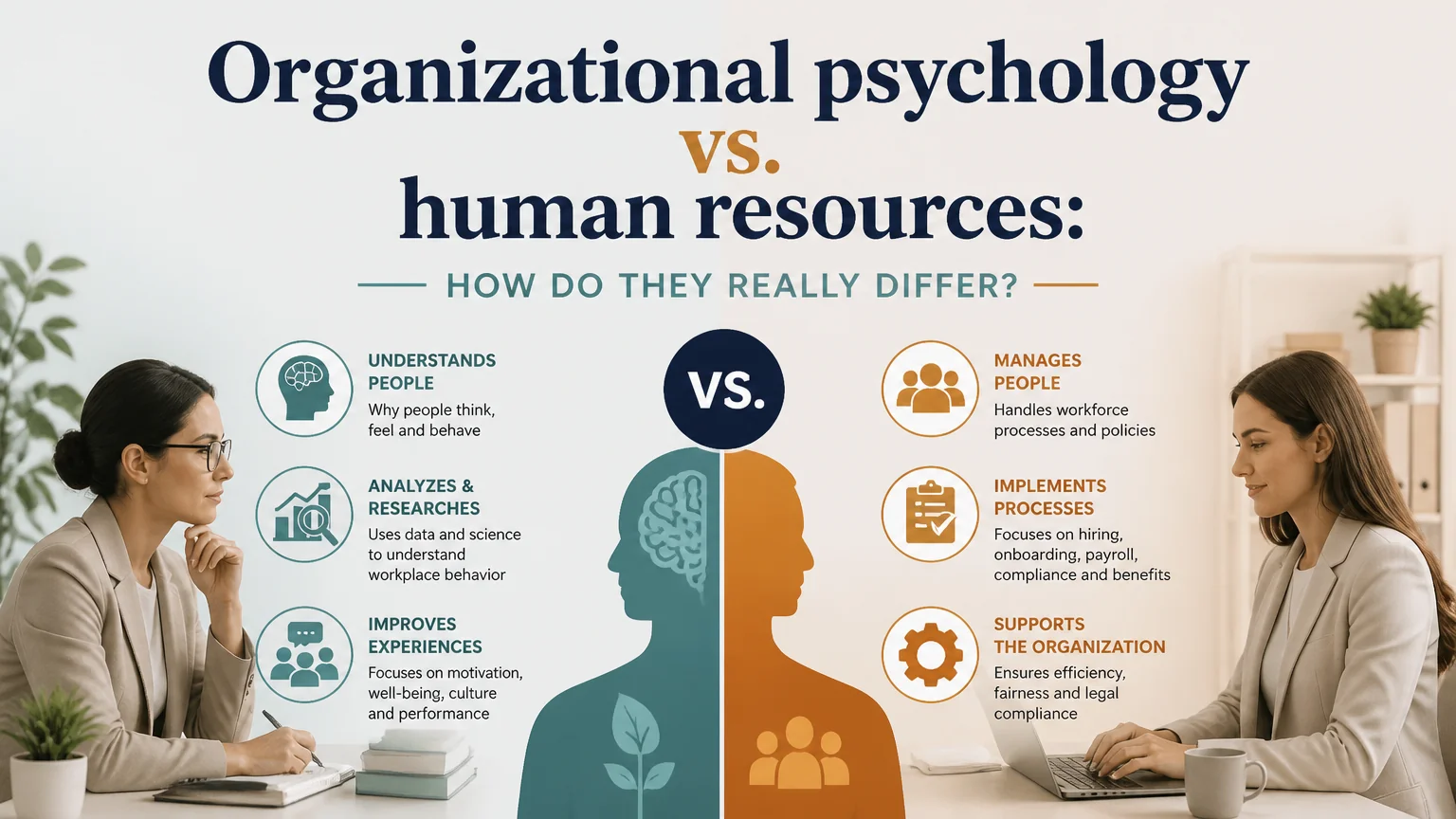
Organizational psychology vs. human resources: how do they really differ? - psychology organizational
Enhance your organizational strategies by understanding the foundation of work psychology and its relevance in improving employee satisfaction across various fields.
Organizational Psychology, also known as Industrial-Organizational Psychology (I-O Psychology), is a branch of psychology that applies psychological principles to the workplace. It focuses on understanding and improving human behavior in the context of organizations. Organizational psychologists study a wide range of topics, including:
In summary, Organizational Psychology focuses on the "why" behind employee behavior, using scientific research and assessment methods to diagnose problems and develop tailored solutions.
On the other hand, Human Resources (HR) focuses on the practical management of employees throughout their lifecycle within the company. This includes activities such as:
HR focuses on the "how" employees are managed, implementing policies and procedures to ensure the company has the talent needed to achieve its objectives.
Although both Organizational Psychology and Human Resources work to improve employee performance and well-being, there are fundamental differences in their approaches and responsibilities:
| Characteristic | Organizational Psychology | Human Resources |
|---|---|---|
| Main Focus | Human behavior at work | Management of human talent |
| Methodology | Scientific research, data analysis | Implementation of policies and procedures |
| Primary Objective | Understand and improve employee behavior | Manage employees throughout their lifecycle in the company |
| Areas of Specialization | Motivation, leadership, organizational culture, organizational development | Recruitment, selection, compensation, training, labor relations |
| Level of Intervention | Analysis at the individual, group, and organizational levels | Management at the level of policies and procedures |
In summary, while Organizational Psychology seeks to understand the underlying causes of employee behavior to design effective interventions, Human Resources focuses on implementing policies and procedures to manage employees efficiently and fairly.
Despite their differences, Organizational Psychology and Human Resources are complementary disciplines that can work together to drive organizational success. When effectively combined, they can create a more positive, productive, and satisfying work environment for all employees.
For example, an organizational psychologist can help HR design a more effective personnel selection process, using psychometric tests and structured interviews to identify candidates with the skills and personality suited to the role. Or, an organizational psychologist can help HR implement a leadership training program based on scientific research about the most effective leadership styles.
As the world of work continues to evolve, the need for an integrated approach between Organizational Psychology and Human Resources becomes increasingly important. Companies that recognize the value of both disciplines and integrate them into their talent management strategy will be better positioned to attract, retain, and develop top employees.
In the future, we can expect to see greater collaboration between organizational psychologists and HR professionals, working together to create healthier, more productive, and more people-centered organizations. The combination of scientific research and talent management practice will be key to business success in the 21st century.
Search
Popular searches



![How to give negative feedback without demotivating the employee [psychological techniques]](/images/postDuplicados/onlinecourses55-how-to-give-negative-feedback-without-demotivating-the-employee-psychological-techniques.webp)