For Onlinecourses55
|
2025-12-02
For Onlinecourses55
|
2025-12-02
Emotional education: the definitive vaccine against school violence - school bullying
Examining the emotional roots of aggression reveals the importance of emotional literacy. Our exploration of this connection is just the beginning, and by taking part in our course you can learn how to cultivate emotional intelligence among students to combat bullying.
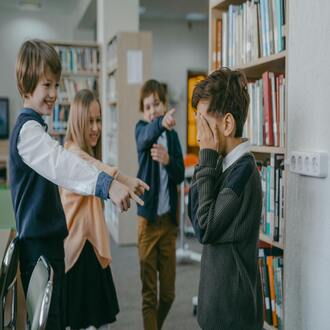
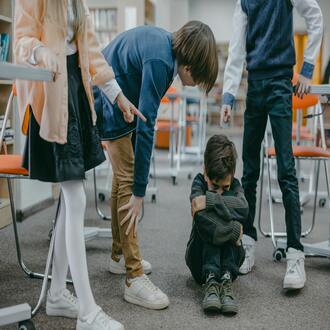
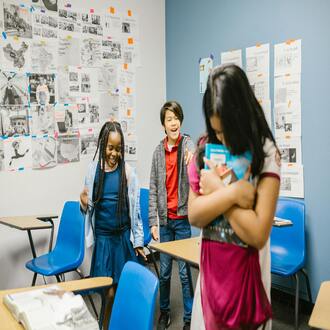
Behind every insult, every blow and every exclusion, there is a poorly managed emotion. The aggressor often acts driven by anger, frustration or the need for recognition. The victim suffers from fear and shame. Bystanders stay silent out of insecurity. That is why experts agree: emotional literacy is the most effective primary prevention against bullying. If we teach mathematics and language, why don't we teach how to manage rage?
In this article we explore the direct link between Emotional Intelligence and coexistence, a central pillar of our training course.
Empathy is the ability to put yourself in another's shoes and feel what they feel. Neurobiologically, it is the natural inhibitor of violence.
The aggressor's deficit: Many bullies have a "disconnected empathy." They may understand intellectually that the other person suffers, but they do not emotionally connect with that pain. Educating in empathy involves working the mirror neurons. When a child truly understands that their words cause real pain, it is much harder for them to continue acting aggressively.
How to work on it: Through storytelling, theater, service-learning (helping others) and the expression of feelings in the classroom.
Assertiveness is the ability to defend one's rights without attacking or submitting. It is the midpoint between passivity (victim) and aggressiveness (bully).
Tools for the victim: Many children are bullied because they do not know how to set boundaries. Training in assertiveness gives them verbal and body-language tools to stop the first attempts at mockery. Teaching them to say "NO", to maintain eye contact, to use a firm tone of voice and to ask for help without feeling like a "tattletale" is vital to break the cycle of victimization.
Many aggressors use violence because they have no other vocabulary to express their distress. They are "emotionally illiterate" people who turn sadness, envy or fear into physical violence.
Self-control Techniques: Teaching techniques like "The Traffic Light" (Red: Stop and breathe; Yellow: Think of options; Green: Act) helps impulsive students process the emotion before it becomes violent behavior. Identifying triggers ("I get angry when I lose at soccer") allows preventing the reaction.
Conflict is natural and inevitable in human coexistence; bullying is not. The difference lies in how the conflict is managed.
School Mediation: It is a powerful tool where two students in conflict sit with a neutral third party (mediator) to seek a "win-win" solution.
What is not named is not managed. Many adolescents feel "bad", but they cannot distinguish whether it is anxiety, loneliness, jealousy or disappointment.
Expanding the dictionary: The more words a student has to define their inner world, the less need they will have to act it out physically. Introducing routines like the "emotional check-in" when entering class ("today I feel a 7 in energy and a 3 in joy") normalizes talking about feelings and creates a natural support group.
An emotionally intelligent school is not a school without problems; it is a school that has the tools to resolve them through dialogue, not aggression.
Search
Popular searches