For Onlinecourses55
|
2025-12-02
For Onlinecourses55
|
2025-12-02
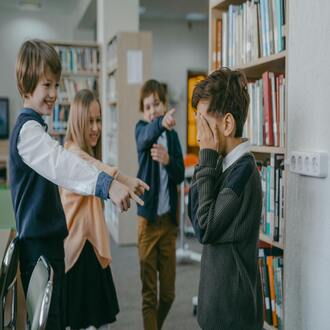
Legal framework for school bullying in spain: responsibilities and lopivi - school bullying
As educators and administrators, it's crucial to understand the serious legal consequences of peer aggression. Our article breaks down these implications, and for a more thorough understanding, consider joining our training to learn about the responsibilities schools hold in protecting students from harm.
School bullying is not just a coexistence problem; it is a legal problem. Many teachers and school principals are unaware of the legal implications of poor management of bullying. When is the school responsible? Can a minor go to jail for bullying? In this article we break down the current regulatory framework in Spain, with special attention to the new Law on the Protection of Childhood (LOPIVI).
The Spanish Civil Code (Art. 1903) establishes that the owners of educational centers are responsible for the damages caused by their minor students while they are under their custody. This is known as Culpa in Vigilando (fault for lack of supervision).
What happens to the bully? The Organic Law on the Criminal Responsibility of Minors establishes clear ranges:
The Organic Law on Comprehensive Protection of Children and Adolescents against Violence (LOPIVI), approved in 2021, has changed the landscape for educational centers.
The Figure of the Wellbeing Coordinator: The law requires all educational centers to have a "Coordinator of Wellbeing and Protection". Their functions include:
Qualified Duty to Report: LOPIVI establishes that any person who has knowledge of a situation of violence against a minor has the obligation to report it to the authorities. For public officials and teaching staff, this obligation is even greater, and its omission may constitute a crime.
Although "bullying" does not appear as such in the Criminal Code, the behaviors that compose it are typified crimes:
Knowing the law is not to scare, it is to empower. A teaching team trained in legal regulation acts with greater confidence, better protects its students, and shields the educational center against negligence.
Search
Popular searches