For Onlinecourses55
|
2026-10-10
For Onlinecourses55
|
2026-10-10
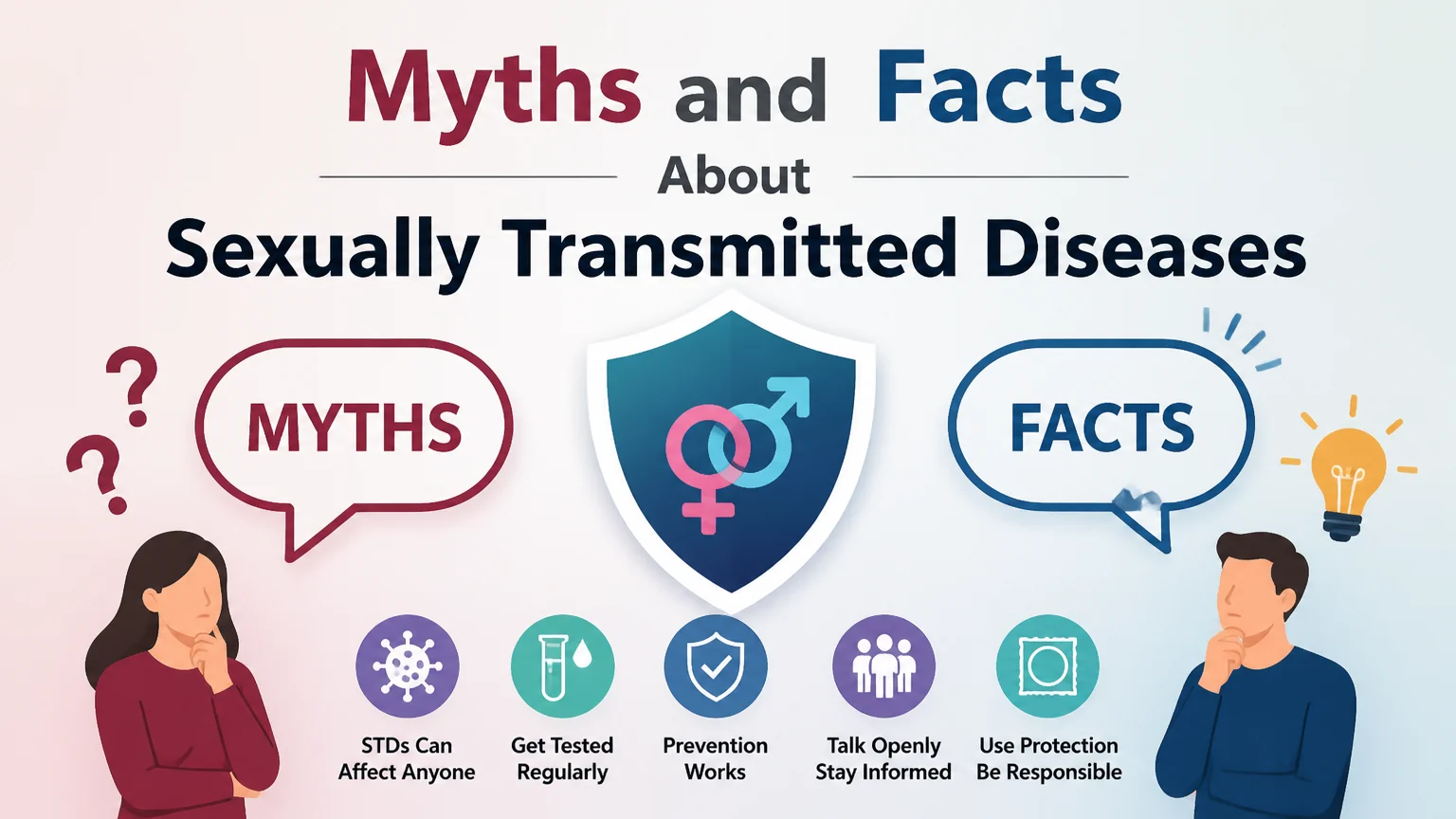
Myths and facts about sexually transmitted diseases - sexual diseases
Separate fact from fiction about STIs with our expert-led program that clarifies common misconceptions, arming you with the information needed to protect your health.
Talking about sexually transmitted infections can lead to embarrassment, uncertainty, and a great deal of misunderstanding. Over the years, misconceptions have circulated that hinder prevention, diagnosis, and treatment. Here you’ll find clear and practical explanations that separate myth from fact, so you can make informed decisions about your sexual health without panic or prejudice.
Sexually transmitted infections (STIs) are caused by bacteria, viruses, parasites, or other microorganisms that are transmitted primarily through sexual contact: vaginal, anal, or oral. They can also be transmitted through blood contact during practices involving unsterilized needles, and some, such as HIV, through perinatal transmission or breastfeeding in specific contexts. Understanding the routes of transmission helps you distinguish myths from facts and choose effective preventive measures.
Fact: STIs do not discriminate based on morality or lifestyle. Anyone who is sexually active is at risk if they do not use adequate protection or get tested regularly. Even monogamous relationships can involve risk if one partner had a previous infection or was not tested at the start of the relationship.
Fact: Many STIs go unnoticed because they are asymptomatic or present mild symptoms that are mistaken for other conditions. Diseases such as chlamydia and gonorrhea are often silent, especially in women, and human papillomavirus (HPV) or herpes may not show visible signs. The absence of symptoms does not guarantee the absence of infection or the absence of the possibility of transmission.
Fact: The risk is not limited to ejaculation. Fluids such as pre-ejaculate can contain infectious agents, and skin-to-skin contact can transmit infections such as herpes or HPV. Additionally, small lesions on the mucous membranes facilitate the entry of microorganisms even without ejaculation.
Fact: Condoms are highly effective at reducing the risk of many STIs transmitted through sexual fluids, such as HIV, chlamydia, and gonorrhea. However, when it comes to infections transmitted through skin-to-skin contact (herpes, HPV, syphilis in external lesions), their effectiveness is lower if the infected areas are not covered. Even so, consistent and correct use substantially reduces the overall risk.
Fact: Most STIs require intimate contact to be transmitted; surfaces such as toilet seats or pool water are not common routes of transmission. Pathogens that survive only briefly outside the body are not transmitted under these conditions, so the risks lie in direct contact and not in inanimate objects encountered in daily life.
Fact: Some bacterial STIs can be cured with treatment, but that does not confer permanent immunity. It is possible to become reinfected if you have contact with an infected person again. In the case of viruses such as HIV, antiviral treatment controls the infection but does not eliminate it; HPV can persist and lead to reinfection or long-term effects such as lesions if left uncontrolled.
Symptoms vary depending on the infection: abnormal discharge, pain when urinating, sores, warts, pelvic pain, or fever may occur, but the absence of symptoms does not rule out infection. Diagnosis is usually made through laboratory tests: culture, nucleic acid amplification tests (PCR), blood tests, or clinical examination, depending on the case. Treatment depends on the causative agent: antibiotics for bacteria, antivirals for certain viruses, and antiparasitic drugs when appropriate. It is crucial to complete the full course of treatment and follow up as directed by a healthcare professional.
Prevention combines education, physical barriers, vaccination, and regular testing. There is no single perfect measure, but different strategies together increase protection. Individual and collective responsibility is key: taking care of one’s own health reduces the risk to others.
If in doubt, the wisest course of action is to stop sexual activity and visit a health care provider for evaluation and testing. Do not downplay symptoms or expect them to “go away on their own.” Early detection improves outcomes, prevents complications, and reduces transmission to others. In many places, testing is confidential and accessible at primary care centers, specialized clinics, or community programs.
If the diagnosis is positive, informing sexual partners who may have been exposed is a responsible step that enables treatment and prevents reinfection. This can be uncomfortable, but many health care providers offer support for communicating this information. Additionally, receiving a diagnosis can trigger fear, shame, or guilt; seeking medical and emotional support helps manage these feelings and make rational decisions about care.
Distinguishing fact from fiction is essential for safer and more responsible sexuality. STIs are medical conditions with practical solutions: prevention, early diagnosis, and appropriate treatment. Getting information from reliable sources, using protection whenever possible, getting vaccinated when appropriate, and getting tested regularly are actions that empower and protect both the individual and their partners. Sexual health is an integral part of well-being; taking care of it is an act of respect toward oneself and others.
Search
Popular searches