For Onlinecourses55
|
2026-02-22
For Onlinecourses55
|
2026-02-22
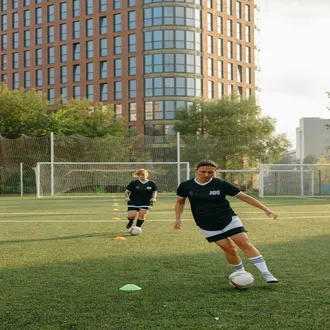
Pre-game routines: what elite athletes do before taking the field - sports psychology
Establish an effective pre-competition routine to optimize performance; our expert-led training session on routine building will help you excel under pressure.
Before the start of a match, the best athletes don’t rely on luck: they follow a clear sequence that synchronizes mind, body and gear. A good routine is not superstition; it is a proven system that reduces uncertainty, creates consistency and allows entering the field with optimal clarity and energy. Each step is tested and adjusted in training sessions and lower-pressure matches until it becomes automatic. What follows gathers common practices and principles you can adapt to your context, understanding that there are no one-size-fits-all recipes and that consistency is what matters.
In high-performance environments, mental and physical variability is the enemy. A well-designed pre-match routine acts as a script that minimizes decisions, saves cognitive energy and anchors confidence cues. It helps regulate arousal (avoiding being too “flat” or too revved up), prevents injuries by preparing tissues and the nervous system, and creates continuity between the tactical plan and execution. It also allows you to detect issues in time: thirst, accumulated fatigue, equipment discomfort or lack of focus. The result is a state of readiness: alert, loose and focused.
Elite athletes don’t just “imagine winning”; they mentally rehearse key actions with sensory detail. They visualize their entry onto the field, first contacts with the ball, transitions, decisions under pressure and responses to mistakes. They do it in first person, including breathing and sensations of rhythm and force. Two or three micro-blocks of one to two minutes are enough: one for strengths (your best version), another for difficult scenarios (noise, being behind on the scoreboard) and a third for the first minute of play. The objective is to prioritize patterns and reduce surprises.
Breathing is the steering wheel of the nervous system. Before warming up, some use slow diaphragmatic breathing to lower heart rate and calm thoughts; close to the start, they incorporate more energetic cycles to raise arousal without anxiety. A useful sequence: 3 to 5 minutes of deep nasal inhalation, exhalation longer than the inhalation, and brief pauses at the end of the exhalation. In the moments before going out, two or three “physiological sighs” (double short inhalation through the nose and long exhalation through the mouth) clear tension without losing focus.
Self-talk structures attention. Keywords are brief, actionable and specific: “first step,” “firm,” “simple,” “low hips,” “angles.” They are chosen for each role and repeated at specific moments in the routine: when putting on footwear, touching the turf, in the pre-game huddle with the team. Triggers are also defined to reset after errors: a brief gesture (touching a wristband, looking at a field line), a deep exhalation and a restart phrase like “next play.” This anchor prevents rumination spirals.
Pre-match mobility does not aim to “be more flexible” but to free specific ranges and improve motor control. Priority is given to high-impact areas: hip, ankle, thoracic spine, shoulders if the sport requires it. Dynamic, not held movements: controlled hip circles, pelvic tilts, thoracic rotations, ankle swings and walks with active stretches. Duration: 6 to 8 minutes, without fatiguing. The correct indicator is feeling looser and better aligned, not exhausted.
After mobility, key muscle chains are “switched on” to transmit force and stability. Mini-bands for glutes, lateral walks, lunges with rotation, low-impact in-place jumps, elastic pushes and pulls for the upper body. In contact sports, elastic stiffness exercises are added: small hops, controlled falls and rebounds. The idea is to take the system from a passive state to a reactive one, with progressive cadences and short rests. You should finish feeling “response” in your feet and hands.
The final block replicates the demands of your sport and position: short sprints with changes of direction, accelerations from different postures, turns, receptions and technical actions at increasing speed. For team sports, short tactical sequences with communication are included. The aim is to reach match threshold for a few seconds so that the first intense effort does not surprise you. Close with one or two actions at maximal controlled speed and a brief recovery, so you enter the field with spark and without fatigue.
Hydration starts hours before. A practical guideline: pale, light-colored urine by the morning, 500 to 700 ml between 2 and 3 hours before, and 200 to 300 ml in the 20 to 30 minutes prior, adjusting for climate and sweat rate. Adding sodium and electrolytes helps retain fluids and avoid cramps, especially in heat. Avoid drinking excessively just before to prevent feeling heavy. During the tactical talk, small sips are enough. Remember to trial these amounts in training to avoid gastrointestinal surprises.
Pre-match food is simple, familiar and easy to digest. Easily absorbed carbohydrates (rice, pasta, potato, white bread), lean protein in moderate portions (chicken, fish, yogurt) and low fat. Avoid fiber and heavy sauces. 2 to 3 hours before: main meal. 60 to 30 minutes: a snack if needed (low-fiber bar, banana, bread with honey). Adjust according to match duration and intensity. The essential thing is to arrive with your reserves full, without feeling heavy or experiencing unstable sugar spikes.
Many athletes use caffeine in moderate doses to improve alertness and perception of effort, always tested beforehand to avoid nervousness or discomfort. Others use nitrates or carbohydrate drinks from different sources for high tolerances. The rule is clear: nothing new on match day, and dose according to your personal response and the recommendations of your trusted professionals. A simple, consistent plan yields more than a complex last-minute mix.
Personal rituals organize the mind, as long as they don’t become rigid. Music selected in segments is common: calmer playlists for the early locker room, ascending rhythms toward the field. Some use routines of dressing in the same order, a brief written note with the day’s objectives or a specific greeting with teammates. The criterion is functional: if the ritual helps you get into focus, keep it; if it ties you to external conditions (a specific song that one day isn’t available), make it flexible so you don’t depend on the uncontrollable.
Typical pitfalls include warming up too much or too little, trying new foods or supplements, arriving rushed and being overwhelmed with tactical information. It’s also common to “chase” motivation with music or shouts when what’s lacking is physiological regulation. Prevention involves testing the routine in training, preparing equipment the day before, simplifying tactical language to a few priorities, and using breathing to adjust arousal. If something fails, return to the minimal script: brief mobility, a couple of powerful actions, one keyword and play.
Search
Popular searches

![Eating disorders [ed] in weight-class sports](/images/postDuplicados/onlinecourses55-eating-disorders-ed-in-weight-class-sports.webp)