For Onlinecourses55
|
2026-01-15
For Onlinecourses55
|
2026-01-15
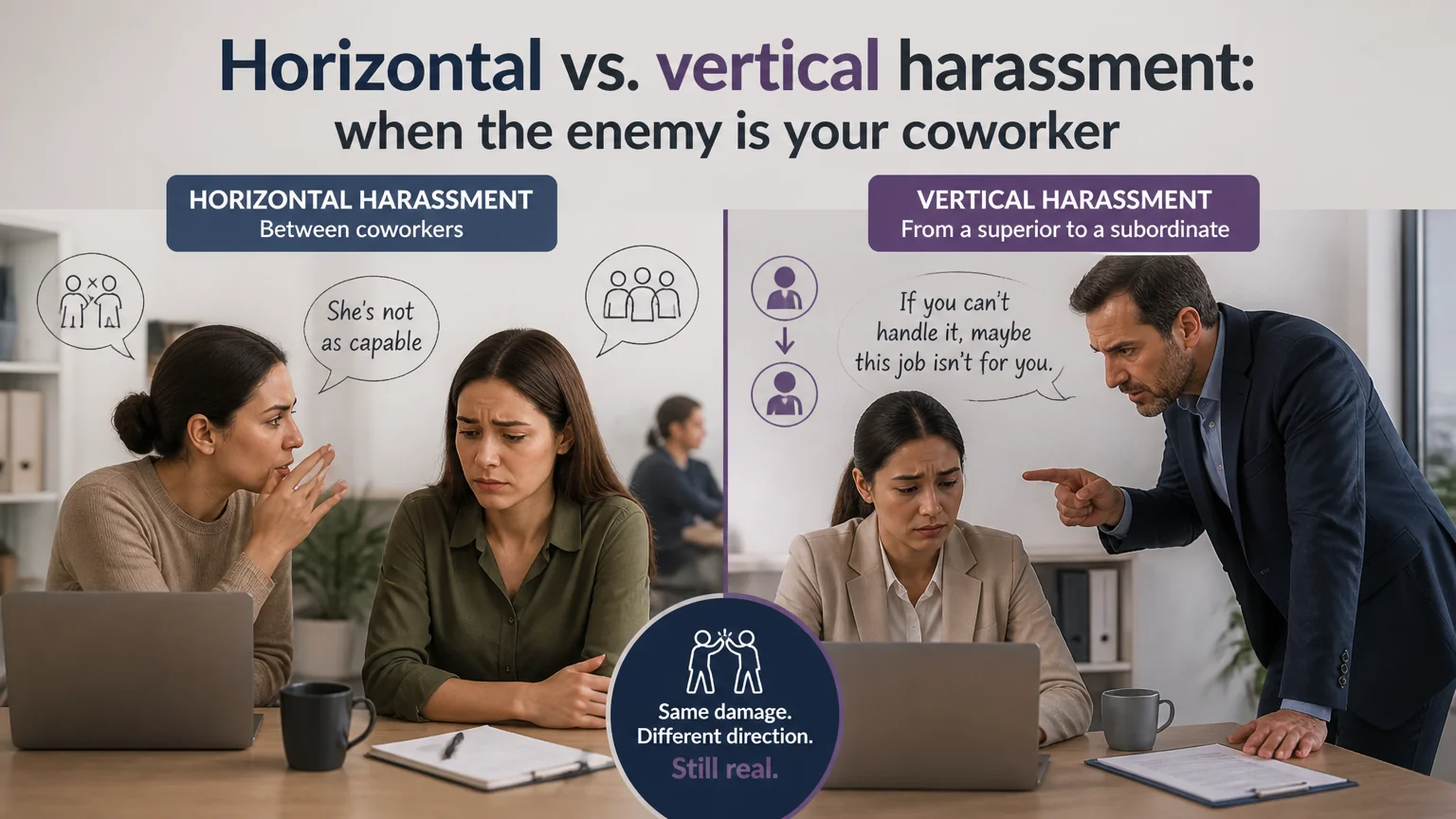
Horizontal vs. vertical harassment: when the enemy is your coworker - workplace harassment
Recognizing different forms of harassment is crucial for a healthy work climate. Learn to differentiate and mitigate these threats by taking part in our comprehensive course focused on combating workplace harassment today.
The workplace harassment is an unfortunate reality that affects millions of people worldwide. It manifests in various forms, with horizontal harassment and vertical harassment being two of the most common. While both share the characteristic of creating a hostile work environment, their dynamics and consequences differ significantly. Understanding these differences is essential to identify, prevent and effectively combat these forms of mistreatment.
Before delving into the types of harassment, it is important to clearly define what we mean by workplace harassment. It refers to a series of negative and hostile behaviors, repeated and prolonged over time, directed at a worker or a group of workers by one or more colleagues, superiors or subordinates. These behaviors aim to humiliate, discredit, intimidate or marginalize the victim, affecting their physical and mental health, and hindering their job performance.
The horizontal harassment, also known as mobbing among peers, occurs when the harasser and the victim are at a similar hierarchical level within the organization. It does not involve a direct abuse of hierarchical power, but is based on dynamics of envy, rivalry, resentment or simply the search for a scapegoat.
The main characteristics of the horizontal harassment include:
To better illustrate the horizontal harassment, let's consider some examples:
The vertical harassment, also known as bossing or power harassment, occurs when the harasser holds a hierarchical position superior to that of the victim. It involves an abuse of power by the superior, who uses their authority to intimidate, manipulate or humiliate the subordinate.
The main characteristics of the vertical harassment include:
Let's look at some concrete examples of vertical harassment:
To better understand the differences between the horizontal harassment and the vertical harassment, we present the following comparative table:
| Characteristic | Horizontal Harassment | Vertical Harassment |
|---|---|---|
| Relationship between Harasser and Victim | Same hierarchical level | Higher hierarchical position |
| Basis of Harassment | Envy, rivalry, resentment | Abuse of power |
| Main Intention | Marginalize, exclude, humiliate | Control, intimidate, subjugate |
| Consequences | Social isolation, low self-esteem, stress | Fear, anxiety, depression, risk of dismissal |
The prevention and combating of workplace harassment are the responsibility of both the company and the employees. Here are some effective strategies:
Search
Popular searches