For Onlinecourses55
|
2025-12-08
For Onlinecourses55
|
2025-12-08

Online course on food allergens and intolerances for schools - allergens
Why is allergen awareness critical for school staff? Enhance skills with our training on food allergies to effectively manage health and safety in educational settings.
Imagine the following scene: a child suddenly starts coughing in the cafeteria. Their face turns red, and they have difficulty breathing. Would your school staff know how to act quickly and effectively? Allergen training is not a luxury; it is a necessity.
Food allergies are on the rise, affecting an increasing number of children. According to recent studies, approximately 8% of school-age children suffer from some food allergy. This means that in every classroom, it is likely there is at least one student with an allergy. Knowing the most common allergens (milk, egg, nuts, fish, etc.) is fundamental to preventing incidents.
Schools have the legal responsibility to protect the health and safety of their students. This includes the proper management of allergens and food intolerances. Ignoring this responsibility can lead to severe legal consequences. An online course will provide you with the necessary knowledge to comply with current legislation and avoid potential legal issues.
Parents rely on schools to care for their children. Knowing that school staff is well-trained in allergen management provides them with peace of mind and confidence: A school that cares about food safety demonstrates a real commitment to the well-being of its students.
Why opt for an online course instead of in-person training? The answer is simple: flexibility, convenience, and access to updated content.
Online courses allow school staff to train at their own pace and from anywhere. There are no fixed schedules: or travel, making it easier to balance work and personal life. They can learn in their spare time, reviewing the material as often as necessary.
Online courses are typically updated with the latest research and regulations on allergens and food intolerances. This ensures that school staff receives the most recent information: and relevant for their work. Furthermore, the content is often more dynamic and engaging, with videos, infographics, and interactive exercises.
A well-structured online course provides school staff with the necessary tools and knowledge to handle situations related to allergies and food intolerances with confidence and competence: Knowing what to do in an emergency reduces stress and improves response capability.
Our online course is designed to provide comprehensive: and practical training on allergens and food intolerances. You will learn to identify the most common allergens, how to act in case of allergic reactions, and how to handle food safely.
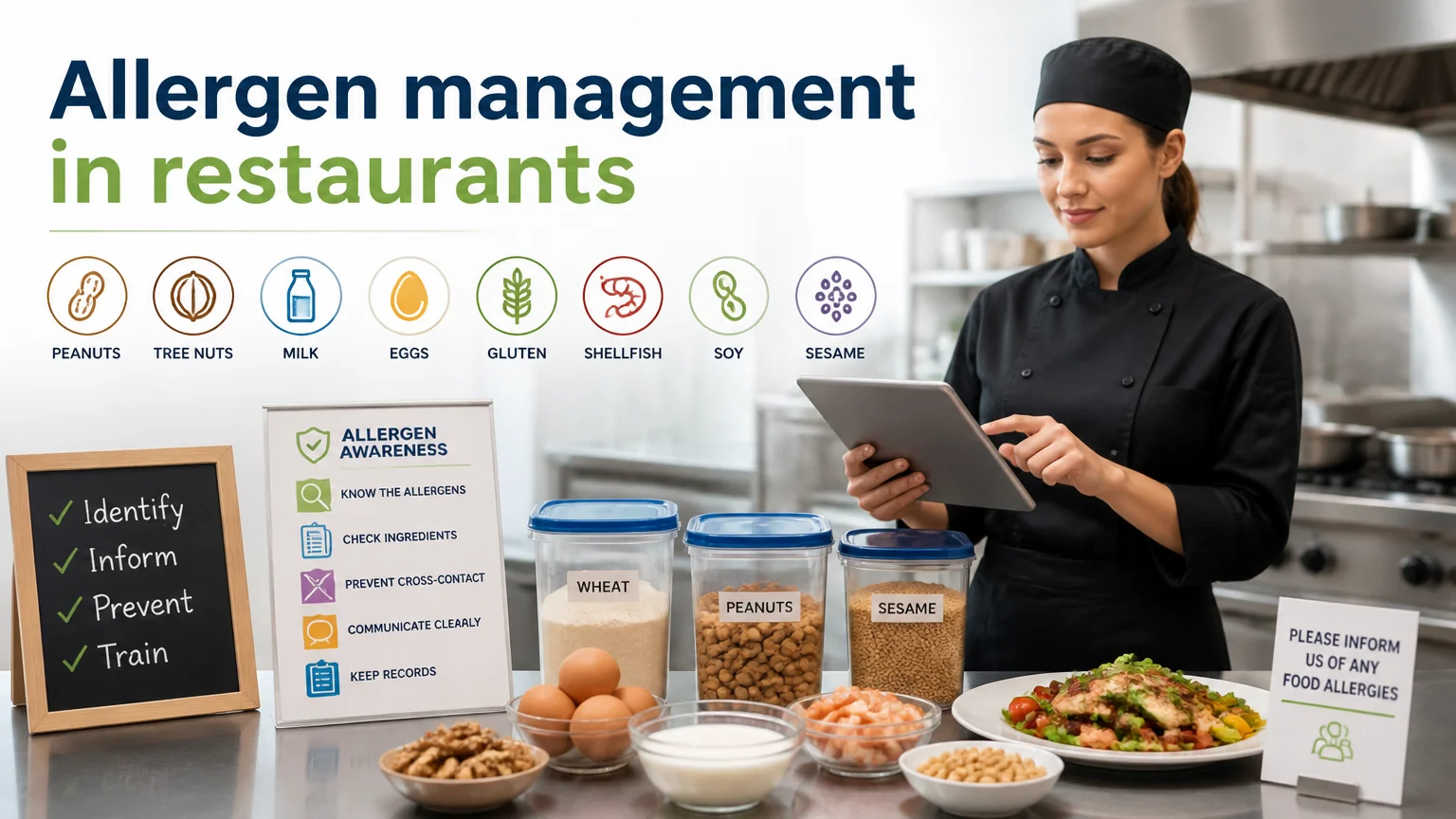
Identifying the most common allergens is the first step in preventing allergic reactions. In the course, you will learn to recognize the foods that most frequently cause allergies: such as milk, egg, nuts, fish, shellfish, and wheat. You will also learn to read food labels and identify hidden ingredients that may contain allergens.
Knowing how to act in response to an allergic reaction can mean the difference between life and death. In the course, you will learn the action protocols: in case of anaphylaxis, including the administration of epinephrine (adrenaline) and calling emergency services. You will also learn to recognize the symptoms of a mild allergic reaction and provide appropriate first aid.
Cross-contamination: is one of the main causes of allergic reactions in schools. In the course, you will learn to handle food safely to prevent cross-contamination and protect allergic students. This includes using separate utensils and work surfaces, proper cleaning of facilities, and preparing specific foods for students with allergies.
It is essential to know: the current legislation on allergens to ensure compliance with regulations and protect allergic students.
European legislation establishes specific requirements: for consumer information regarding allergens in food. In the course, you will learn to interpret European regulations and apply them in your school.
Spanish legislation adapts European regulations to the national reality. In the course, you will learn the specificities: of Spanish legislation and how to comply with legal requirements in your autonomous community.
With so many options available, choosing the right online course can be a challenge: Here are some tips for making the best decision.
Investigate the reputation of the course provider: Look for reviews and testimonials from other schools that have taken the course. A reputable provider guarantees the quality of the content and student support.
Ensure that the course content: is comprehensive, updated, and relevant to the needs of your school. The methodology should be practical and participatory, with real examples and exercises that allow staff to apply what they have learned.
Check if the course offers a recognized certification or accreditation: A certification validates the training received and demonstrates your school''s commitment to food safety.
An online course is an excellent first step, but it is essential to implement effective policies: for allergen management in your school.
Form an allergen committee: with representatives from school staff, parents, and students. This committee will be responsible for developing and overseeing the implementation of allergen policies at the school.
Establish clear communication channels: and effective with parents and students regarding food allergies and intolerances. Inform parents about school policies and request detailed information about their children''s allergies. Educate students on the importance of not sharing food and reporting to school staff in an emergency.
Adapt the school menu: to offer safe options for students with food allergies and intolerances. Work with a nutritionist to design a balanced and nutritious menu that takes into account the special needs of each student.
There are numerous informational guides and manuals: that can help you implement allergen policies in your school.
Online platforms and management apps can facilitate communication: with parents, the preparation of adapted menus, and the monitoring of student allergies.
What will allergen education look like in schools in the future? Technology will play an increasingly important role: allowing for more personalized and accessible learning.
Virtual reality and augmented reality can be used to simulate risk situations: and teach students and school staff to act safely in an emergency.
Knowledge about allergens and food intolerances is in constant evolution: It is essential that school staff stays updated on the latest research and regulations.
Training in allergens and food intolerances is an essential investment: for any school concerned with the safety and well-being of its students. An online course will provide you with the knowledge and tools necessary to create a safe and inclusive school environment for everyone. Don''t wait any longer, protect your students today!
How long does the online course last? The course has an estimated duration of 20 hours, but you can complete it at your own pace.
Is the course certified? Yes, upon completion of the course, you will receive a certificate of achievement.
What if I have doubts during the course? We have a team of tutors who will be available to answer your questions via email.
Is the course valid for all autonomous communities in Spain? Yes, the course complies with current national legislation.
Can I access the course from any device? Yes, you can access the course from your computer, tablet, or mobile phone.