For Onlinecourses55
|
2026-06-06
For Onlinecourses55
|
2026-06-06

The best methods for resolving disputes at home - family conflict resolution
Fostering a peaceful home environment is possible when you have the right tools. Immerse yourself in this innovative training on overcoming family tensions to create lasting agreements and understanding.
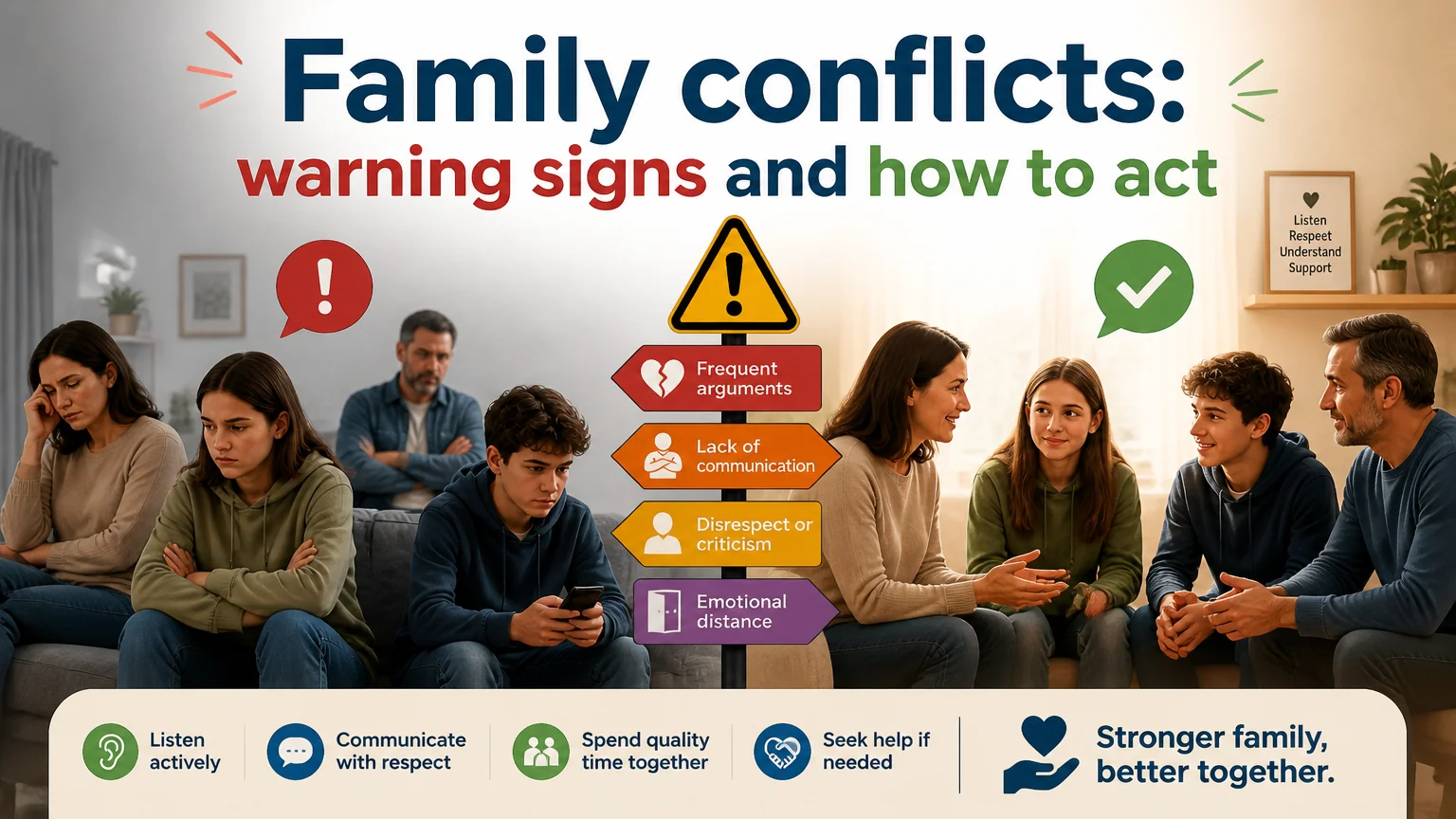
Resolving tensions under the same roof isn’t about always being right, but about building routines that make it easier to understand each other, negotiate, and keep agreements. Below you’ll find a clear, practical framework that combines communication methods, structured steps, and simple tools to apply them even when time is short or you’re very tired. The idea is for the home to be a place where conflict is handled with respect and results, not a battlefield that repeats every week.
Differences aren’t the problem; the hard part is usually how and when they’re discussed. Identifying the real cause prevents endless arguments about symptoms.
Understanding these roots lets you choose the right method instead of reacting on autopilot.
No insults, mockery, or threats. When the environment is safe, people risk being honest and the conversation moves forward.
A position is “I want this”; an interest is “I need to feel…”. Addressing interests (rest, order, recognition) opens creative options.
Talking when tired or in a hurry multiplies conflict. Agreeing “let’s look at it tomorrow at 19:30” is usually more effective than pushing the conversation in the heat of the moment.
Repeat in your own words what you understood before responding. Validate the emotion even if you don’t share the opinion.
Avoid “you always…”. Use “I” to describe impact and need: “I feel overwhelmed when the hallway fills up with boxes; I need a fixed place to put them”.
When the tone rises, agree on a 20–40 minute break to lower your heart rate and try again. Guideline: who signals, how long it lasts, and when you resume.
When two can’t manage on their own, a neutral third party helps them listen to each other and organize proposals. It can be a trusted person who simply facilitates turns and summarizes key points.
Using data or external criteria reduces the “I say/you say”. For example, a shared chore calendar, an agreed budget, or measurable times (“15 min daily”).
The issue isn’t only who does more, but the mental load. It’s helpful to separate planning from execution and rotate both roles.
Define goals (savings, debts, leisure) and assign percentages or caps. Minimum transparency: a monthly summary and alerts when a limit is exceeded.
Short, clear, visible agreements. Logical and consistent consequences, not disproportionate punishments. Including the child in defining them improves adherence.
Set boundaries together: schedules, frequency, and sensitive topics. The golden rule: the couple or host household communicates as a unit, without contradictions.
Some situations require professional or institutional intervention. Recognizing it in time protects everyone.
Help may be family or couples therapy, professional mediation, or legal advice, depending on the case.
Offer control over the when and how: “We can talk for 15 minutes tomorrow after dinner; if you prefer, we can write it down and read it first”. Insist on small, visible agreements.
Before negotiating, decide your bottom line. Use the 1–10 scale so the other person can assess how much they care; if it’s an 8 for you and a 3 for the other, don’t give in out of habit.
Agree on a signal to pause and resume in private. If it already happened, repair: explain that there was a disagreement and that you’re working to resolve it respectfully.
Turn them into visible habits: a checklist in the kitchen, reminders on the phone, and a 10-minute weekly review. What gets measured, improves.
Resolving disputes at home doesn’t require perfect speeches, but small, repeatable rituals: truly listening, defining one topic at a time, testing short agreements, and reviewing without blame. With these methods and tools, conflict stops being a threat and becomes an opportunity to strengthen life together.
Search
Popular searches