For Onlinecourses55
|
2026-08-20
For Onlinecourses55
|
2026-08-20

The importance of forgiveness in the resolution of family conflicts - family conflict resolution
Repairing relationships begins with the powerful act of forgiveness. Learn practical approaches by enrolling in this meaningful course that focuses on healing and building trust within your familyfor a more connected life.
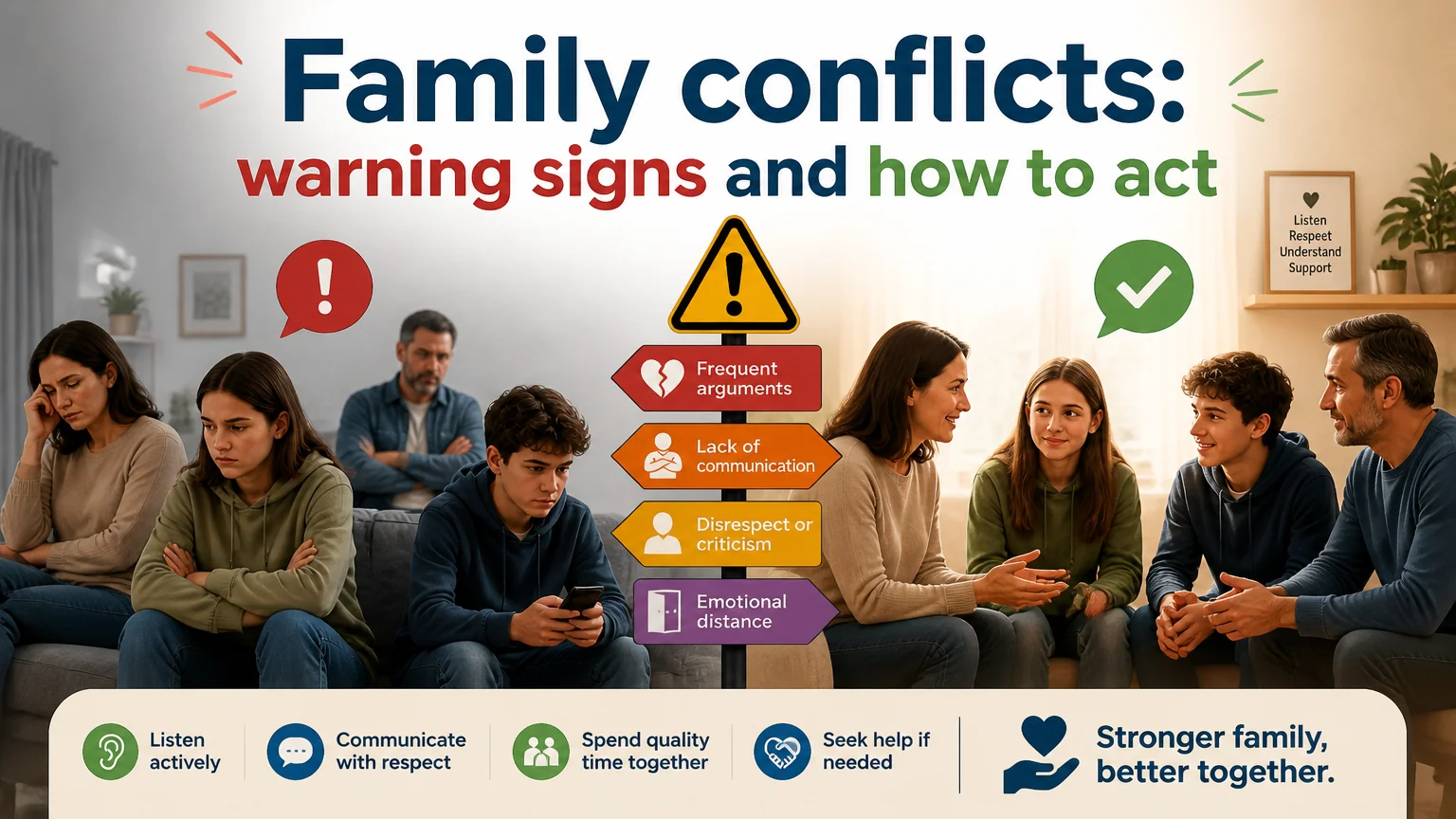
In every family, frictions arise, unmet expectations, and moments when someone hurts another, sometimes unintentionally and other times with full awareness. In such scenarios, forgiveness acts as a bridge that allows trust to be rebuilt, eases emotional tension, and makes room for lasting agreements. It is not magic nor an instant solution, but rather a deliberate practice that transforms the way of living together. Below, key concepts, common obstacles, and concrete steps are explored to integrate it realistically into family life.
To forgive is to decide to stop holding on to resentment in order to lessen suffering and regain the possibility of connection, with or without reconciliation. It does not mean denying the harm, nor forgetting, nor minimizing what happened. It involves acknowledging the wound, tending to it with care, and choosing to respond with responsibility and dignity. In families, forgiveness becomes especially complex because relationships are ongoing and charged with shared history; that’s why it’s best approached with emotional clarity and healthy boundaries.
When forgiveness is worked on honestly, it reduces the burden of stress and resentment that drains energy at home. It supports emotional regulation, improves communication, and reduces the need to “win” every argument. In daily life, this translates into more patience, greater openness to negotiate, and a sense of emotional safety. In addition, children observe and learn that making mistakes is part of life and that repair is possible, which strengthens their socioemotional development.
The difficulties usually do not lie only in the incident itself, but in the interpretations we make: “if I forgive, they’ll see me as weak,” “if I give in, it will happen again.” Pride, fear that the harm will be repeated, family pressure to “fix everything now,” and pain accumulated over time complicate the process. Personal histories also play a role: if someone grew up without being asked for forgiveness, it may be hard for them to name their boundaries and receive an apology.
Forgiving is an internal decision; reconciling is reconnecting with clear agreements and restorative behaviors. You can forgive without resuming the same closeness, especially if there are no changes or the risk persists. This distinction avoids unfair pressures and prevents the repetition of harm.
Instead of “you always ignore me,” opt for “when I speak and you don’t respond, I feel invisible and I would like to agree on a way to close.” This shift reduces the sense of attack and centers the conversation on needs and specific behaviors.
Sometimes we carry guilt over past decisions or impulsive reactions. Practicing self-forgiveness involves acknowledging the mistake, learning, and committing to different behavior. Self-compassion is not permissiveness; it is holding oneself with firmness and kindness while repairing the harm and building new habits.
Imagine that a sibling made a humiliating comment at a family gathering. The person who was hurt could prepare the conversation by regulating their emotion, then say: “When you said that in front of everyone, I felt ashamed and undervalued. I need you, if you have a criticism, to tell me in private. Can we agree to avoid jokes about my work?” The other party could respond: “I acknowledge that I hurt you. It wasn’t my intention, but I understand the impact. I commit to not repeating it and, if I cross the line again, I will accept the consequence we agree on.” This exchange, followed by consistency over time, opens space for forgiveness and, if both parties wish, for reconciliation.
Family therapy, mediation, and guidance spaces offer tools to structure dialogues, legitimize emotions, and support complex repair processes.
Forgiveness in the family is not a single act, but a path made of micro-decisions: choosing to speak honestly, uphold boundaries, acknowledge mistakes, and make room for gestures of repair. When this practice is integrated, conflicts cease to be threats and become opportunities to weave more mature, trustworthy, and humane relationships. It is not about forgetting, but about remembering differently: with learning, respect, and the will to build a home where making mistakes is not the end of the bond, but the beginning of a new way of finding one another.