For Onlinecourses55
|
2026-06-07
For Onlinecourses55
|
2026-06-07

Is it necessary to adapt the diet according to the degree of dependency of the older adult? - nutrition geriatrics
Understanding how to adjust meals for seniors who may need help is vital, which is why exploring the principles of tailored elder nutrition can be a game changer for caregivers and families alike.
Hello everyone! Have you ever wondered if an older person's diet needs to be different if that person requires more help with daily tasks? As we age, our needs change, and nutrition plays a crucial role, especially when independence diminishes. In this article, we will thoroughly explore the importance of adapting the diet according to the degree of dependency of the older adult, providing valuable information and practical advice.
Nutrition is not just "eating." It is the fuel that keeps our body running. In older adults, good nutrition can prevent diseases, strengthen the immune system, and improve the quality of life. But what happens when dependency comes into play? Well, this is where diet adaptation becomes *essential*. A dependent older adult may have difficulty preparing their meals, feeding themselves, or even remembering to eat. Therefore, adjusting the diet is not just a recommendation—it's a necessity!
Not all dependent older adults are in the same situation. There are different degrees of dependency, and each requires a specific dietary approach.
In cases of mild dependency, the older adult can still perform many tasks by themselves, but may need occasional help. The key here is to foster autonomy. How? By providing nutritious foods that are easy to prepare and consume.
When dependency is moderate, the older adult needs more regular help with daily tasks, including feeding. This presents new challenges, such as ensuring adequate intake and avoiding malnutrition.
In cases of severe dependency, the older adult requires complete assistance for all tasks, including feeding. Here, diet adaptation is critical to prevent complications such as malnutrition, dehydration, and pressure ulcers.
In some cases of severe dependency, tube feeding may be necessary. If this is the case, it is crucial to ensure that the feeding formula is appropriate for the older adult's needs and that administration is performed correctly to avoid complications.
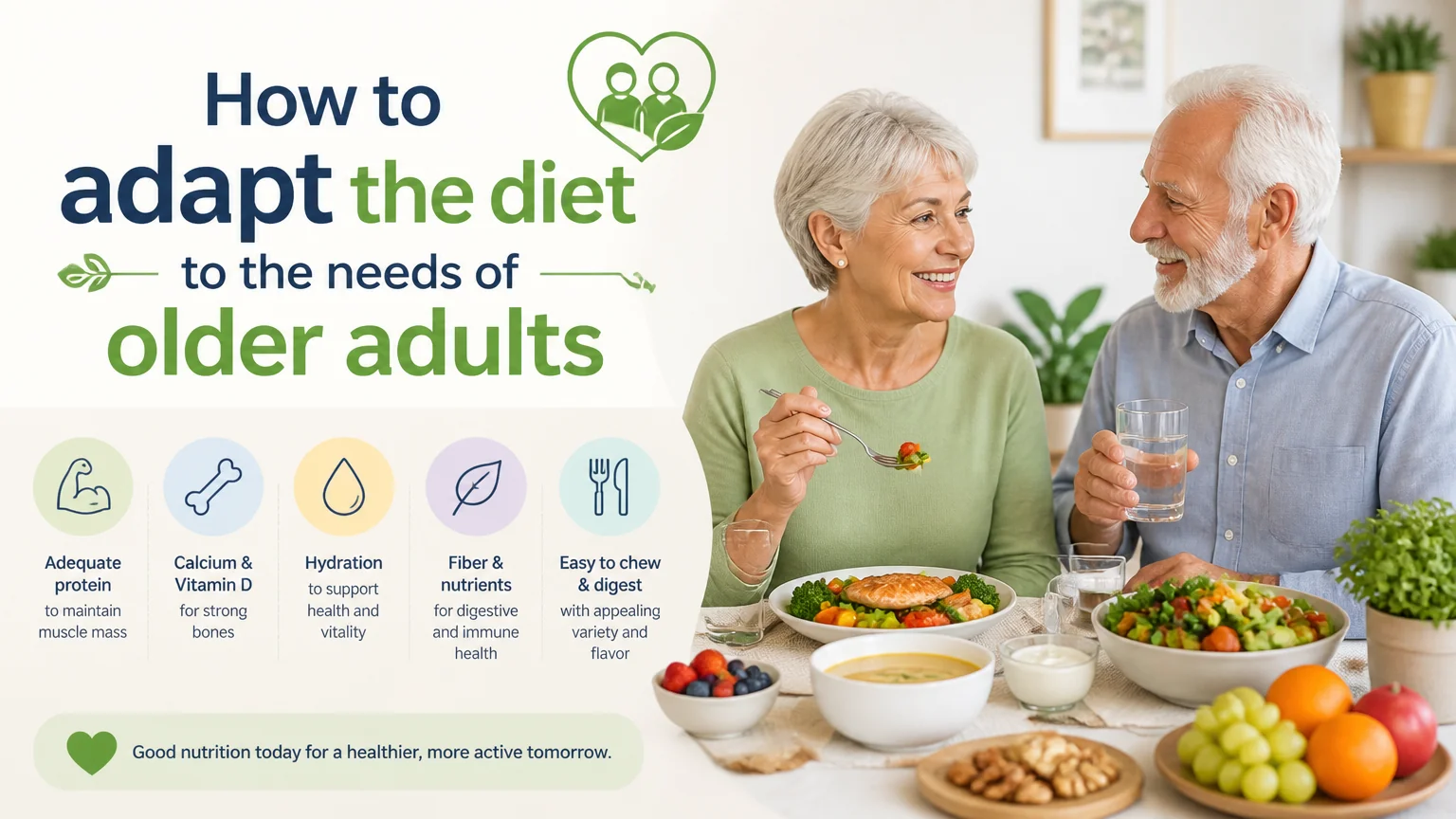
Regardless of the degree of dependency, there are some key dietary adaptations that can improve the nutrition and quality of life of the older adult.
Dysphagia, or difficulty swallowing, is common in dependent older adults. Modifying the texture of foods can make them easier to swallow and reduce the risk of choking.
Dependent older adults often have a reduced appetite and may have difficulty consuming enough calories. Increasing the energy density of foods can help ensure sufficient caloric intake.
In some cases, nutritional supplementation may be necessary to cover the nutritional needs of the dependent older adult. However, it is important to consult with a doctor or nutritionist before starting any supplement.
Adapting the diet is not just about modifying textures or increasing energy density. It also involves considering individual preferences, medical conditions, and the specific needs of the older adult.
Dehydration is a common problem in older adults, especially in those who are dependent. Ensuring adequate hydration is crucial to prevent complications such as confusion, constipation, and urinary tract infections.
The nutritional needs of a dependent older adult can change over time. It is important to constantly monitor their nutritional status and adapt the diet accordingly.
In summary, adapting the diet according to the degree of dependency of the older adult is *fundamental* to ensure adequate nutrition, prevent complications, and improve the quality of life. It is not just about feeding them; it is about nourishing their body and spirit, giving them the best opportunity to live with dignity and well-being. Remember, every person is different, and what works for one may not work for another. The key is personalization and individualized attention!
1. What should I do if my dependent older relative refuses to eat?
Lack of appetite can have many causes. Try offering smaller, more frequent meals, varying flavors and textures, and creating a pleasant environment during meals. If the problem persists, consult a doctor to rule out underlying medical causes.
2. How can I tell if my older relative is malnourished?
Some signs of malnutrition include unintentional weight loss, fatigue, muscle weakness, dry skin, and hair loss. If you observe any of these signs, consult a doctor or nutritionist.
3. What kind of foods are easiest for an older adult with dysphagia to swallow?
Soft foods, purees, soups, and thickened liquids are generally easier for people with dysphagia to swallow. Avoid dry, crunchy, or sticky foods.
4. Is it necessary to consult a nutritionist if my older relative is dependent?
Absolutely! A nutritionist can evaluate your relative's specific nutritional needs and help you create a personalized meal plan.
5. How can I make mealtime more pleasant for my dependent older relative?
Create a calm and relaxed environment, play soft music, converse with your relative, and allow them to participate as much as possible in meal preparation. Company and affection are important ingredients!
Search
Popular searches