Combining nutrition and exercise is paramount for seniors. Learn effective strategies by joining an engaging program on elder nutrition and fitness that empowers their well-being.
Hello everyone! Reaching old age is a wonderful stage, full of wisdom and experiences. But, like everything in life, it requires certain care, especially regarding nutrition and exercise. Have you ever wondered how to combine both to feel better than ever? Well, keep reading!
The importance of nutrition and exercise in old age
As we age, our bodies change. That's no surprise, right? Metabolism slows down, muscle mass decreases, and bone density can be affected. Therefore, both nutrition and exercise become fundamental pillars for maintaining a good quality of life. Think of it like a car: it needs gasoline (nutrition) and maintenance (exercise) to function properly.
Benefits of good nutrition in older adults
Adequate nutrition in old age can make a big difference. It's not just about eating "healthy," but about ensuring we are getting all the necessary nutrients to stay strong and healthy. Some of the benefits include:
- Increased energy: Adequate nutrients will give you the energy you need to enjoy your daily activities.
- Better immune system: Good nutrition strengthens your defenses and protects you against diseases.
- Strong bones: Calcium and Vitamin D are essential for preventing osteoporosis and keeping your bones in shape.
- Optimal brain function: Omega-3 fatty acids and B vitamins are key for good brain health and for preventing cognitive decline.
Benefits of regular exercise in older adults
Exercise is not just for the young. In fact, it is even more important as we age. Regular exercise can:
- Improve strength and endurance: It will help you perform daily tasks more easily and stay independent for longer.
- Protect the heart: Cardiovascular exercise reduces the risk of heart disease and strokes.
- Relieve joint pain: Exercise can help strengthen the muscles around the joints and reduce pain caused by arthritis.
- Improve mood: Exercise releases endorphins, which have a positive effect on mood and can help combat depression and anxiety.
Exercises that complement good nutrition for older adults
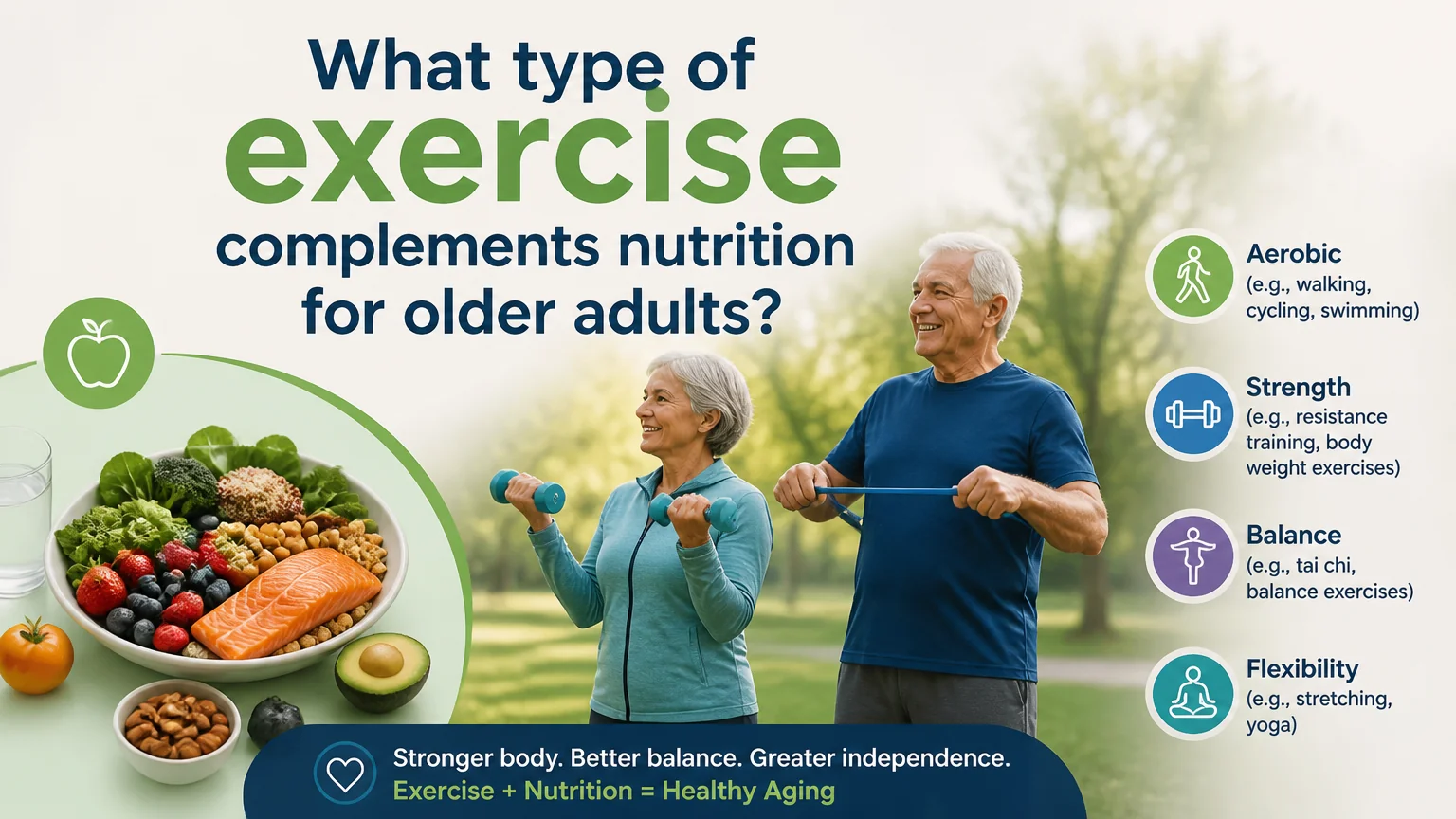
Now, what type of exercise is most suitable to complement good nutrition in old age? The answer is: a combination of several types!
Strength exercises: Building and maintaining muscle mass
Muscle loss is one of the main concerns as we age. Strength exercises are essential to combat this loss and keep us strong and agile. Think of muscles as armor that protects your bones and joints.
Examples of strength exercises
- Lifting light weights: Start with small weights and gradually increase the weight as you feel stronger.
- Resistance band exercises: Resistance bands are an excellent option for strengthening muscles safely and effectively.
- Squats: Squats strengthen the muscles of the legs and glutes. If you have knee problems, you can do partial squats or lean on a chair.
- Push-ups: If full push-ups are too difficult, you can do them supported against the wall or on a chair.
Cardio exercises: Improving cardiovascular health
Cardiovascular exercise, also known as aerobic exercise, is essential for maintaining a healthy heart and improving blood circulation. Did you know that the heart is like an engine that needs exercise to function correctly?
Examples of cardio exercises
- Walking: Walking is an excellent option for people of all ages and fitness levels. Try to walk at least 30 minutes a day, several times a week.
- Swimming: Swimming is a low-impact exercise that is gentle on the joints and strengthens the entire body.
- Cycling: Cycling is another great option for people with joint problems. You can use a stationary bike or go for an outdoor ride.
- Dancing: Dancing is a fun and social way to get cardiovascular exercise. Put on your favorite music and move!
Flexibility exercises: Increasing the range of motion
Flexibility is the ability to move joints through their full range of motion. As we age, muscles and tendons tend to become stiffer, which can limit our ability to move easily. Flexibility exercises are essential for staying agile and preventing injuries.
Examples of flexibility exercises
- Static stretches: Hold each stretch for 20-30 seconds. Stretch the major muscle groups, such as the shoulders, chest, back, legs, and arms.
- Yoga: Yoga is an excellent way to improve flexibility, strength, and balance.
- Pilates: Pilates is another exercise that focuses on strengthening core muscles and improving flexibility.
Balance exercises: Preventing falls
Falls are one of the leading causes of injuries in older adults. Balance exercises are essential to strengthen the muscles that help us maintain balance and prevent falls.
Examples of balance exercises
- Standing on one foot: Try standing on one foot for 30 seconds, several times a day. You can hold onto a chair or a wall for added safety.
- Walking in a straight line: Walk in a straight line, placing one foot in front of the other.
- Tai Chi: Tai Chi is a gentle martial art that improves balance, coordination, and flexibility.
Practical tips for integrating exercise and nutrition into your daily routine
Now that you know what type of exercise is most suitable to complement good nutrition, here are some practical tips for integrating it into your daily routine:
Consult with health professionals
Before starting any exercise program, it is important to consult with your doctor to ensure it is safe for you. A dietitian or nutritionist can also help you create an eating plan that suits your individual needs.
Set realistic and achievable goals
Don't try to do too much too soon. Start with small changes and gradually increase the intensity and duration of your workouts. Set realistic and achievable goals that motivate you to keep going.
Make it fun and social
Exercise doesn't have to be boring. Look for activities that you enjoy and that make you feel good. Join an exercise group or invite a friend to work out with you. Making it social can make it more fun and motivating!
Conclusion
In summary, the combination of good nutrition and regular exercise is essential for maintaining a good quality of life in old age. It's not about becoming a high-performance athlete, but about making small changes that have a big impact on your health and well-being. So get up, move, and eat well to enjoy a long and healthy life! Remember, every little step counts.
Frequently Asked Questions
- How much exercise should I do each week? The general recommendation is at least 150 minutes of moderate-intensity exercise or 75 minutes of vigorous-intensity exercise per week.
- What should I eat to keep my bones strong? Calcium and Vitamin D are essential for bone health. Include calcium-rich foods such as dairy, green leafy vegetables, and fortified foods. You can also take a Vitamin D supplement if your doctor recommends it.
- How can I prevent falls? Do balance exercises regularly, ensure good lighting in your home, and eliminate tripping hazards such as loose rugs.
- Is it safe to exercise if I have arthritis? Yes, exercise can help relieve pain and stiffness caused by arthritis. However, it is important to consult with your doctor to determine the type of exercise that is most suitable for you.
- Where can I find exercise programs for older adults? Many community centers, gyms, and hospitals offer exercise programs designed specifically for older adults. You can also find exercise videos online.
 For Onlinecourses55
|
2026-10-11
For Onlinecourses55
|
2026-10-11