For Onlinecourses55
|
2026-09-27
For Onlinecourses55
|
2026-09-27
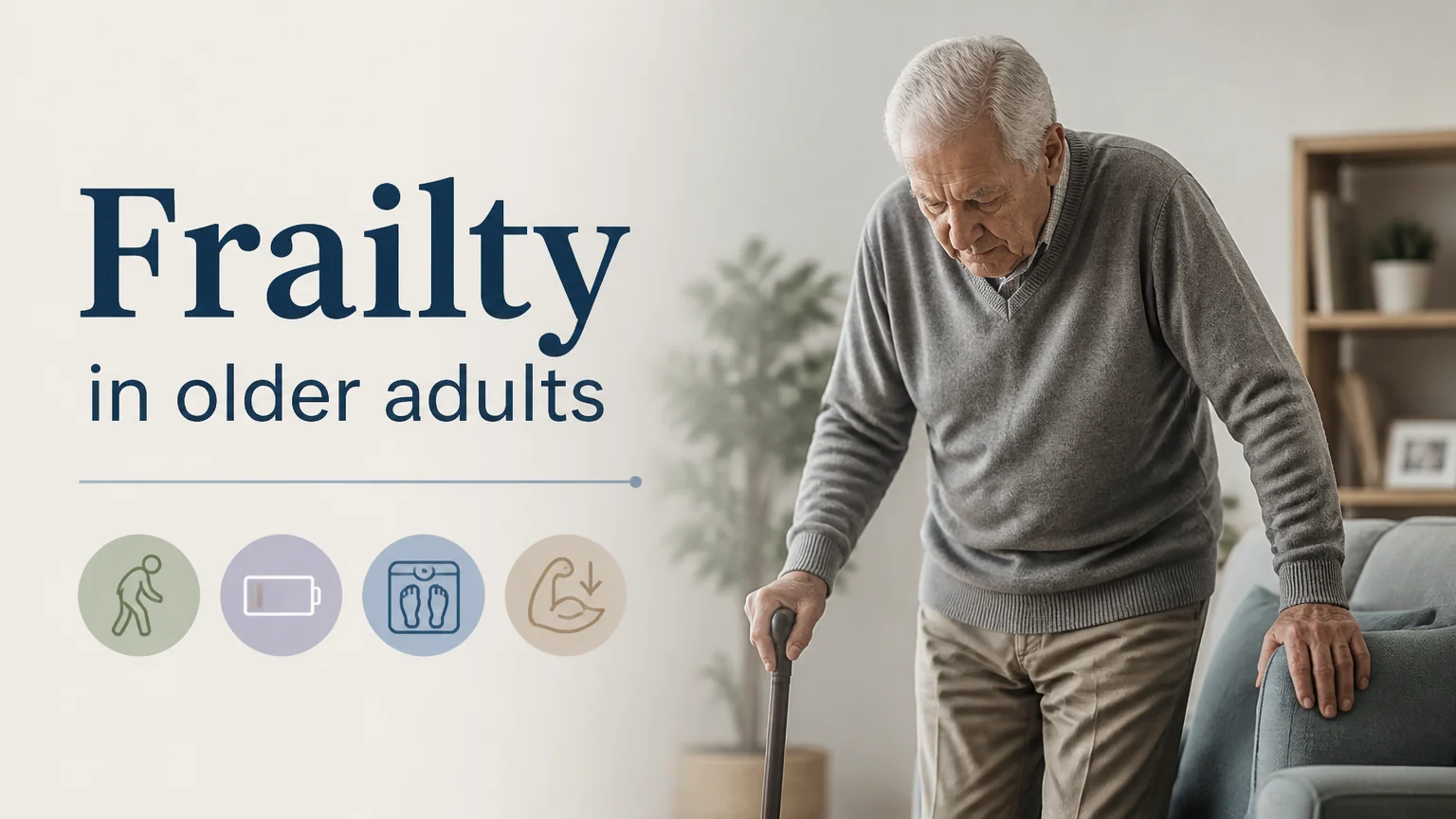
Frailty in older adults - nutrition geriatrics
Hello everyone! Today we are going to talk about a topic that, although sometimes ignored, is crucial for the health and well-being of our older adults: frailty. It's not just a matter of "getting old," but a condition we can prevent and manage. Ready to dive into this topic?
Sometimes, the word "frailty" conjures images of something that breaks easily. In the context of older adults, frailty goes beyond that. It refers to a state of increased vulnerability that diminishes the body's capacity to resist or recover from stressors, such as an illness or a fall.
Imagine a young, flexible tree compared to an old, dry one. The young tree can bend with the wind without breaking, while the old tree, due to its frailty, can easily snap. Frailty in older adults is similar: a decrease in physiological reserve that makes them more susceptible to the negative effects of any adverse event. It is not just muscular weakness, although weakness is a component.
Aging is a natural process, and every wrinkle tells a story! But frailty is different. Normal aging involves gradual changes in the body, but frailty is an acceleration of that process, where the person becomes more vulnerable and dependent much sooner than expected. The dividing line is when these changes significantly impact the ability to perform daily activities.
Frailty does not arise from nowhere. It is a complex combination of factors. Think of a cake: you need several ingredients to make it. The same is true for frailty.
Genetics play an important role. If you have family members who experienced frailty at an early age, you may have a predisposition. Furthermore, chronic diseases such as diabetes, heart disease, and arthritis can significantly contribute to frailty.
What you eat and how you live matters! A nutrient-poor diet, lack of exercise, smoking, and excessive alcohol consumption are key risk factors. The environment also influences: living in an unsafe place or one with difficult access to healthcare services can increase frailty.
We are social beings! Social isolation, loneliness, and depression can have a devastating impact on the physical and mental health of older adults, increasing the risk of frailty: Staying connected with friends and family is vital.
Detecting frailty early is crucial for intervening and improving quality of life. How do you know if someone you know is at risk? Here are some warning signs:
If an older adult loses weight unintentionally (for example, 4.5 kg or more in one year), that is a red flag! It may indicate a decrease in muscle mass and a lack of appetite related to frailty.
We all get tired sometimes. But if the person feels exhausted most of the time, even after resting, it could be a sign of frailty: It's not just "being tired," it is a feeling of deep and persistent exhaustion.
Does it cost them effort to get up from a chair? Do they walk slower than normal? These are signs that muscle strength and endurance are decreasing. A simple test is: measuring how long it takes them to walk a short distance. If the time increases significantly, attention must be paid.
If you suspect a loved one may be experiencing frailty, it is important to seek a medical evaluation.
There are several frailty scales that doctors can use to assess risk. These scales consider different factors, such as weight loss, fatigue, walking speed, and muscle strength. One of the most commonly used is the "Fried Frailty Index."
The good news is that frailty is not inevitable! There are many things we can do to prevent and manage it.
A balanced diet rich in proteins, vitamins, and minerals is fundamental. Think fruits, vegetables, whole grains, and lean proteins! Make sure the older adult is consuming enough calories and nutrients to maintain their muscle mass and energy.
Exercise is key to maintaining muscle strength, flexibility, and balance. Get moving!
Encouraging participation in social activities, clubs, or support groups can reduce isolation and improve mood. A phone call, a visit, or a simple conversation can make a big difference!
Family and caregivers play a crucial role in the care of frail older adults. Offering emotional support, helping with daily tasks, and coordinating medical care are essential duties. Family support can make a huge difference in quality of life!
If frailty is not addressed, it can lead to a series of serious complications:
Muscle weakness and loss of balance increase the risk of falls, which can result in hip, wrist, or spinal fractures.
Frail older adults are more prone to hospitalization and have a slower recovery after an illness or surgery.
Frailty can limit the ability to perform daily activities, leading to a decreased quality of life and increased dependence on others.
Fortunately, many resources and programs are available to help frail older adults and their families.
Look for community programs that offer healthcare services, transportation, meals, and social activities: Home care services can provide assistance with daily tasks, such as bathing, dressing, and preparing meals.
Frailty in older adults is not a sentence. With a proactive approach, healthy eating, regular exercise, social support, and appropriate medical care, we can help our loved ones age with strength, independence, and a high quality of life: Let's not wait until it's too late to act!