For Onlinecourses55
|
2026-01-22
For Onlinecourses55
|
2026-01-22
What is the difference between a course and a diploma in vegetarian and vegan nutrition? - nutrition vegetarian
Welcome to the world of plant-centric diets where you can deepen your knowledge and skills by taking advantage of the opportunities presented in our article and signing up for a comprehensive vegetarian food course that can enhance your culinary experience.
Hello everyone! If you are here, you are probably interested in vegetarian and vegan nutrition. Perhaps you are thinking of making the switch to a plant-based diet, or maybe you are already a tofu and tempeh expert but want to deepen your knowledge. In any case, welcome aboard!
The answer is simple: more and more people are realizing the benefits that a plant-based diet can bring to their health, the environment, and animal welfare. Plus, vegetarian and vegan food can be absolutely delicious! But, as in any field of nutrition, it is essential to have a solid knowledge base to ensure we are getting all the nutrients we need.
Eating only lettuce and tomatoes does not automatically make you a healthy vegan. In fact, a poorly planned vegetarian or vegan diet can lead to nutritional deficiencies. Therefore, training is key. But what kind of training? A course? A diploma program? That’s where the confusion lies. Don't worry, I'll explain!
Courses are an excellent way to introduce yourself to the world of vegetarian and vegan nutrition. Think of them as a first immersion into the subject.
Courses are usually shorter and more concise than diploma programs. They can last from a few hours to several days or weeks. The structure is usually more flexible, with online or in-person classes, practical workshops, and study materials.
If you want to deepen your knowledge even further and become an expert in vegetarian and vegan nutrition, a diploma program is the ideal option. Think of it as an intensive Master's degree in the subject.
The main difference is the depth and breadth of the content. A diploma program covers more advanced topics and provides a more comprehensive training.
Additionally, diploma programs usually include professional internships and research projects that allow you to apply your knowledge in real-life situations.
| Feature | Course | Diploma Program |
|---|---|---|
| Depth of Knowledge | Basic fundamentals. | Advanced and specialized knowledge. |
| Duration | Short (hours, days, or weeks). | Long (months). |
| Investment | Lower. | Higher. |
| Requirements | Generally, none or minimal. | Often, a university degree or experience in the health field. |
| Professional Opportunities | Introduction to the field, improvement of personal knowledge. | Specialization, consulting, research, teaching. |
A course is like reading an introductory book on a topic. A diploma program is like writing a doctoral thesis.
Think of a course as buying a pair of shoes. A diploma program is like buying a car. Both get you somewhere, but one requires a much greater investment.
They open the door to the world of vegetarian and vegan nutrition, give you the basic tools to start exploring, and allow you to see if you are truly passionate about the subject.
They allow you to become an expert, offer specialized services, work in research and teaching, and truly make a difference in the lives of people seeking a plant-based diet.
The choice between a course and a diploma program depends on several factors:
What do you want to achieve with your training? Do you simply want to improve your personal diet, or do you want to dedicate yourself professionally to vegetarian and vegan nutrition?
Are you an absolute beginner, or do you already have a solid foundation of knowledge about nutrition?
How much are you willing to invest in your training? How much time can you dedicate to it?
Remember that training does not end with a course or a diploma program. Learning is a continuous process.
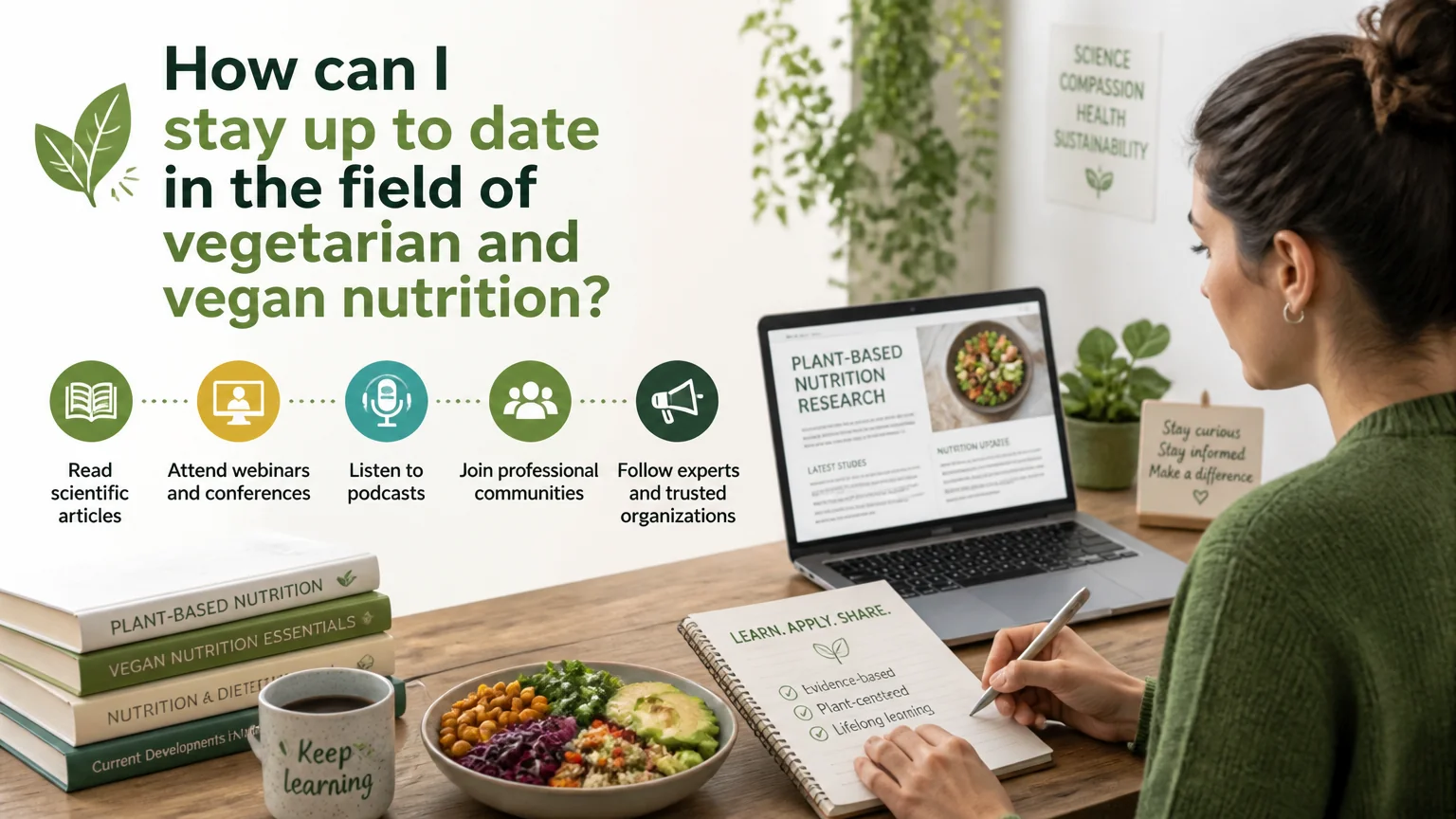
There is a large amount of scientific books and journals that address vegetarian and vegan nutrition from different perspectives. Read, research, and stay updated!
Attending conferences and events allows you to meet other professionals, learn from experts, and stay abreast of the latest trends.
There is a large number of blogs and online communities dedicated to vegetarian and vegan nutrition. Participate, share your experiences, and learn from others!
Both a course and a diploma program are valuable investments in your future. The choice depends on your goals, your level of knowledge, and your resources. But the most important thing is that you make an informed decision and commit to your learning.
Whether you choose a course or a diploma program, congratulations on taking the first step toward deeper training in vegetarian and vegan nutrition! Remember that knowledge is power, and by investing in your education, you are investing in your health, your well-being, and the future of the planet. Best of luck!
Not necessarily: While personal experience can be valuable, many programs are open to people of all eating styles with a genuine interest in the topic.
Not automatically: To be a certified nutritionist, a bachelor's degree in nutrition and dietetics is generally required. A diploma program can be a valuable specialization for already certified nutritionists.
Research: In universities, professional training institutions, and organizations specializing in nutrition. Make sure the program has a solid curriculum and qualified instructors.
You will learn: To plan balanced diets, identify nutritional deficiencies, advise people on how to adopt a plant-based diet healthily, and much more.
Now!: It is never too late to learn something new. If you are passionate about the topic, do not hesitate to take the first step and explore the available options.
Search
Popular searches