LOGIN

REGISTER
Seeker

The main cognitive biases that increase conversions - psychology marketing

onlinecourses55.com

ByOnlinecourses55

2026-01-21
The main cognitive biases that increase conversions - psychology marketing


The main cognitive biases that increase conversions - psychology marketing

Buying behavior is rarely completely rational. In everyday life, people use mental shortcuts to decide faster, reduce effort, and feel confident about their choice. Understanding those shortcuts allows you to design experiences that guide clearly, reduce friction, and, as a result, increase conversions. Below are the most relevant biases for optimizing pages, messages, and flows, with practical ideas and ethical nuances for applying them well.

Why biases influence conversion

Cognitive biases are shortcuts the brain uses to decide without analyzing all the data. Faced with multiple options, incomplete information, or time pressure, people rely on signals like what others do, urgency, or the first number they see. In a saturated digital environment, those shortcuts intensify: time is scarce, attention is scattered, and cognitive load rises. That’s why designing pages and messages that align with how we actually decide (and not how we think we decide) can transform conversion rate, average order value, and retention.

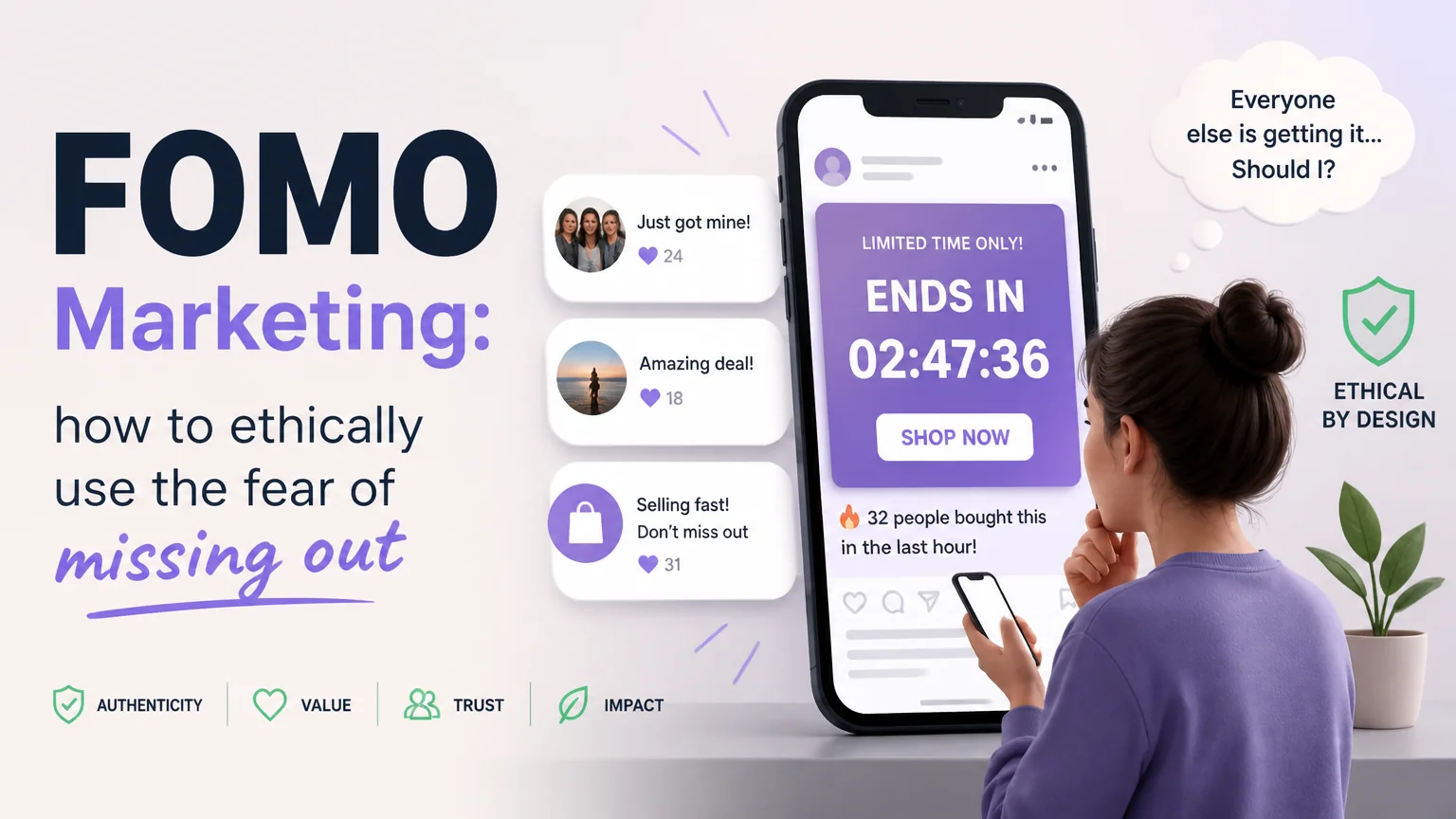
Scarcity and urgency

Why it works

When a resource seems limited, its perceived value increases. The possibility of losing an opportunity activates quick-action mechanisms. Urgency adds a temporal dimension that pushes prioritization.

How to apply it

  • Dynamic inventory: remaining units or limited spots, updated in real time.
  • Clear time windows: countdown for a bonus or special price.
  • Expiring benefits: free shipping or a free upgrade if purchased before a certain date.

Best practices

  • Avoid false urgency; if it “sells out” all the time, credibility is lost.
  • Combine with clear value: urgency without a solid proposition feels aggressive.

Social proof and bandwagon effect

Why it works

When others choose an option, we infer it is safe or superior. Social proof reduces uncertainty and speeds up decisions, especially in complex or new categories.

Effective formats

  • Verified reviews and visible ratings near the CTA.
  • Specific numbers: “More than 12,800 active customers,” instead of “thousands.”
  • Use cases and client logos relevant to the segment.

Mistakes to avoid

  • Generic or outdated reviews that don’t address real objections.
  • Unverifiable or overly polished testimonials that generate distrust.

Loss aversion

Why it works

Losing hurts more than gaining the equivalent. In conversion, emphasizing what the user could lose by not acting is more powerful than presenting benefits alone.

How to apply it

  • Loss-framed messages: “Avoid paying extra fees” instead of “Save on fees.”
  • Strong, reversible guarantees that minimize the fear of making a mistake.
  • Reminders of expiring trials or unused credits.

Price anchoring and decoy effect

Why it works

The first number seen influences the perception of all others. a reference plan or price reframes the rest. The decoy guides the target option by making another alternative comparatively less attractive.

How to present it

  • “Pro” plan as an anchor with a list of benefits; the target plan stands out in relation.
  • Show previous (real) price next to the new one to facilitate contrast.
  • Structure three options: basic, target, premium; the decoy competes with the premium to push the middle option.

Best practices

  • Ensure the difference in value between plans is clear; without clarity, anchoring confuses.
  • Avoid permanent discounts; they erode the anchor and trust.

Commitment and consistency

Why it works

After taking a first step, we seek to be consistent with the initial decision. Micro-commitments reduce friction and increase the likelihood of completing larger actions.

Practical application

  • Multi-step forms: start with easy fields (email) and progress gradually.
  • “Start for free” buttons that move to action before the final decision.
  • Save progress and show that “You’ve already completed 60%.”

Framing and contrast

Why it works

The same data changes impact depending on how it’s presented. Emphasizing gains, avoiding losses, or comparing with a concrete alternative modifies perceptions of value and risk.

How to apply it

  • Benefits in terms of outcomes: “Increase X” instead of listing features.
  • Specific comparisons: “3× faster than…” with evidence.
  • Highlight the costs of not acting: wasted time or money.

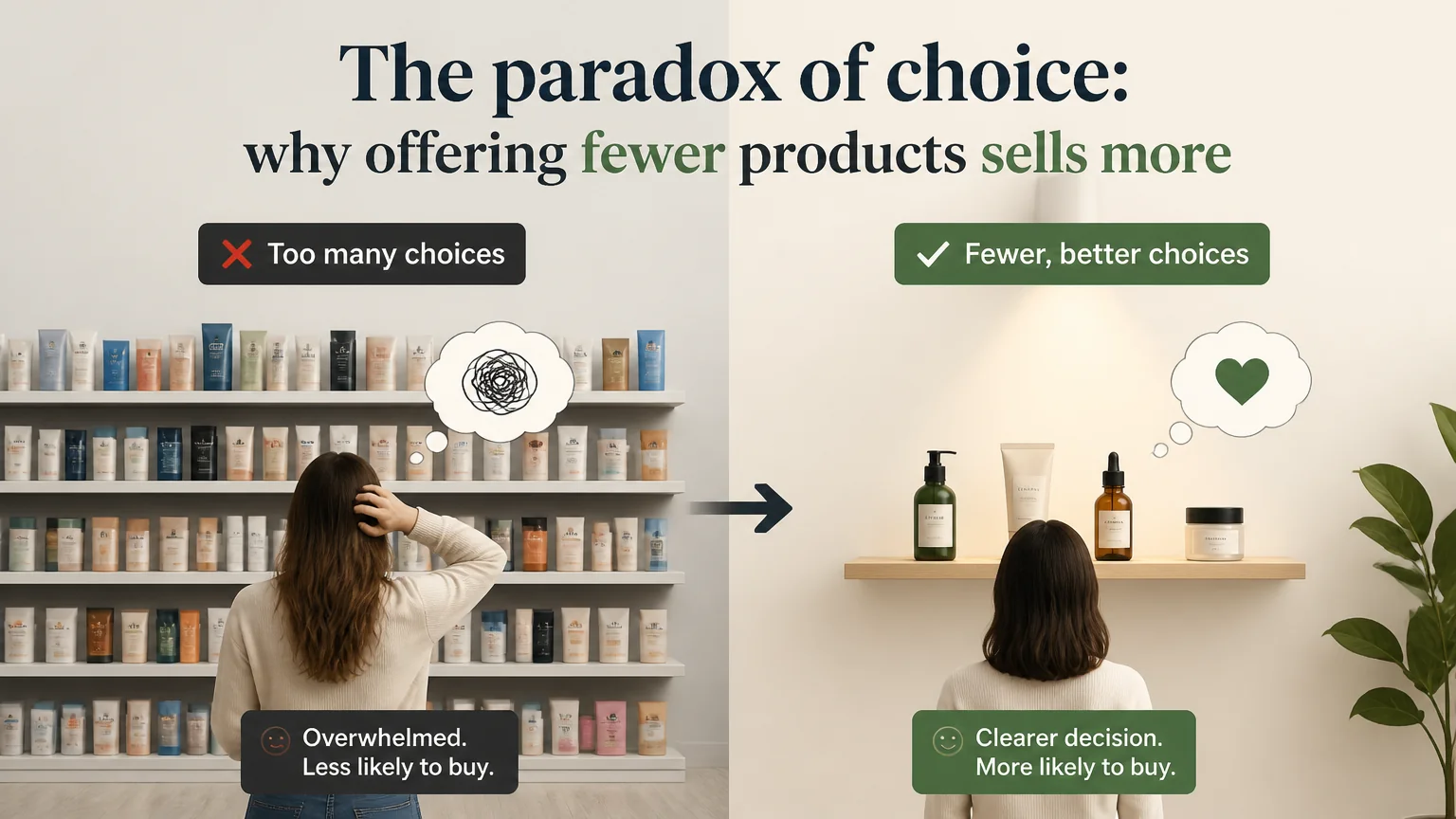
Paradox of choice and default effect

Why it works

Too many options paralyze. A default path reduces mental load and increases action. Less, well presented, usually converts more.

Practical application

  • Limit visible variants and hide advanced options behind a dropdown.
  • Preselect the recommended plan based on typical use.
  • Offer packages “for X type of customer” that guide the decision.

Endowment effect and IKEA effect

Why it works

We value more what we feel is ours or what we have helped build. Making the user “own” the outcome before paying increases willingness to buy.

Ideas to use it

  • Customizers or demos with user data that create a sense of ownership.
  • Free trial with tailored setup; it hurts more to give up something already customized.
  • Assistants that let you “design your plan” in a few steps.

Zeigarnik effect and goal gradient

Why it works

We tend to complete tasks we’ve started and speed up as we approach the goal. Visualizing progress turns that tension into action.

Practical application

  • Progress bar and checklist with clear milestones in checkout.
  • Step labels: “Account,” “Shipping,” “Payment,” to orient and reduce anxiety.
  • Allow pausing and resuming; reminders with the saved state.

Authority and familiarity heuristic

Why it works

Badges, accreditations, and familiar faces reduce perceived risk. Familiarity builds trust by reducing novelty.

How to apply it

  • Certifications and security seals visible near the form.
  • Relevant media mentions and awards, not generic ones.
  • Consistent messaging in design and tone to build familiarity.

Measurement, experimentation, and ethics

How to know if it works

  • Define a primary metric (conversion to purchase/registration) and secondaries (CTR, value per visitor, cancellations).
  • A/B tests with sufficient sample sizes and comparable time windows.
  • Segmentation: new vs. returning, mobile vs. desktop, acquisition channels.

Responsible application

  • Transparency: don’t simulate scarcity or fake testimonials. Trust is a compound asset.
  • Mutual benefit: biases should help decide better, not push harmful purchases.
  • Relevance: adapt messages to context and the user’s stage in the journey.

Integrating these biases isn’t about isolated tricks, but about designing experiences that accompany real decisions. Start by identifying the main friction, choose the principles most congruent with your proposition, and test them rigorously. When value is clear, social proof is credible, choice is simple, and perceived risk is low, conversions follow as a natural consequence.

Become an expert in Psychology marketing!

Master the consumer's mind with the Marketing Psychology and Applied Neuro-Selling Course. It consists of 19 topics and 32 hours of study – for €12

EXPLORE THE COURSE NOW

Recent Publications

Search