For Onlinecourses55
|
2026-01-21
For Onlinecourses55
|
2026-01-21

The scarcity principle: creating real urgency in your campaigns - psychology marketing
If you're interested in harnessing the power of scarcity in your marketing efforts, an insightful course on psychological tactics in marketing could enhance your skills.
Scarcity is a powerful mental shortcut: when we perceive something as limited, we value it more and act faster. It’s not just about selling more, but about helping people make decisions within a clear and honest timeframe. In marketing, that urgency can accelerate conversions, reduce indecision, and prioritize those who truly need the solution. The key is that the limitation is real and verifiable. Otherwise, you damage trust and, with it, the brand’s long-term value. A responsible approach combines clarity, evidence, and limits that reflect the business reality.
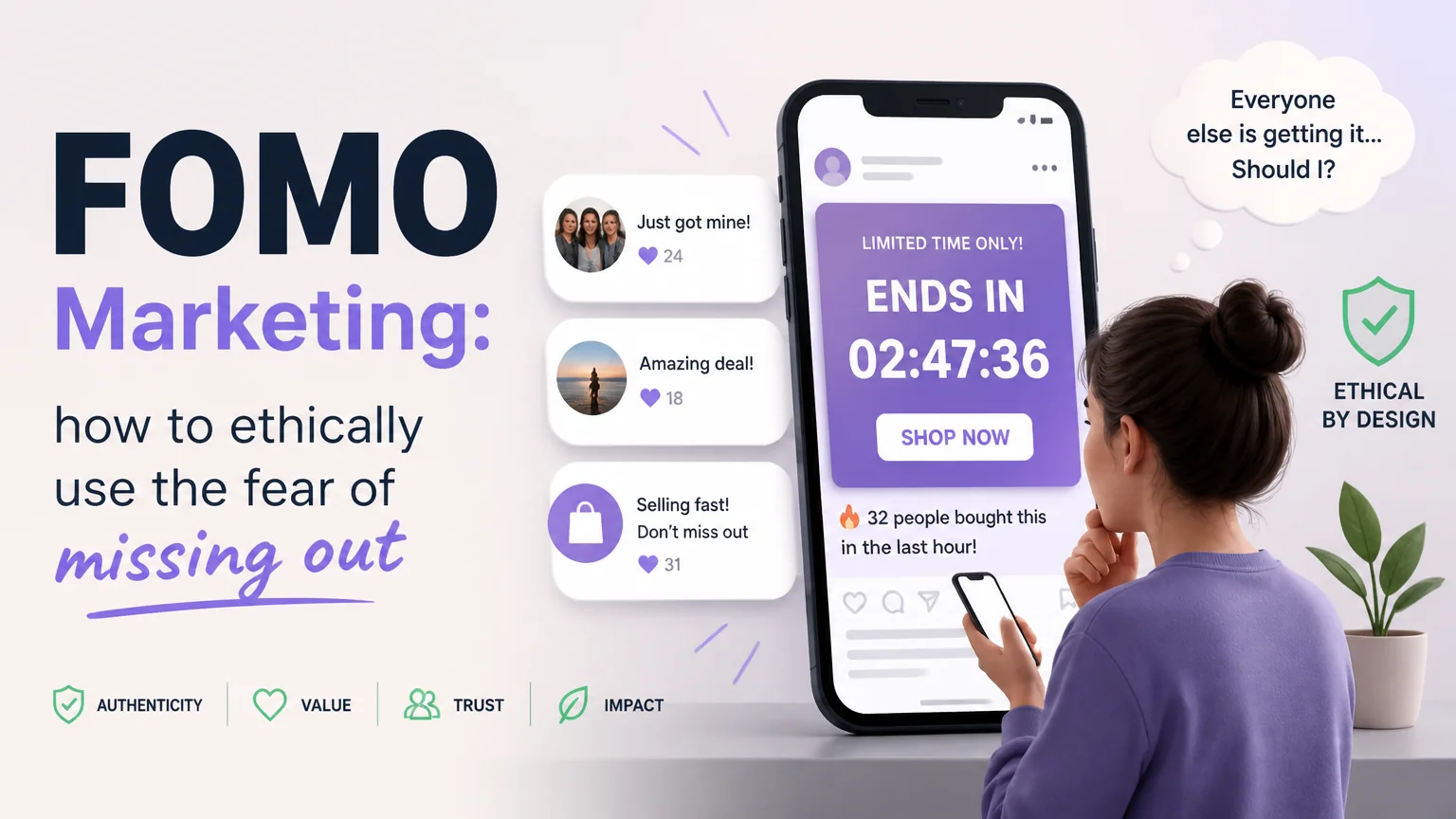
Scarcity works because it activates the fear of missing out on a valuable opportunity. It also reduces the mental cost of postponing the decision: if there is a deadline or limited slots, it’s clear that waiting has a cost. When communicated with transparency and respect, this signal helps prioritize without unduly pressuring. When manipulated, it generates reactance, complaints, and returns.
Real urgency is supported by objective constraints: operational capacity, delivery schedule, finite inventory, pricing rules, or limited editions. Artificial urgency is created without backing, such as timers that reset or permanent “last chance” messages. In the short term it can produce results, but it undermines credibility and increases support costs.
Being honest doesn’t reduce conversions; it protects you from cancellations, returns, and bad reputation. Provide evidence for what you claim, avoid grandiose promises, and allow the customer to keep their autonomy. Trust is the multiplier that turns a campaign into a long-term asset.
Offers with clear closing date and time, tied to a real event: rate change, cohort start, end of season, or rising costs. There must be a tangible before and after, not just a counter on the page.
When availability is finite due to production, logistics, or quality of service, the limit is an objective fact. Communicate it with exact numbers and real-time updates. If it’s restocked, say so; if there will be no more, explain it.
Numbered versions, seasonal colors, founder benefits, or early access by waiting list. The key is that the rarity is authentic and sustainable: if everything is “special edition,” nothing is.
For products that require accompaniment, opening and closing enrollments by cohort ensures quality. That is a legitimate limitation that improves the customer experience and reinforces the value proposition.
Designing scarcity from operations avoids contradictions. If the team knows there are 100 units or 30 slots per week, all channels will communicate the same thing and you will be able to deliver on what was promised.
Don’t optimize only for conversion rate. Poorly calibrated urgency triggers returns and complaints. Define a dashboard that includes short- and long-term metrics, and experiment with moderate variations to find the right balance.
Run A/B tests on deadline duration, messages, stock display, and reminder sequence. Keep limits constant during the experiment and respect the real closure. Record impact by segment: new vs. returning, price-sensitive vs. premium, urgency by product or category.
Prevention is worth more than a dramatic discount. If you are going to invoke scarcity, make sure you can deliver without compromising service quality.
Implement live inventory, show sizes with few units available, enable restock alerts, and offer easy returns to reduce friction. Season windows or limited-edition bundles make sense when the supply chain supports the rarity.
Scale in stages: “founder pricing” for the first X customers, seat limits on a plan, or onboarding windows with support. Clearly communicate what changes afterward: price increase, slot closure, or end of assisted migration.
Cohorts with slots, pre-screening interviews, and scheduled start dates. Scarcity here improves outcomes: fewer students or clients per professional means more attention. Show average results, not extreme cases, and set fair cancellation policies.
Well-applied scarcity organizes decisions, conveys focus, and protects the experience. It’s not a trick; it’s an operational policy turned into communication: real limits, clear rules, and visible evidence. If you design your offer from capacity and communicate honestly, urgency stops being pressure and becomes help. The result is not just more sales today, but more trust for tomorrow. Start small, measure rigorously, and evolve toward a system where each window, slot, or edition has a solid reason behind it. Your brand and your customers will notice.
Search
Popular searches