For Onlinecourses55
|
2025-12-02
For Onlinecourses55
|
2025-12-02
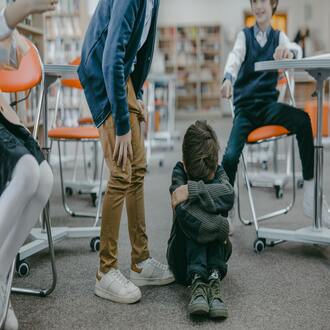
Protocol for responding to school bullying: legal and educational steps - school bullying
When signs of peer mistreatment emerge, swift action is vital. In our article, we detail how to effectively recognize and respond to these situations, and you can enhance your understanding by enrolling in our program designed to provide clear intervention strategies that every educator should implement.
When a suspicion of school bullying arises, time is of the essence. Improvisation is the worst enemy of the educational community. By law, and by moral responsibility, all educational centers must have a clear Action Protocol known by all teaching staff. What to do when a student tells you they are being beaten? What legal steps must be followed? In this article we detail the critical phases of the intervention, from detection to follow-up.
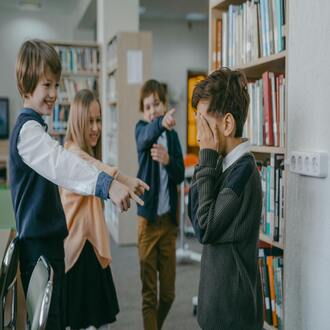
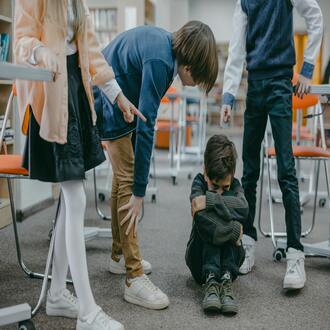
Most bullying cases occur out of adults' sight (bathrooms, between classes, social networks). Therefore, detection usually comes by two routes:
Observation of signs: Sudden changes in academic performance, absenteeism, somatization (frequent stomachaches before going to school), isolation during recess or damaged school materials. The homeroom teacher should be alert to these "smoke signals".
The Disclosure: A student (the victim or a witness) breaks the silence. At this moment, the teacher's action is critical.
Once the management knows the case, the official protocol is activated (which may vary slightly depending on the Autonomous Community, but follows a common structure).
Immediate Protection: Before investigating, protection is required. Precautionary measures must be implemented to guarantee the victim's safety. Examples: increased supervision during recess, group changes (if strictly necessary and agreed upon), or accompaniment at arrivals and dismissals.
Communication to Families: The families of those involved must be summoned (separately, never together at this stage).
The designated team (usually Guidance and the Head of Studies) must gather evidence to determine whether it is a case of bullying (repetition, intent, imbalance) or an isolated conflict.
Information gathering:
With all this information, a report is prepared concluding whether bullying exists or not. If there are indications of a crime (serious physical assaults, cyberbullying with sexual content), the school has the legal obligation to notify the Juvenile Prosecutor's Office.
If bullying is confirmed, the comprehensive action plan is deployed.
With the Victim: Psychological support, self-esteem reinforcement, training in social skills and assertiveness. Assignment of a "tutor teacher" as a point of reference and support classmates.
With the Aggressor: Application of the Internal Regulations (educational sanctions). But punishment is not enough; re-education is necessary. Programs in empathy, anger management and responsibility. They must understand the harm caused.
With the Group (Bystanders): Awareness workshops, group cohesion dynamics and zero tolerance. The group must stop laughing at the aggressor's jokes.
Follow-up: The protocol does not end with the sanction. Periodic meetings should be established (weekly, then monthly) to verify that the bullying has ceased and that the victim is recovering. If the bullying persists, more drastic measures should be taken, which may include changing the aggressor's school.
Knowing this protocol is mandatory for candidates and practicing teachers. Poor management can lead to civil liability for the school and the teachers for "culpa in vigilando".
Search
Popular searches