For Onlinecourses55
|
2025-12-02
For Onlinecourses55
|
2025-12-02
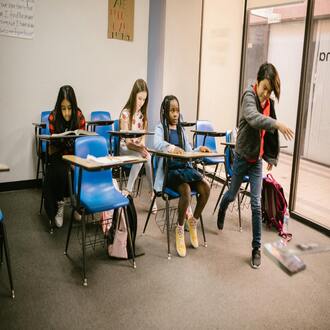
The kiva method and other school bullying prevention programs - school bullying
Addressing peer aggression requires understanding not just the aggressors but also the surrounding community. Our analysis of successful intervention programs highlights this, and by enrolling in our course you can discover methods to change school dynamics and reduce incidents of bullying.
For decades, the fight against school bullying focused on punishing the perpetrator and protecting the victim. However, the statistics did not improve significantly. Why? Because they ignored the social context. In the early 2000s, Finland revolutionized the global approach with the KiVa method, demonstrating that the key is not the protagonists of the conflict, but the bystanders. In this article we analyze the most successful prevention programs and how to implement them in your school.
KiVa is the acronym of "Kiusaamista Vastaan" (against school bullying). Developed by the University of Turku (Finland), it is based on changing group norms. Its premise is simple: bullying is a group phenomenon motivated by the pursuit of social status. If the group stops rewarding the bully with attention and laughter, bullying loses its function and stops.
The program does not act only when there is a problem; it works year-round at three levels:
In addition to KiVa, in our course we explore other methodologies that are yielding results in Spain and Latin America:
It is a successful Spanish model. It is based on "emotional tutoring" between students of different ages.
How it works: Older students (e.g., 3rd year of ESO) become tutors for students who have just entered (1st year of ESO). If the younger student has a problem or feels afraid, they go to their older tutor, not the teacher. This breaks the code of silence, since it is easier to tell a peer than an adult.
Based on the Dialogic Model of Conflict Prevention. It transforms the concept of "tattletale" into "brave".
The Key: Work is done to remove the appeal from the aggressor's profile (who is usually seen as strong or cool) and give it to the person who defends the victim. In class assemblies those who have protected a peer are publicly praised, creating a new model of social success based on solidarity.
You don't need to import a complete Finnish method to start preventing today. Teachers can apply:
Prevention is not a one-hour talk once a year. It is a climate, a culture and a structure that says loud and clear: "Here we take care of each other".
Search
Popular searches