We've all felt that moment when time disappears, distractions fade and the task becomes surprisingly natural. It's not magic: it's a psychologically replicable state. Entering it voluntarily requires design, not luck. Below you'll find a practical guide to induce that state more consistently, from preparation to fine-tuning while you work.
What flow state is and why it benefits you
Flow is a state of deep concentration in which your level of challenge and your skills are balanced. You feel absorbed, move forward with clarity and receive immediate signals that you're on the right track. This state not only improves performance; it also increases satisfaction, reduces the sense of effort and favors rapid learning.
When you access it deliberately, procrastination decreases, work quality rises and delivery times shorten. That combination of evident progress and enjoyment turns complex tasks into stimulating experiences.
Conditions that trigger flow
For it to appear, four factors usually converge. You can consciously design them before starting:
- Balance between challenge and skill: too easy is boring; too hard generates anxiety. Adjust the challenge to your real level.
- Clear, concrete goal: define what "done" means for this session, not for the whole project.
- Immediate feedback: create visible progress signals (checklists, tests, simple metrics).
- Undisturbed attention: protected time windows, a prepared environment and clear rules with those around you.
Prepare your energy and your mind
No fuel, no takeoff. A brief pre-routine stabilizes your physiology and focuses your attention.
- Sleep and rhythm: if you're low on energy today, aim for shorter, more concrete sessions.
- Light movement: 3 to 5 minutes of mobility or a short walk raise activation without tiring you out.
- Breathing: 2 minutes of paced breathing (for example, 4 seconds inhale, 6 exhale) reduce mental noise.
- Hydration and measured caffeine: drink water; if you consume coffee or tea, do so before starting and avoid late spikes.
- One-line intention: write in one line what you're going to achieve in the session.
Design a five-step entry ritual
Rituals act as switches. Repeat the same pattern and your brain will associate it with concentration.
- Quick clear: remove what you won't use from the desk and close irrelevant windows.
- Blocking distractions: do-not-disturb mode, silence notifications and close messaging sessions.
- Auditory anchor: choose a playlist or white noise that you'll use only for deep work.
- First micro-goal: set a 5 to 10 minute task that gets you moving without friction.
- Countdown: 5-4-3-2-1 and execute the first observable action (open the file, run the script, sketch the outline).
Optimize your environment for concentration
Your space should reduce friction for what's important and increase it for what's irrelevant.
- Zero friction for essentials: materials at hand, named files, direct access to what you'll use.
- High friction for temptations: site blockers, phone out of sight, blacklisted apps.
- Ergonomics: comfortable chair, screen at eye level, warm, glare-free lighting.
- Social signal: an "in focus" sign or an agreement with your team to protect time blocks.
Techniques that induce and sustain the state
Once inside, the key is to maintain a measurable, steady flow of progress.
- Timeboxing of 45 to 90 minutes: defined blocks with short breaks to avoid burnout.
- Chained micro-goals: every 10 to 15 minutes, close a small milestone and celebrate with a visible mark.
- Parking board: note tempting ideas and tasks on a list so you don't break concentration.
- Continuous feedback: quick tests, frequent builds, preview or read aloud to correct course instantly.
- Maintenance breathing: between milestones, three long exhales to release tension without leaving the focus.
Adaptations by task type
Not all activities require the same approach. Adjust your triggers to the context.
- Creativity and writing: start with a simple outline, set a word quota and leave editing for the end of the block.
- Programming and analysis: define test cases, split into small tickets and compile frequently to get immediate feedback.
- Studying and deep reading: use bookmarks, guiding questions and summaries in your own words when closing each section.
- Sport or physical performance: progressive warm-up, visualization of sequences and a consistent start signal.
Adjust the level: between boredom and anxiety
If you notice you're getting distracted, maybe the challenge is low; if you're blocked, maybe it's too high. Adjust quickly:
- If there's boredom: increase the difficulty, add a time constraint or change the success indicator.
- If there's anxiety: reduce the scope, ask for specific support or use templates to structure the first steps.
- If there's confusion: rewrite the session goal in a verifiable sentence and specify the first action.
Enter faster with if-then intentions
Implementation intentions eliminate internal negotiation. Define clear rules in advance.
- If it's time for the block, then I put my phone in another room and open the document.
- If a distraction appears, then I note it on the parking board and carry on until the next break.
- If I get stuck for 3 minutes, then I formulate a specific question and write the most likely answer.
How to maintain, pause and exit without breaking the momentum
Flow is not sustainable indefinitely. Learn to let go in time so you can return tomorrow easily.
- Active breaks: at the end of a block, stand up, breathe, hydrate, without touching social media or emails.
- Intentional closing: make a record of where you left off and what the next concrete step is. Leave a hook to pick up again.
- Gradual shutdown: lower lights, music and typing pace in the last two minutes; your brain learns to close calmly.
Common mistakes and how to fix them
Avoid typical traps that sabotage this state.
- Starting without a goal: stop and write the session's goal in a single measurable sentence.
- Noisy environment: reschedule the block or negotiate a quiet slot; without that, you're only practicing frustration.
- Multitasking: one main task per block; the rest goes to the parking board.
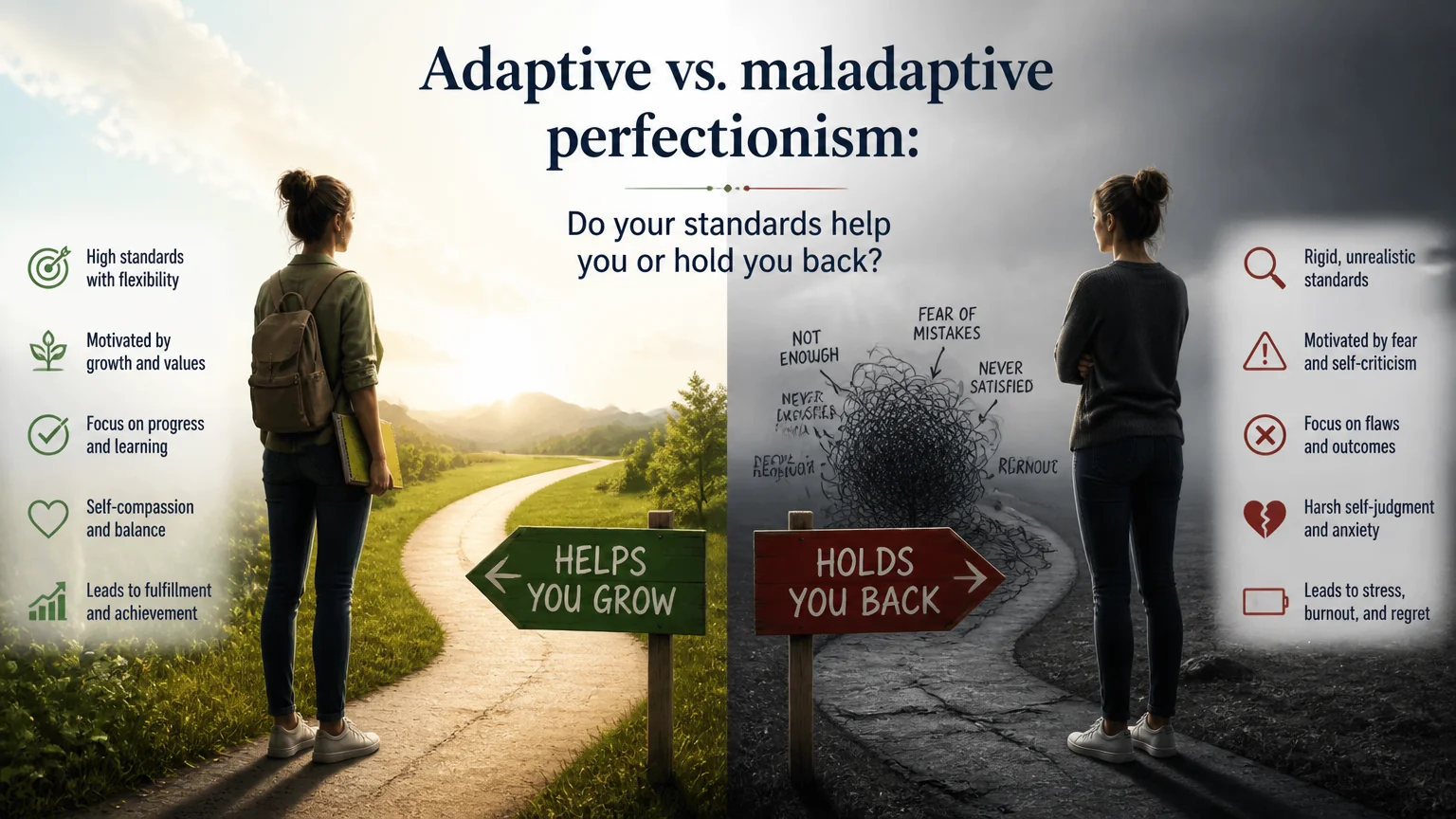
- Early perfectionism: prioritize a functional rough draft first, then polish. Change the order and your speed will change.
Build the habit with minimal metrics
What gets measured improves. You don't need big systems, just consistency.
- Daily log: block duration, goal, achievement, perceived level of challenge and 1 thing you'll improve tomorrow.
- Weekly iteration: identify your highest-energy windows and protect them in the calendar.
- Progression: gradually increase duration or difficulty, not both at once.
Quick checklist for the next session
- Is the goal in one sentence and the first micro-step written?
- Is the environment ready and distractions blocked?
- Is the five-step entry ritual prepared?
- Is the timebox defined and breaks planned?
- Is the immediate feedback system ready?
- Is there an if-then plan for getting stuck and temptations?
- Is an intentional closing note written for easy resumption?
Entering this state voluntarily isn't a matter of infinite motivation, but of small systems that cooperate with each other. Adjust the challenge to your real skill, clarify the goal, protect attention and surround yourself with feedback. Repeat the ritual enough and your brain will recognize the invitation: it will become increasingly easier to cross the threshold and stay the time necessary to do work you feel proud of.
 For Onlinecourses55
|
2026-01-18
For Onlinecourses55
|
2026-01-18
![The flow zone ['the zone']: how to enter it voluntarily - sports psychology](/images/postDuplicados/onlinecourses55-the-flow-zone-the-zone-how-to-enter-it-voluntarily.webp "The flow zone ['the zone']: how to enter it voluntarily - sports psychology")

![Eating disorders [ed] in weight-class sports](/images/postDuplicados/onlinecourses55-eating-disorders-ed-in-weight-class-sports.webp)