For Onlinecourses55
|
2026-01-13
For Onlinecourses55
|
2026-01-13

Differences between genuine humility and impostor syndrome: quick test - syndrome impostor
Understanding the thin line between humility and self-doubt is crucial for personal growth. Engage in a course focused on overcoming impostor feelings to help you build confidence and proudly acknowledge your true abilities.
Have you ever felt like a fraud, despite your accomplishments? Do you constantly doubt your abilities, attributing your success to luck rather than to your talent? You may be experiencing impostor syndrome, a common feeling that can be confused with humility. This article will help you distinguish between these two seemingly similar concepts, understand their implications, and cultivate healthy self-confidence.
Humility, in its purest essence, is a valuable quality that involves recognizing our limitations and strengths with equanimity. It's not about downplaying our achievements, but maintaining a realistic and modest perspective on our abilities. A humble person learns from their mistakes, values others' contributions, and remains open to personal growth. Humility is a source of strength, as it allows us to connect authentically with others and build solid relationships.
Key characteristics of humility:
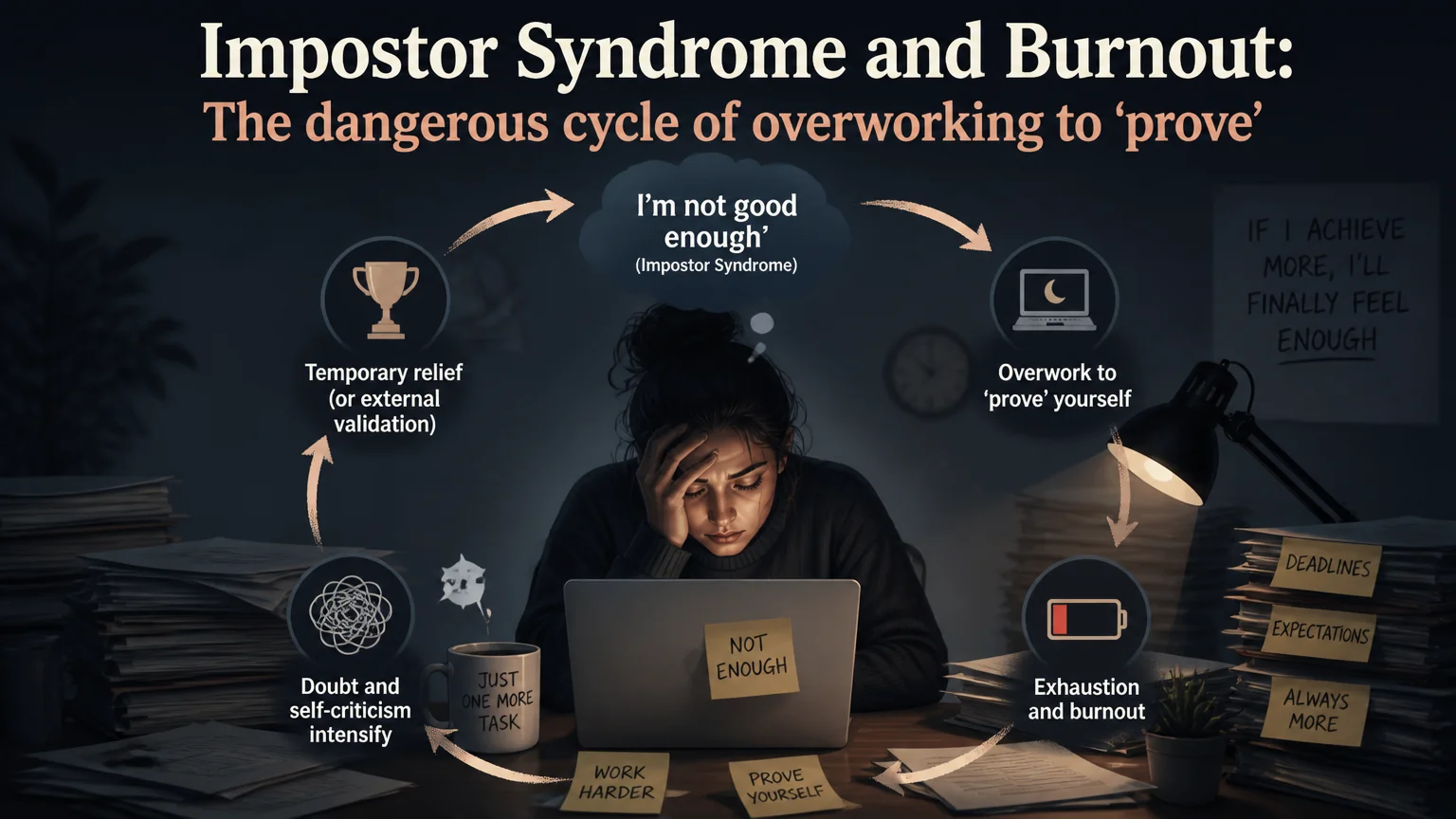
Impostor syndrome, on the other hand, is a psychological experience in which people persistently doubt their accomplishments and fear being exposed as "frauds." Despite objective evidence of their success (praise, promotions, successfully completed projects), those who experience it believe they are not good enough and attribute their achievements to external factors such as luck, being in the right place at the right time, or even having deceived others. This syndrome can generate anxiety, stress, and low self-esteem.
Key characteristics of impostor syndrome:
The line that separates humility from impostor syndrome can be blurred, but there are fundamental differences:
Answer the following questions honestly to identify your predominant feelings:
Interpretation: If you answered mostly "A", you may be experiencing impostor syndrome. If you answered mostly "B", your feelings lean more toward healthy humility. **Important:** This test is only a guide. If you are concerned, seek the advice of a professional.
If you identified that you are experiencing impostor syndrome, don't worry. There are effective strategies to overcome these feelings and build greater self-confidence:
Search
Popular searches