Why do i feel like i'm a fraud at my job? psychology explained - syndrome impostor
If self-doubt is holding you back, discover powerful strategies to overcome this challenge. Enroll in a comprehensive course tailored to address impostor syndrome and embrace your successes.
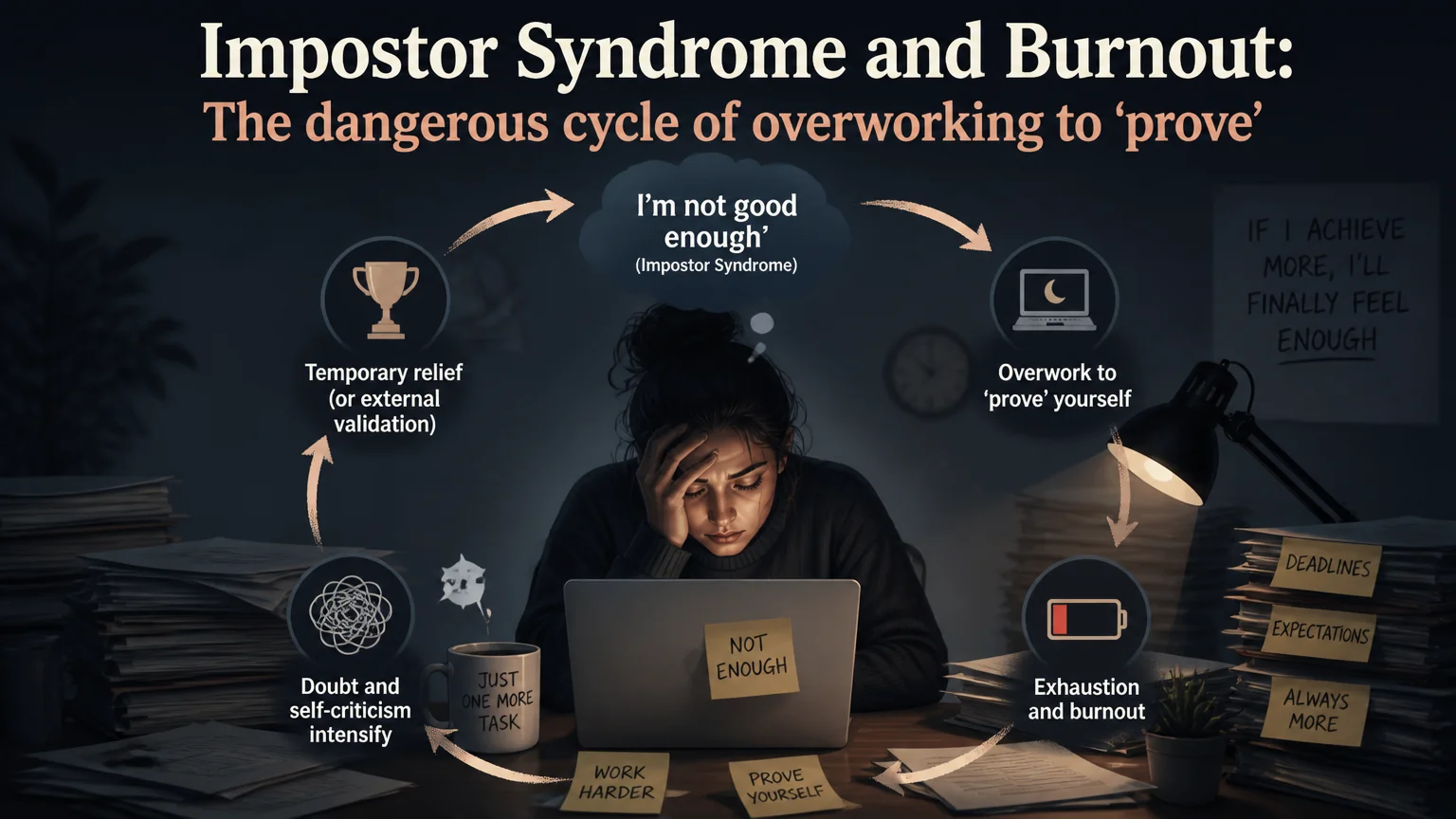
Have you ever felt that your accomplishments are the result of luck and that at any moment someone will discover that you're not as competent as you seem? If the answer is yes, you're not alone. Many professionals experience the so-called impostor syndrome, a persistent feeling of doubt about their abilities and a constant fear of being exposed as a fraud.
What Is Impostor Syndrome and How Does It Affect Your Career?
Impostor syndrome is not a mental illness, but a psychological pattern in which successful people are unable to internalize their achievements. They attribute their success to external factors like luck, timing, or deceiving others, instead of recognizing their own talent and effort. This lack of confidence can have a significant impact on your career:
- Low self-esteem: Constant doubt about your abilities undermines your self-confidence and makes you feel insecure at work.
- Stress and anxiety: The fear of being discovered generates high levels of stress and anxiety, which can affect your performance and overall well-being.
- Procrastination: The fear of not meeting expectations leads you to postpone important tasks, which in turn increases feelings of guilt and incompetence.
- Perfectionism: To avoid being exposed, you demand an unattainable level of perfection from yourself, which leads to overwork and constant dissatisfaction.
- Difficulty accepting praise: When you receive a compliment, you downplay it or attribute it to external factors, instead of accepting it as a deserved recognition.
Causes of Impostor Syndrome: A Psychological Analysis
The causes of impostor syndrome are complex and can vary from person to person. However, some common factors include:
- Family history: Growing up in an environment that emphasizes performance and comparison can create a sense of insecurity and a constant need for validation.
- Past experiences: Having experienced failures or criticism in the past can reinforce the belief that you are not good enough.
- Gender stereotypes: Women are more likely to experience impostor syndrome, especially in male-dominated fields, due to social pressure and gender stereotypes.
- Work culture: A competitive and unsupportive work environment can increase feelings of insecurity and the fear of being judged.
- Major transitions: Job changes, promotions, or new roles can trigger impostor syndrome when you face new challenges and responsibilities.
Recognizing the Signs of Impostor Syndrome at Work
Recognizing the signs of impostor syndrome is the first step to overcoming it. Pay attention to the following indicators:
- You attribute your successes to luck or to the help of others.
- You are afraid of being found out as a fraud.
- You minimize your achievements and focus on your mistakes.
- You constantly compare yourself to others and feel inferior.
- You are perfectionistic and demand too much of yourself.
- You have difficulty accepting praise and recognition.
- You feel anxious or stressed at work.
- You procrastinate important tasks for fear of failing.
Effective Strategies to Fight Impostor Syndrome and Regain Confidence
Overcoming impostor syndrome requires time, effort, and self-compassion. Here are some strategies that can help:
- Recognize your thoughts and feelings: Be aware when negative thoughts take over and challenge their validity. Ask yourself whether there is objective evidence supporting those beliefs.
- Celebrate your achievements: Keep a record of your successes, no matter how small, and allow yourself to feel proud of them. Do not downplay them or attribute them to luck.
- Share your feelings: Talk with trusted friends, family, or colleagues about your insecurities. Sharing your feelings can help you gain perspective and realize you are not alone.
- Seek a mentor or coach: A mentor or coach can provide support, guidance, and tools to build your confidence and overcome your fears.
- Accept that no one is perfect: Making mistakes is part of learning and growth. Do not punish yourself for mistakes; learn from them instead.
- Focus on your strengths: Identify your skills and talents and concentrate on using them to their fullest. Do not compare yourself to others and acknowledge your own value.
- Challenge your perfectionism: Set realistic goals and give yourself permission not to be perfect. Remember that "done is better than perfect."
- Practice self-compassion: Be kind and understanding with yourself, especially when you make mistakes or feel insecure. Treat yourself as you would treat a friend going through a similar situation.
Seeking Professional Help: When to Consider Therapy?
If impostor syndrome is significantly affecting your emotional well-being and work performance, consider seeking professional help. A therapist can help you identify the underlying causes of your insecurities, develop healthy coping strategies, and build stronger self-esteem. Cognitive-behavioral therapy (CBT) is especially effective for treating impostor syndrome.
 For Onlinecourses55
|
2026-02-06
For Onlinecourses55
|
2026-02-06