Impostor syndrome: 5 clear signs that you suffer from it and it's not just 'modesty - syndrome impostor
Feeling like a fraud isn’t a solitary experience. Join a comprehensive program designed to understand and combat impostor feelings, allowing you to embrace your achievements with clarity and pride.
Have you ever felt like a fraud, despite your achievements and successes? Are you worried that someone will discover that you are not as competent as you seem? If the answer is yes, you may be experiencing impostor syndrome. This is not just "modesty"; it is a pattern of thinking that can limit your potential and affect your well-being.
What Exactly Is Impostor Syndrome? Definition and Characteristics
The impostor syndrome is defined as a psychological experience in which people doubt their abilities, talents, or achievements and have a persistent fear of being exposed as a fraud. Despite external evidence of their competence, individuals with this syndrome attribute their success to luck, timing, or deception, rather than to their own abilities. This constant doubt can generate anxiety, stress, and low self-esteem.
The Impact of Impostor Syndrome on Professional and Personal Life
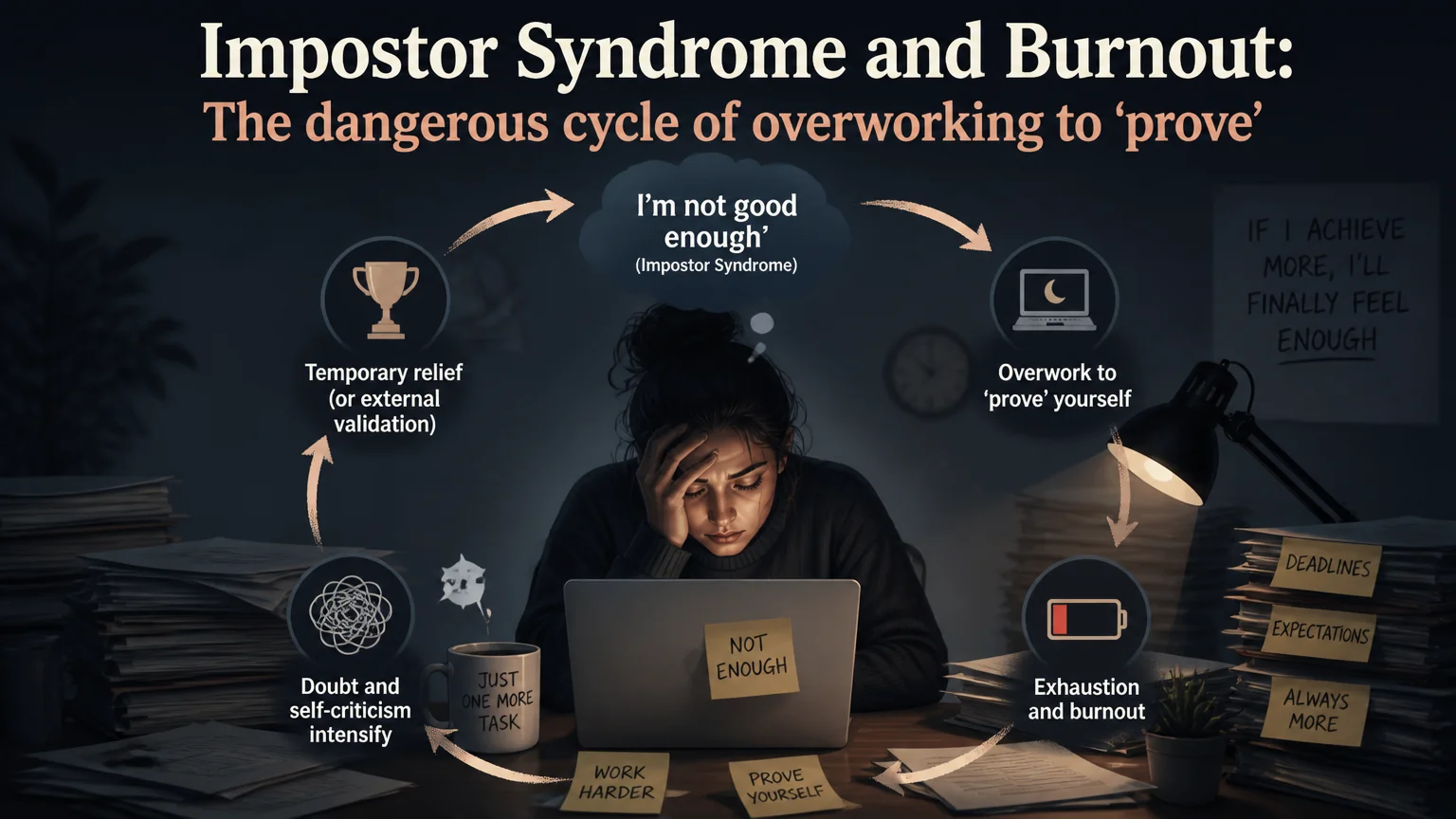
Impostor syndrome not only affects professional life, but can also impact personal relationships and mental health. At work, it can lead to avoiding taking on new challenges, overworking to avoid failure, and having difficulty accepting praise and recognition. On a personal level, it can generate feelings of inferiority, insecurity, and isolation.
5 Revealing Signs of Impostor Syndrome: Do You Identify With Them?
Recognizing the signs of impostor syndrome is the first step to overcoming it. Here are 5 key indicators that can help you identify whether you are experiencing this phenomenon:
- Attributing success to external factors: Minimizing your achievements and attributing them to luck, chance, or the help of others, instead of recognizing your own talent and effort. For example, thinking "I was lucky on this project" instead of "I did an excellent job thanks to my dedication and skills."
- Constant fear of being discovered as a fraud: Living with the worry that someone will find out you are not as intelligent, competent, or capable as you seem. This fear can generate anxiety and chronic stress.
- Perfectionism and overexertion: Setting unreasonably high standards for yourself and pushing yourself to the limit to avoid failure, even if that means sacrificing your free time and well-being. The idea is that if you work extremely hard, no one will suspect that you are not as good.
- Difficulty accepting praise and recognition: Feeling uncomfortable or rejecting compliments and recognition for your achievements. You may think you do not deserve them or that people are just being kind.
- Feelings of inferiority and constant comparison: Constantly comparing yourself to others and feeling inferior, even when you have similar or superior achievements. This comparison is often based on a distorted perception of others' skills and success.
Practical Examples of Impostor Syndrome Signs
To better illustrate these signs, consider some examples:
- A programmer who has created a successful app thinks: "It was luck that it worked; it probably has hidden bugs I haven't found yet."
- An executive who has been promoted to a leadership position worries: "I'm not sure I'm qualified for this role; I'm afraid my peers will realize I'm not as good as them."
- A writer who has won a literary prize believes: "The judges were probably being generous; my book is not as good as the others."
Effective Strategies to Overcome Impostor Syndrome and Regain Confidence
Overcoming impostor syndrome requires conscious effort and a shift in perspective. Here are some strategies that can help you regain confidence in yourself and recognize your own worth:
- Recognize and challenge your negative thoughts: When you find yourself thinking you are a fraud, stop and question the evidence that supports that thought. Is there real evidence that you are incompetent, or are you simply being hard on yourself?
- Celebrate your successes and achievements: Take time to acknowledge and celebrate your successes, no matter how small. Keep a record of your accomplishments and review it regularly to remind yourself of what you have achieved.
- Accept that perfection does not exist: No one is perfect, and making mistakes is part of the learning and growth process. Allow yourself to make mistakes and learn from them instead of punishing yourself.
- Seek support from others: Talk with friends, family, mentors, or a therapist about your impostor feelings. Sharing your experiences with others can help you feel less alone and gain different perspectives.
- Focus on your strengths and skills: Identify your strengths and skills and focus on using them to reach your goals. Remember that you have much to offer and that your contributions are valuable.
Additional Resources to Combat Impostor Syndrome
There are numerous resources available to help you understand and overcome impostor syndrome. You can find books, articles, videos, and online workshops that offer practical advice and effective strategies. You may also consider seeking the support of a therapist or counselor who specializes in treating this syndrome.
 For Onlinecourses55
|
2026-01-13
For Onlinecourses55
|
2026-01-13