Impostor syndrome vs. low self-esteem: understanding the key differences - syndrome impostor
Navigating feelings of fraudulence requires understanding key differences between impostor syndrome and low self-esteem. Discover practical strategies in a course that offers valuable insights to build solid confidence.
Have you ever felt that you are not as good as others think you are? Or that your achievements are the result of luck and not your own effort? These feelings can indicate both an impostor syndrome and low self-esteem. Although they are often confused, it is crucial to understand the key differences in order to address them effectively. In this article, we will explore these two conditions in depth, identify their distinctive symptoms, and offer practical strategies to overcome them and build solid self-confidence.
What Is Impostor Syndrome? A Constant Feeling of Fraud
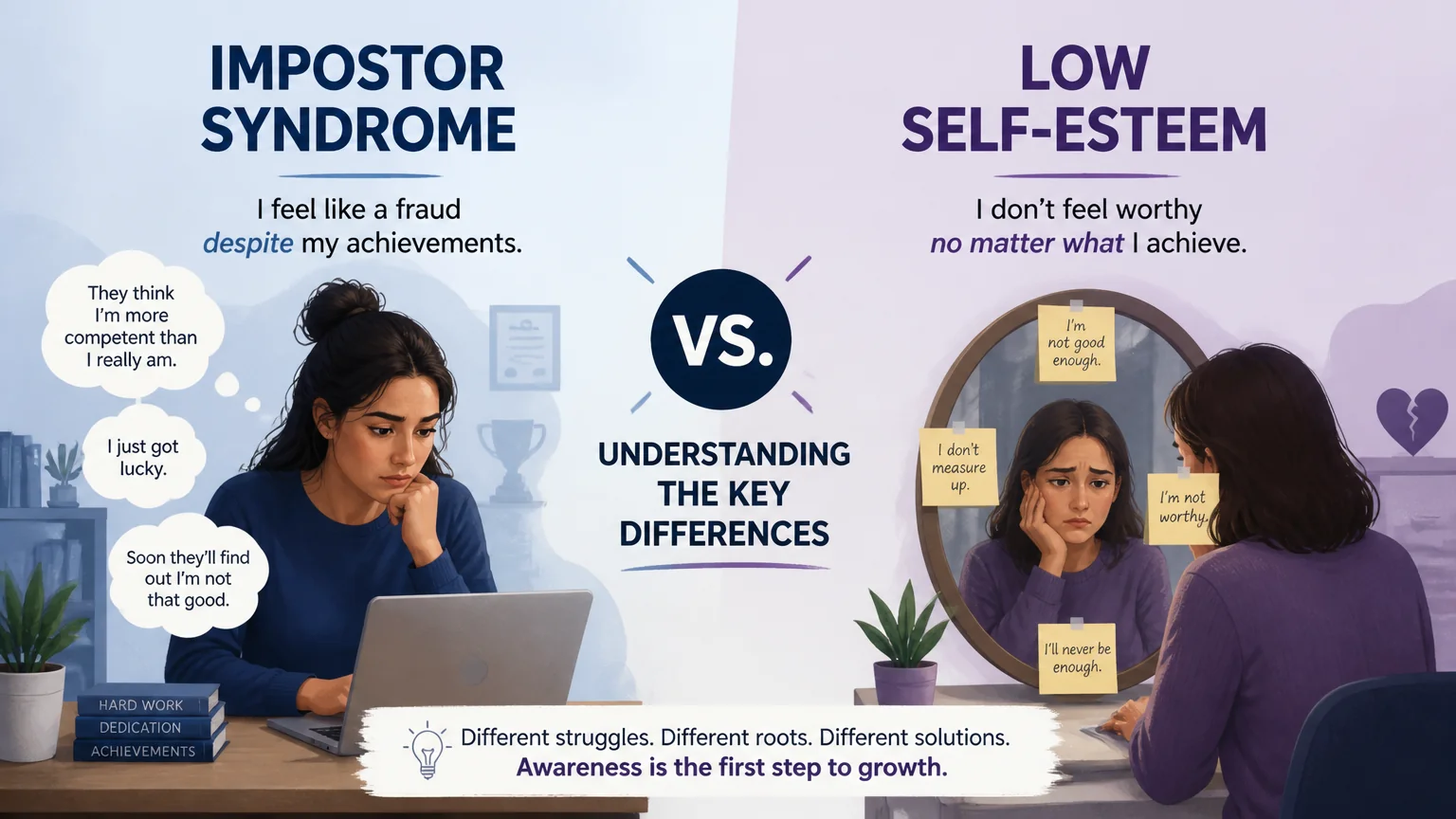
Impostor syndrome is not a formal clinical diagnosis, but rather a psychological experience in which successful people internalize a persistent belief that they are a fraud. Despite objective evidence of their achievements, they continue to feel that they are not competent enough and that sooner or later they will be discovered as an "impostor."
Key characteristics of impostor syndrome:
- Fear of being exposed: A constant anxiety that others will discover your "true" incompetence.
- Attributing successes to external factors: Discounting your achievements as the result of luck, timing, or others' help, rather than recognizing your own talent and effort.
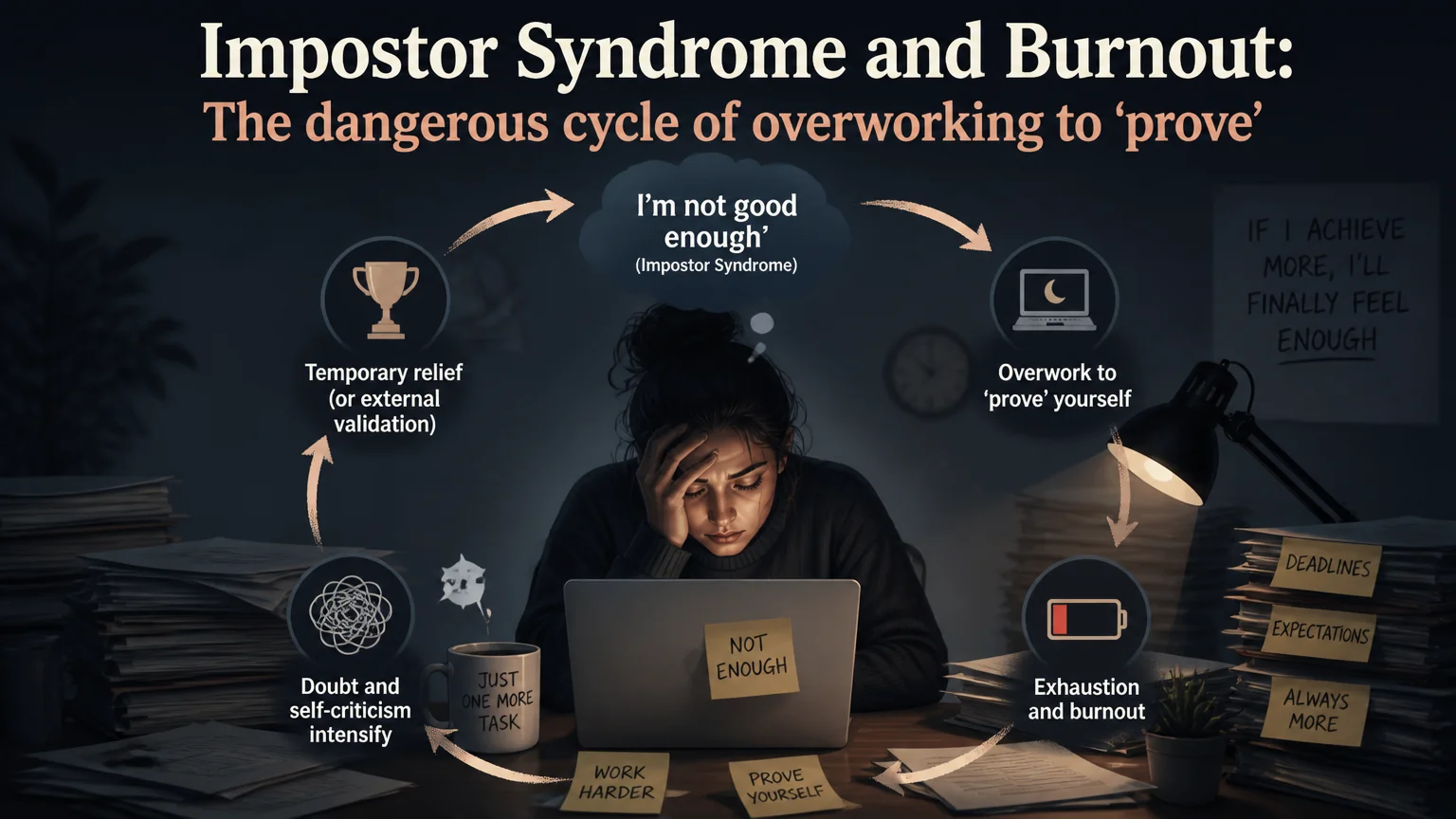
- Perfectionism and self-sabotage: Setting unrealistically high standards and often procrastinating or avoiding important tasks for fear of failure.
- Difficulty accepting praise: Minimizing or rejecting compliments, believing they are not deserved.
Low Self-Esteem: A Negative Perception of Oneself
Low self-esteem, on the other hand, is defined as a negative and persistent evaluation of your own worth. People with low self-esteem tend to have a negative self-image, doubt their abilities, and feel unworthy of love and respect.
Key characteristics of low self-esteem:
- Constant self-criticism: A negative and self-critical inner dialogue that undermines confidence.
- Difficulty setting boundaries: Giving in to others' needs at the expense of your own.
- Feelings of inferiority: Comparing yourself negatively to others and feeling less valuable.
- Fear of rejection: Avoiding social situations for fear of being judged or rejected.
Impostor Syndrome vs. Low Self-Esteem: What Are the Crucial Differences?
While both concepts are related and can coexist, there are important differences:
- Focus: Impostor syndrome centers on the perception of competence, while low self-esteem centers on personal worth. A person with impostor syndrome may feel competent but not believe they deserve success. Someone with low self-esteem, on the other hand, may doubt their worth as a person regardless of their achievements.
- Scope: Impostor syndrome is often tied to performance in specific areas (work, studies, etc.), while low self-esteem is a generalized perception of oneself.
- Impact on behavior: Impostor syndrome can lead to perfectionism and procrastination, while low self-esteem can lead to isolation and avoidance.
A clear example: A person can be a brilliant surgeon (objective evidence of competence) but suffer from impostor syndrome, thinking they are not really that good and that sooner or later they will make a fatal mistake. Another person may be incredibly talented in music but have low self-esteem and believe they are not worthy of having a successful career in that field.
How to Overcome Impostor Syndrome and Low Self-Esteem? Effective Strategies
The good news is that both impostor syndrome and low self-esteem can be overcome. Here are some effective strategies:
Strategies to Overcome Impostor Syndrome:
- Acknowledge your achievements: Keep a record of your successes, no matter how small, and give yourself credit for them.
- Question your negative thoughts: Identify the thinking patterns that feed impostor syndrome and challenge them with objective evidence.
- Share your feelings: Talk with friends, family, or a therapist about your fears and insecurities. You may be surprised to find you are not alone.
- Accept imperfection: No one is perfect. Allow yourself to make mistakes and learn from them.
- Celebrate your strengths: Focus on your strong points and what makes you unique.
Strategies to Improve Self-Esteem:
- Practice self-compassion: Treat yourself with the same kindness and understanding you would offer a friend.
- Identify your strengths and values: Reflect on your positive qualities and what matters to you.
- Set realistic goals: Define achievable objectives that allow you to experience success and boost your confidence.
- Take care of your physical and emotional well-being: Get enough sleep, eat healthily, exercise, and spend time on activities you enjoy.
- Seek professional support: A therapist can help you identify and address the underlying causes of low self-esteem.
When to Seek Professional Help
If impostor syndrome or low self-esteem are significantly affecting your personal or professional life, it is important to seek professional help. A therapist can provide you with the tools and support necessary to overcome these challenges and build greater confidence and well-being.
 For Onlinecourses55
|
2026-02-21
For Onlinecourses55
|
2026-02-21