Impostor syndrome in programmers: why you feel you don't 'code' well enough - syndrome impostor
As a programmer, battling self-doubt can hinder your progress. Consider participating in a course dedicated to overcoming impostor sentiments that will empower you to recognize your skills and accomplishments.
Have you ever felt that, despite your achievements as a programmer, you are a fraud? That at any moment someone will discover that you are not as good as you appear to be? If so, you are likely experiencing impostor syndrome. This psychological phenomenon affects many professionals, but it is particularly common among programmers.
What Is Impostor Syndrome and How Does It Affect Programmers?
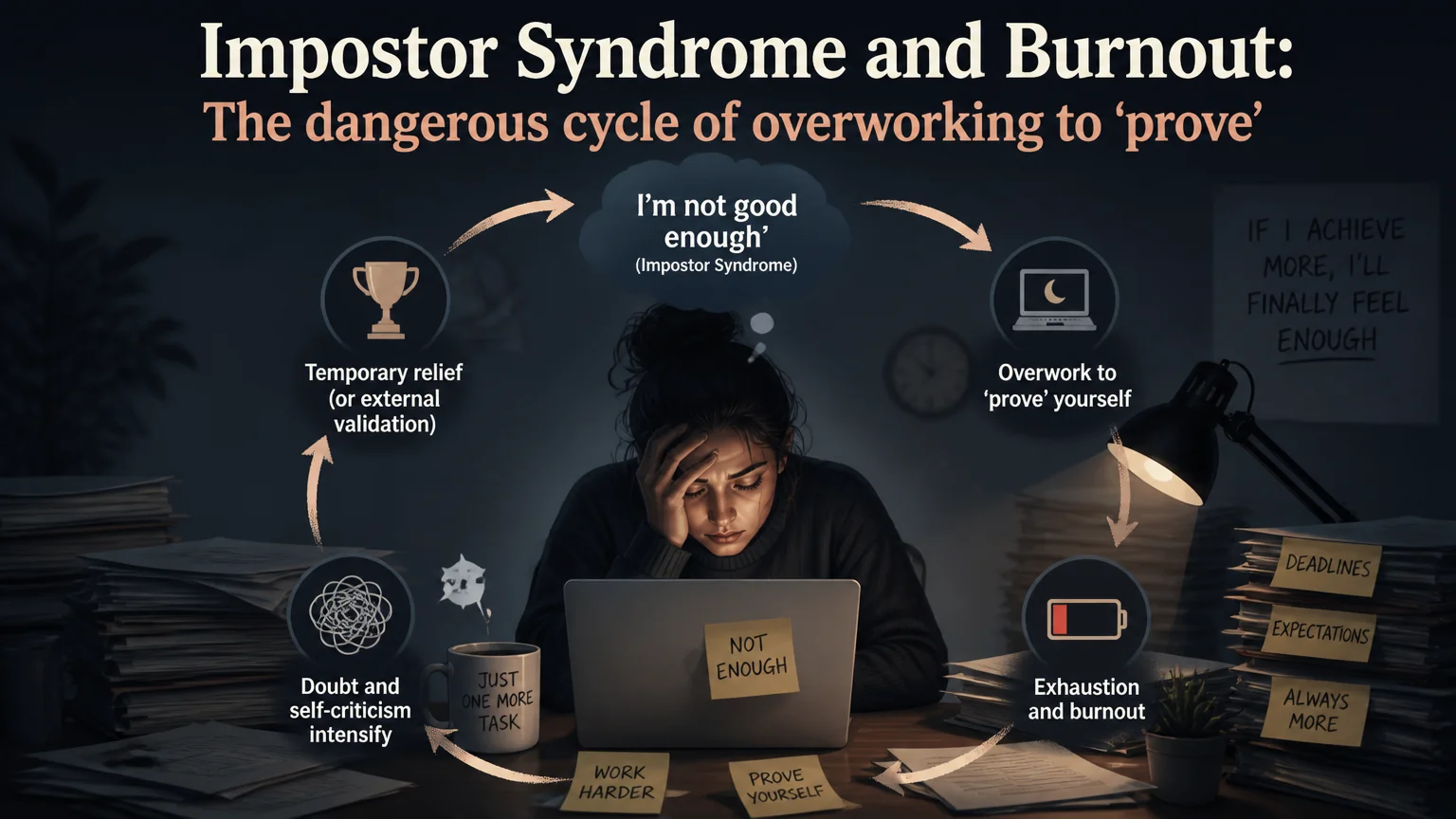
Impostor syndrome is defined as the persistent doubt about one's own abilities and achievements, accompanied by the fear of being exposed as a fraud, despite objective evidence to the contrary. In the context of programming, this manifests in:
- Feeling of inadequacy: Despite completing projects successfully, you feel you don't "know how to code" well enough.
- External attribution of success: Achievements are attributed to luck, help from others, or chance, rather than to one's own skills.
- Fear of failure: You avoid taking on new challenges for fear of not being up to the task.
- Perfectionism: You demand an unattainable level of perfection, which generates frustration and anxiety.
- Constant comparison with others: You compare your own progress with that of other programmers, feeling inferior if you don't reach their levels.
The nature of programming, with its constant evolution and the need to learn new technologies, contributes to this feeling. There is always something new to learn, and it is easy to feel overwhelmed and think you are not up to date.
The Roots of Impostor Syndrome in Software Development
There are various reasons why impostor syndrome is so prevalent in the developer community:
- The nature of the work: Programming is inherently complex and challenging. There will always be problems we don't know how to solve, and that can create insecurity.
- The competitive environment: The software industry is highly competitive. Programmers are constantly evaluated and compared to one another.
- The 'hacker' culture: The figure of the genius programmer who can solve any problem is often glorified. This can lead others to feel less capable.
- Rapid technological change: The tech field is constantly evolving. What you learn today may be obsolete tomorrow. This creates constant pressure to stay updated.
- Online communities and social media: Although they are valuable for learning and collaborating, social media can foster social comparison and highlight only successes, creating a distorted view of reality.
Negative Consequences of Impostor Syndrome
Impostor syndrome can have a significant impact on a programmer's professional and personal life:
- Decreased self-confidence: Belief in one's own skills and abilities is weakened.
- Increased anxiety and stress: The constant fear of being discovered as a fraud generates anxiety and stress.
- Burnout: The pressure to constantly prove your worth can lead to professional exhaustion.
- Procrastination: Important tasks are put off for fear of not being able to complete them satisfactorily.
- Missed opportunities: You avoid taking on new challenges that could advance your career.
Strategies to Overcome Impostor Syndrome in Programming
Fortunately, there are effective strategies to combat impostor syndrome and build greater self-confidence:
- Acknowledge your feelings: The first step is to identify and admit that you are experiencing impostor syndrome.
- Challenge your negative thoughts: Ask yourself if your thoughts are realistic and if there is objective evidence to support them.
- Celebrate your achievements: Recognize and value your successes, no matter how small. Keep a record of your accomplishments to remind yourself of your abilities.
- Accept imperfection: No one is perfect. Learn to accept your mistakes as opportunities to learn and grow.
- Seek positive feedback: Ask for feedback from trusted colleagues and mentors.
- Share your feelings with others: Talking with other people who experience impostor syndrome can help you feel less alone and gain different perspectives.
- Focus on your progress, not perfection: Instead of comparing yourself to others, focus on your own progress and how far you've come.
- Learn to say "no": Don't overload yourself with work for fear of disappointing others. Learn to set healthy boundaries.
- Invest in your professional development: Keep learning and acquiring new skills. This will increase your confidence and help you feel more competent.
- Seek professional help: If impostor syndrome is significantly affecting your life, consider seeking the help of a therapist or counselor.
 For Onlinecourses55
|
2026-03-08
For Onlinecourses55
|
2026-03-08