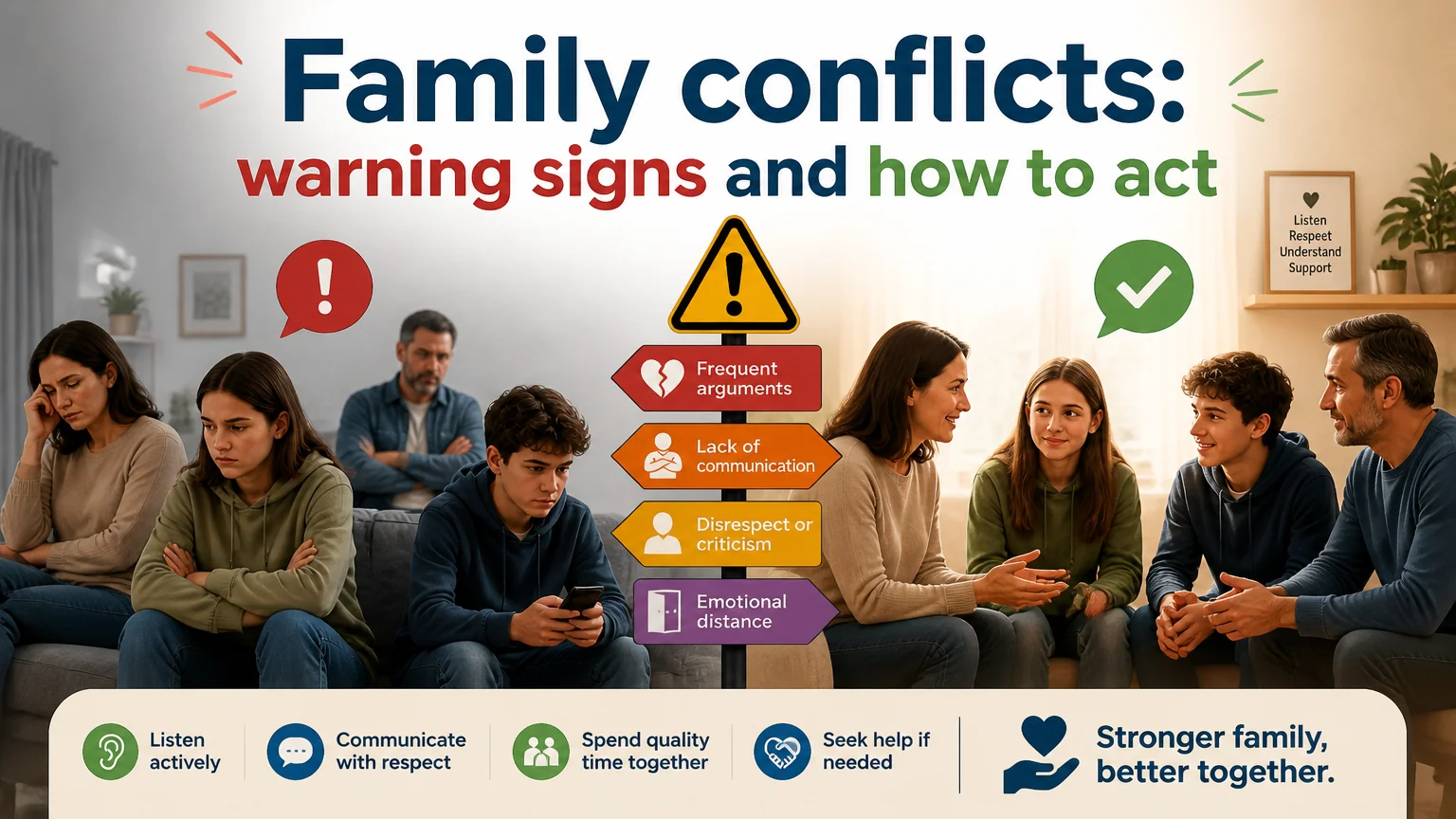
Creating compassionate bonds among family members requires effort and intentionality; consider participating in an insightful course on resolving family disagreements to strengthen those connections and foster understanding.
Creating a home where everyone feels heard, respected, and loved requires daily intention. It’s not about avoiding every argument, but about building habits that strengthen the bond and allow you to handle friction with care. Below you’ll find a practical roadmap to cultivate healthy relationships, prevent unnecessary tensions, and resolve disagreements without damaging trust. These are simple, applicable ideas grounded in common sense: clear communication, kind boundaries, quality time, and a compassionate view toward each member’s needs.
Understanding bonds and the factors that protect the family
Families are strengthened when there is a combination of belonging, shared purpose, and emotional safety. It’s not necessary to think the same about everything; what matters is that there are spaces to talk, predictable rules, and a network of mutual care. The following foundations work like “lightning rods” against conflicts and everyday stress.
- Trust: keep small and large promises, and make amends when we fail.
- Consistency: what is said and what is done point in the same direction.
- Flexibility: adapt routines and expectations according to stages and contexts.
- Recognition: see and name the efforts, not just the results.
- Mutual support: take turns carrying the load, ask for help, and offer it without reproach.
Communication that brings us closer: from judgment to curiosity
Speaking better isn’t speaking more, but listening with interest and expressing needs concretely. Connecting communication reduces misunderstandings and lowers the volume on conflict. The goal isn’t to win arguments; it’s to understand and be understood.
Active listening in practice
- Stop what you’re doing, look at the person, and validate with gestures or brief responses.
- Paraphrase: “What worries you is… is that right?”
- Ask open-ended questions: “What would you need from me right now?”
- Avoid interrupting with premature advice; first understand, then propose.
Language that de-escalates tensions
- Speak in the first person: “I feel… when … happens, and I need…”.
- Describe facts, not labels: “Yesterday the dishes were left unwashed,” instead of “you’re always messy”.
- Offer viable options instead of ultimatums.
- Use pauses: if the tone rises, agree to take a breather and resume in 20 minutes.
Prevent conflicts before they start
Many frictions arise from unclear expectations, lack of agreements, or accumulated fatigue. Prevention is simpler than repair. Put basic household rules in writing so no one has to guess them, thereby reducing reproach.
- Clarify roles: who does what, when, and with what resources.
- Anticipate changes: new schedules, visitors, exams, work shifts.
- Design routines that remove friction: morning and evening checklists, a spot for backpacks and keys.
- Early signals: agree on cues to pause before escalating (a keyword or a gesture).
- Plan rest and leisure: constant fatigue is fuel for arguments.
Resolve disagreements without damaging the relationship
Well-managed conflict strengthens. The key is to move from positional debate to exploration of interests: what does each person need, and what solution could protect both? Avoid “all or nothing”; look for partial and temporary arrangements, and review their effectiveness.
Four-step method
- Describe the fact: concrete, without adjectives.
- Express the emotion: name it without dramatizing or minimizing.
- Connect to the need: rest, order, support, autonomy, recognition.
- Propose something specific and negotiable: “Shall we try this for a week and assess?”
Repair and closure
After the conversation, seal the agreement and acknowledge the mutual effort. If there was emotional harm, offer meaningful repair: a clear apology, a gesture of kindness, or temporarily taking on a task that eases the other person’s load. Documenting agreements helps sustain them.
Limits and rules that care without controlling
Limits are not punishments; they are safety frameworks. They work when they are few, clear, consistent, and applied calmly. Consequences should be related, proportional, and predictable, not impulsive.
- Explain the “why” behind each rule.
- Model what you ask for: respect, punctuality, order.
- Avoid power struggles; offer choices within a safe framework.
- Review rules from time to time according to age and family reality.
Monthly family meeting
- Agenda: what’s going well, what’s hard, proposals and agreements.
- Round of specific appreciations.
- One change per person to try for 2-4 weeks.
- Celebrate progress, adjust without blame.
Rituals and quality time that sustain the bond
Rituals create identity and belonging. They don’t have to be long or expensive; it’s enough that they are predictable and meaningful. They are anchors of calm on hectic days.
- Greeting and farewell ritual: hug, phrase, or high-five.
- Shared meals without screens several times a week.
- Game night or a short outing on weekends.
- Shared reading or a 10-minute chat before bed.
Daily micro-moments
- Eye contact and a smile when you see each other again.
- Acknowledge an effort from the day.
- Powerful question: “What made you happy today?”
Emotional education for all ages
Learning to name and regulate emotions reduces blowups and harmful silences. Validation isn’t approval of behaviors; it’s an acknowledgment of what is felt in order to act better.
- Name internal states: “It seems like you’re frustrated”.
- Validate: “It makes sense that you feel that way”.
- Co-regulate: breathe together, lower the tone, offer water and a pause.
- Resolve: when the emotion subsides, talk and agree on steps.
Calm toolbox
- Visible list of strategies: breathing, walking, showering, writing, music.
- Regulating objects: stress ball, blanket, notebook, pencils.
- A quiet corner agreed upon by everyone.
Technology, money, and chores: typical flashpoints
Recurring arguments often center on screens, finances, and division of labor. Anticipating clear agreements prevents reproach and inequities.
Screens and devices
- Visible rules: schedules, screen-free zones, and consequences.
- “Family mode”: don’t compare, be alongside, and model digital self-control.
- Attractive replacements: games, sports, reading, creative projects.
Household finances
- Simple budget with categories and caps.
- Transparency: shared expenses and relevant decisions are discussed.
- Common goals: emergency fund and motivating targets.
Division of chores
- Complete list of visible and invisible tasks.
- Assignment by skills and schedules, with periodic rotation.
- Avoid “helping”; talk about co-responsibility.
Facing changes and crises with cohesion
In transitions and life’s blows, the priority is to sustain connection. Less perfection, more presence. Adjust expectations, seek external support, and keep minimal rituals to provide stability.
- Moves or new jobs: frequent communication and essential routines.
- Grief and loss: permission to feel, different paces, and accompaniment.
- Adolescence: more autonomy with clear limits and open doors to dialogue.
- Illness or caregiving: fair distribution, shifts, and caregiver rest.
When to seek professional help
- Frequent escalation of yelling, insults, or prolonged silence.
- Fear of speaking due to unpredictable reactions.
- Problematic substance use, violence, or signs of severe depression/anxiety.
- Repeated conflicts that don’t improve despite sustained efforts.
30-day action plan
Small consistent steps beat big one-off intentions. Choose the essentials and assess each week.
- Week 1: define 3 key rules, create a chore list, and a daily ritual.
- Week 2: practice active listening in one conversation a day and document agreements.
- Week 3: implement the calm toolbox and a screen-free meal every other day.
- Week 4: family meeting, review of progress, and adjustment of commitments.
Strengthening family bonds is a process, not a destination. There will be rough days and necessary repairs. What’s decisive is maintaining a learning attitude, recognizing what does work, and adjusting with patience. With simple habits, affectionate presence, and clear agreements, living together becomes kinder and conflicts stop being battlefields to become opportunities for understanding and shared growth.
 For Onlinecourses55
|
2026-02-21
For Onlinecourses55
|
2026-02-21