For Onlinecourses55
|
2026-01-13
For Onlinecourses55
|
2026-01-13

The origin of impostor syndrome: are you born with it or does it develop? - syndrome impostor
Unpacking the roots of impostor syndrome can help you understand and heal. Engage in a course that explores these underlying factors and allows you to reclaim your self-worth.
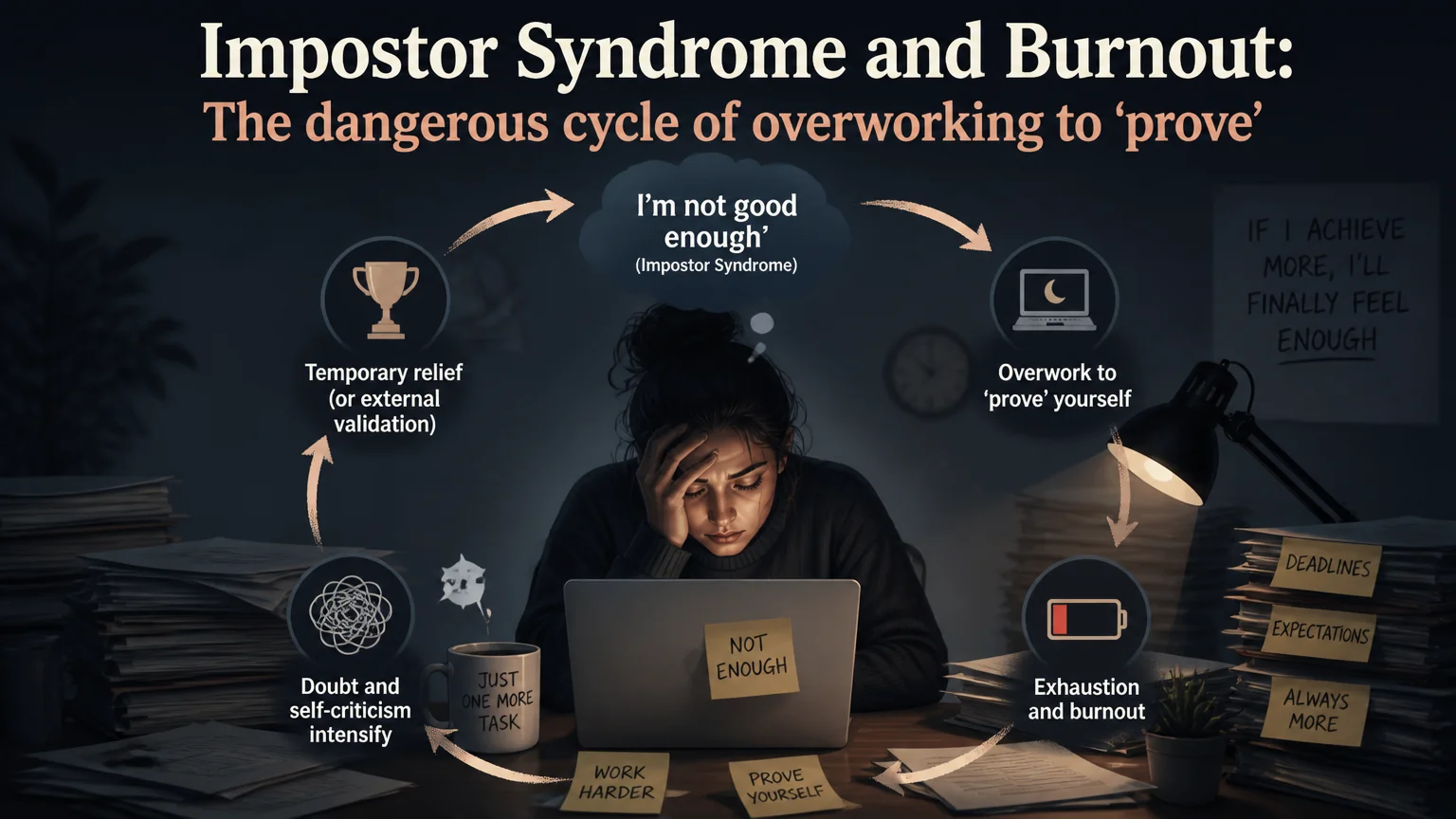
Impostor syndrome, that persistent feeling of being a fraud despite clear evidence of success, affects people from all backgrounds and socioeconomic levels. But, where does that little inner voice that whispers that we are not good enough come from? Is it something we are born with, a genetic predisposition, or is it a learned phenomenon, shaped by our experiences and the environment around us? In this article, we will explore the possible roots of this complex psychological problem, examining both innate and acquired theories.
Before delving into possible causes, it is crucial to understand what *is not* impostor syndrome. It is not simply having occasional doubts about our abilities; we all experience them at some point. Impostor syndrome is characterized by a deep and persistent belief that one is a fraud, regardless of objective achievements. People who suffer from it often attribute their success to luck, being in the right place at the right time, or the ability to fool others, instead of recognizing their own skills and effort. This constant denial of one’s own merit leads to significant anxiety and a paralyzing fear of being discovered as a "fraud".
The idea that impostor syndrome may have a genetic component is, to date, purely speculative. There are no conclusive studies demonstrating a direct connection between specific genes and the propensity to experience this syndrome. However, it is important to consider that certain personality traits, such as neuroticism (the tendency to experience negative emotions like anxiety, fear, sadness, or frustration) or perfectionism, may indeed have a genetic influence. These traits, in turn, can increase vulnerability to impostor syndrome. In other words, while the syndrome itself is not inherited, one might inherit a greater predisposition to develop certain patterns of thought and behavior that contribute to its onset. Research in this field is ongoing, and it is possible that in the future genetic factors that indirectly influence the development of this syndrome will be identified.
Most experts agree that impostor syndrome is, fundamentally, a learned phenomenon. Our experiences, especially during childhood and adolescence, play a crucial role in shaping our self-image and our perception of our abilities. Here we explore some environmental factors that can contribute to the development of the syndrome:
Self-efficacy, the belief in one’s ability to achieve goals, and self-esteem, the value we give ourselves, are two fundamental pillars of mental health. A low level of self-efficacy and/or self-esteem significantly increases vulnerability to impostor syndrome. When we do not trust our abilities or do not value ourselves enough, we are more likely to attribute our successes to external factors and to feel like a fraud. Working to strengthen these two aspects is crucial to overcoming impostor syndrome.
Fortunately, impostor syndrome is not a life sentence. With awareness, self-compassion, and appropriate strategies, it is possible to challenge those negative thought patterns and build a more realistic and positive self-image. Some effective strategies include:
Search
Popular searches