What is impostor syndrome? the complete guide to understanding why you doubt yourself - syndrome impostor
Everyone can experience feelings of fraudulence. Take a step towards overcoming this challenge by enrolling in a course designed to address impostor syndrome and help you celebrate your true accomplishments.
Have you ever felt that your achievements are the result of luck and not your ability? Are you worried that at any moment someone will discover that you are not as good as you seem? If so, you might be experiencing impostor syndrome. This psychological phenomenon, which affects people from all walks of life, can be debilitating if not addressed properly. In this comprehensive guide, we will explore in depth what impostor syndrome is, its causes, symptoms and, most importantly, how to overcome it so you can finally recognize and celebrate your true accomplishments.
What Exactly Is Impostor Syndrome? Definition and Key Characteristics
Impostor syndrome is not a mental illness, but a pattern of thinking in which a person doubts their abilities, talents, or achievements, and has a persistent fear of being exposed as a fraud. Despite objective evidence of their competence, people with this syndrome attribute their success to external factors such as luck, timing, or even deceiving others into thinking they are more intelligent than they really are.
This phenomenon was first identified in 1978 by psychologists Pauline Rose Clance and Suzanne Imes, who observed that many successful women secretly believed they were not intelligent and had fooled everyone into thinking they were. Although it was initially thought to primarily affect women, later research has shown that impostor syndrome affects people of all genders, ages, and from diverse cultures and professions.
Key Characteristics of Impostor Syndrome:
- Persistent Doubt About One's Abilities: Even in the face of evidence of success, the person continues to believe they are not good enough.
- Attributing Success to External Factors: Instead of acknowledging their own talent and effort, they attribute success to luck, help from others, or fooling others.
- Fear of Being Discovered as a Fraud: A constant anxiety and fear that someone will uncover the supposed incompetence.
- Perfectionism: An unreasonable desire to achieve perfection, which leads to frustration and feelings of failure when not achieved.
- Procrastination: Delaying important tasks for fear of not doing them well and being judged.
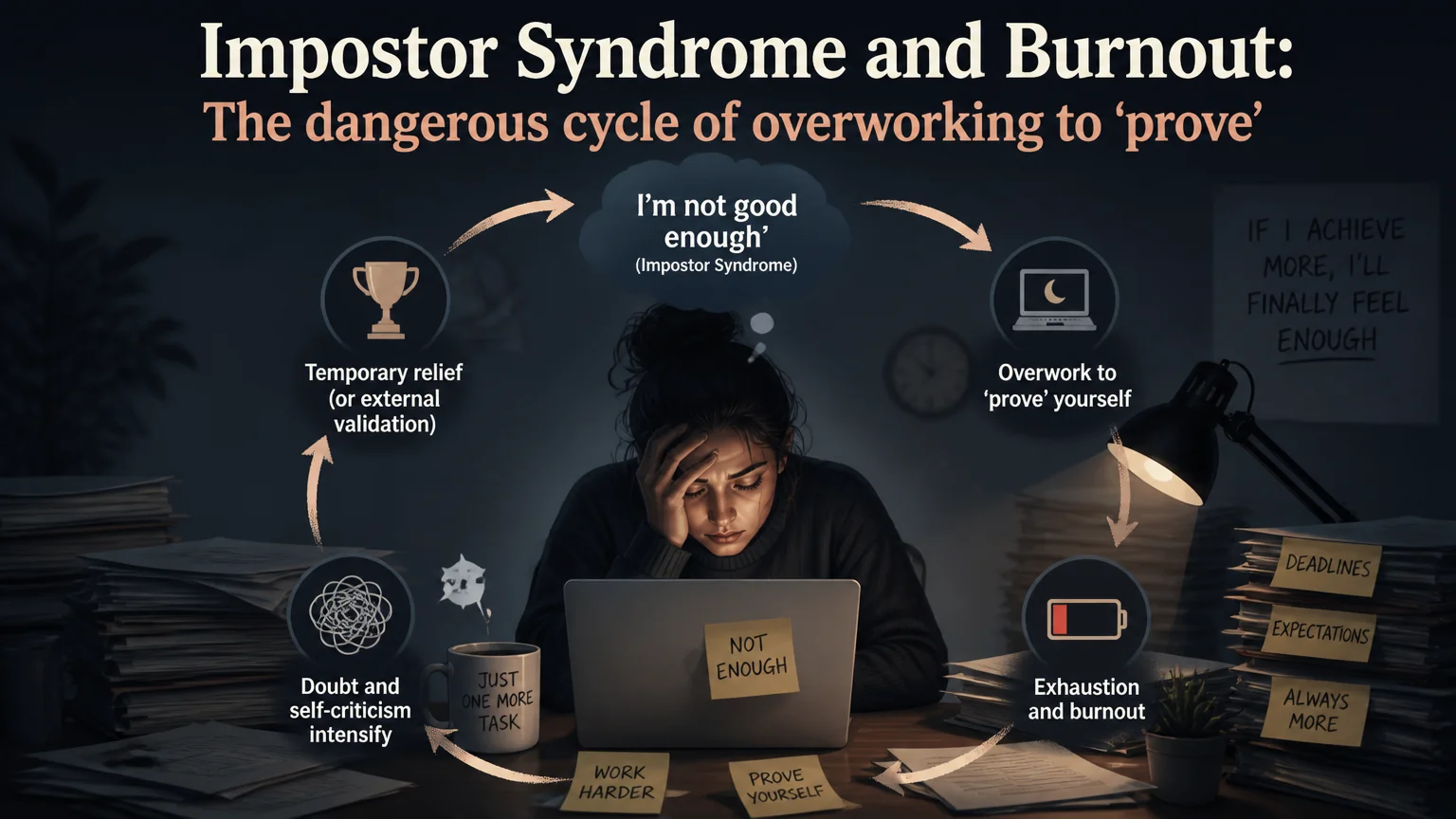
- Overexertion: Working excessively to compensate for the feeling of not being good enough, which can lead to burnout.
Underlying Causes of Impostor Syndrome: Why Do We Feel This Way?
There is no single cause for impostor syndrome, but rather a combination of personal, social and cultural factors that contribute to this pattern of thinking. Understanding these causes can be an important first step toward overcoming this feeling.
- Family Dynamics: Growing up in an environment where performance is highly valued or where achievements are constantly compared with those of siblings or relatives can contribute to impostor syndrome. Receiving contradictory messages about one's abilities can also influence it.
- Early Experiences: Experiences of failure, severe criticism, or even excessive praise can generate doubts about one's worth and ability.
- Social Pressure: The pressure to fit into certain roles or stereotypes, especially in professions dominated by a specific group (gender, ethnicity, etc.), can increase the feeling of being an impostor.
- Organizational Culture: A competitive work environment, where constant comparison is encouraged and mistakes are punished, can feed impostor syndrome.
- Low Self-Esteem: A low valuation of oneself and a lack of confidence in one's abilities predispose a person to doubt their achievements and fear being discovered as a fraud.
Identifying Symptoms of Impostor Syndrome: Do You Recognize Yourself Here?
Recognizing the symptoms of impostor syndrome is essential to address it effectively. Here are some warning signs that may indicate you are experiencing this phenomenon:
- Downplaying One's Own Achievements: Attributing success to luck, help from others, or external factors, instead of acknowledging one's own talent and effort.
- Constant Fear of Being Found Out: Feeling a constant anxiety that someone will discover the supposed incompetence.
- Paralyzing Perfectionism: Setting unreasonably high standards and feeling frustrated when they are not met, leading to procrastination or burnout.
- Fear of Failure: Avoiding challenges or opportunities for fear of not measuring up and being judged.
- Excessive Overexertion: Working excessively to compensate for the feeling of not being good enough, which can lead to burnout and chronic stress.
- Difficulty Accepting Praise: Feeling uncomfortable or distrustful when receiving compliments, thinking they are undeserved or that the person is being condescending.
- Severe Self-Criticism: Being overly critical of oneself and focusing on mistakes instead of recognizing achievements.
Effective Strategies to Overcome Impostor Syndrome: Reclaim Your Confidence
Fortunately, impostor syndrome is not a permanent condition. With awareness and effort, you can develop effective strategies to overcome this pattern of thinking and reclaim confidence in your abilities.
- Recognize and Accept Your Feelings: The first step is to become aware that you are experiencing impostor syndrome and accept that it is a common and valid feeling. Don't judge yourself for feeling this way.
- Identify Your Distorted Thoughts: Pay attention to the negative and self-critical thoughts that arise in your mind. Are they really objective or are they based on fear and insecurity?
- Challenge Your Negative Thoughts: Once you have identified your distorted thoughts, challenge them with objective evidence. Remember your past achievements, your skills and your strengths. Ask yourself: "Is there another way to view this situation?"
- Celebrate Your Achievements: Take time to celebrate your successes, no matter how small. Acknowledge your effort and your talent. Don't minimize them or attribute them to luck.
- Learn to Accept Imperfection: Nobody is perfect. Accept that making mistakes is part of the learning and growth process. Don't punish yourself for mistakes; use them as opportunities to improve.
- Ask for Help: Talk to a friend, family member, mentor, or therapist about your feelings. Sharing your experiences can help you feel less alone and gain support and perspective.
- Focus on the Process, Not the Outcome: Enjoy the process of learning and growing, rather than obsessing over the final result. Concentrate on doing your best and learning from your experiences.
- Remember Your Purpose: Connect with your passion and your purpose. When you focus on what matters to you, it's easier to overcome doubts and insecurity.
- Visualize Success: Imagine yourself succeeding in your goals. Visualize how you will feel when you achieve your objectives. This can help boost your confidence and reduce fear of failure.
Impostor Syndrome in the Workplace: How It Affects Your Career and Well-being
Impostor syndrome can have a significant impact on your career and well-being in the workplace. It can lead you to:
- Avoid Opportunities: Turning down promotions, challenging projects, or new responsibilities for fear of not being up to the task.
- Limit Your Professional Growth: Not seeking new skills or knowledge for fear of not being able to master them.
- Suffer from Stress and Anxiety: Feeling constant pressure to prove your worth and a persistent fear of being discovered as a fraud.
- Experience Burnout: Working excessively to compensate for the feeling of not being good enough.
- Have Difficulty Negotiating Salaries: Feeling that you don't deserve a raise or a better position, which prevents you from advocating for your rights and your value.
It is crucial to address impostor syndrome in the workplace to protect your well-being and reach your full potential. Implement the strategies mentioned above and seek the support of a mentor or therapist if necessary.
 For Onlinecourses55
|
2026-01-13
For Onlinecourses55
|
2026-01-13