For Onlinecourses55
|
2026-10-20
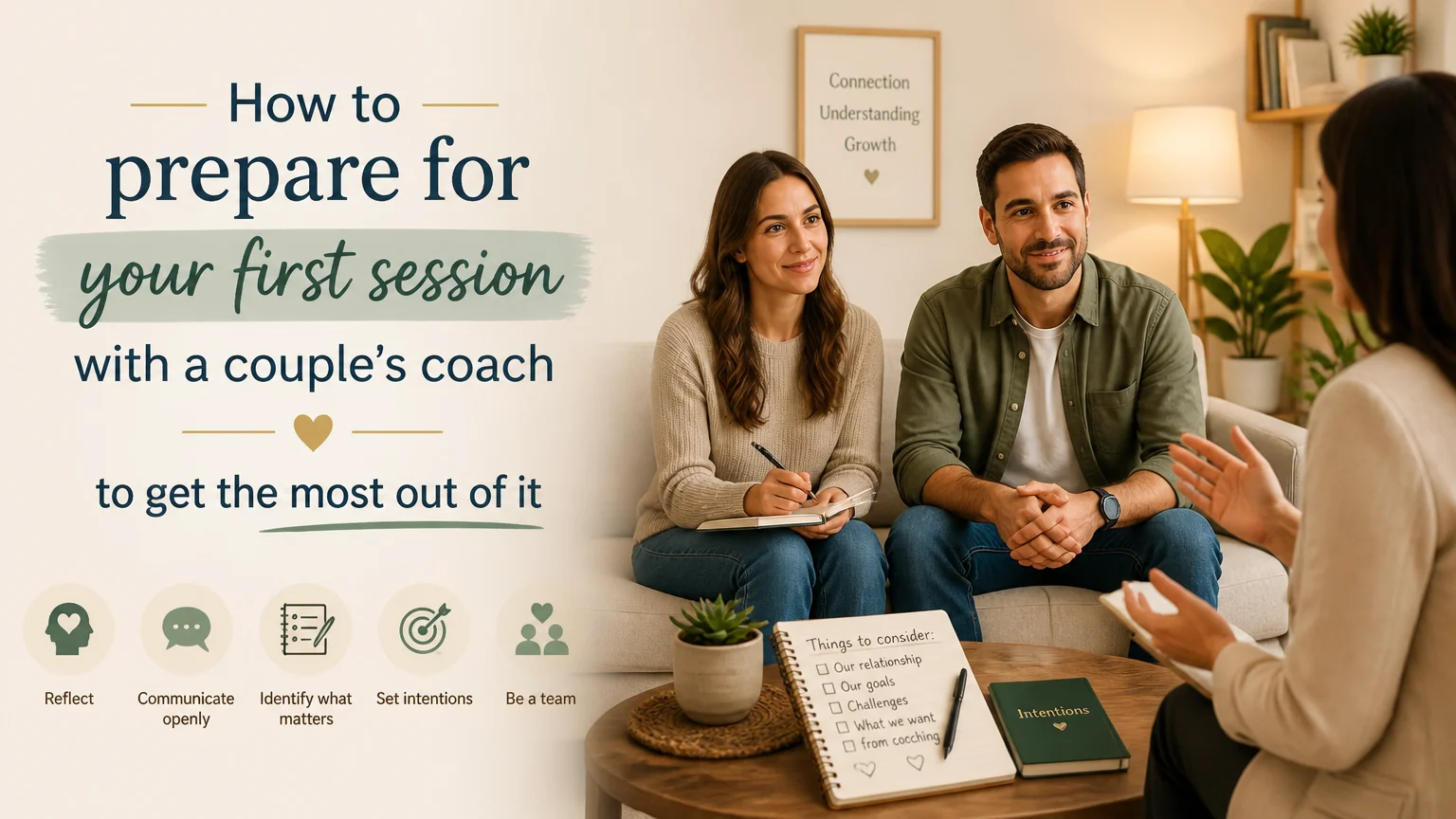
How to prepare for your first session with a couple's coach to get the most out of it - couples coach
Prepare yourself for a productive first coaching session by clarifying your motives and expectations. Recording your concerns and desires can maximize the session's potential. Learn how a thoughtfully structured approach can lead to enhanced personal connections and mutual understanding.
Before the first meeting, it is a good idea to spend some time thinking about why you have decided to seek accompaniment. It is not a matter of writing a perfect report, but of identifying the main concerns, recurring patterns and shared desires. Writing down concrete examples of recent situations helps to make the conversation more productive and prevents it from becoming generalized.
Coordinating practicalities before the session makes it easier to focus on the emotional dynamics. Be sure to confirm the time, format (face-to-face or online), duration and cancellation policy. It is also helpful to decide if each will speak alone at the beginning or if the couple will stay together for the entire session.
The first session is not a test nor does it force immediate decisions. The most useful attitude is one of curiosity and openness. Arriving with a predisposition to listen, to explain one's point of view without attacking and to recognize personal limits helps the coach to establish a solid basis for working together.
A first appointment usually combines assessment, goal setting and initial agreements. The coach will listen to both sides, ask questions to understand the dynamics, and propose a work plan or experiments to implement. Not all processes are the same, but it is normal that at the end there is a clear proposal for next steps.
Bringing some thoughtful questions can help make the best use of the time. These questions also show interest and commitment to the process. You can choose a few for each other or share them as a pair.
It is common for strong emotions to surface when starting to talk about sensitive issues. It is important to agree with the coach on strategies to regulate oneself if one feels overwhelmed: pauses, guided breathing, setting a time-out or using a signal to ask for calm. A good professional will help emotions to be expressed in a way that can be processed constructively.
At the end of the session, it is advisable to define small and concrete tasks that allow the application of what has been worked on. The tasks should not be punishments, but experiments that generate information about new ways of relating. Keeping a brief record of what works and what doesn't helps the coach to adjust the plan in subsequent sessions.
The first session is also a good time to check the fit with the professional. It is reasonable to assess whether the coach shows respect, neutrality and practical competence. Trust is built, but there are clear warning signs: judgments, imposition of rigid solutions or lack of listening. If there is no professional chemistry, it is valid to look for another option.
Going into the first session with preparation, honesty and a willingness to experiment maximizes the benefit. It is not necessary to have all the answers: the process is about learning together, practicing and adjusting. Maintaining an attitude of curiosity, agreeing on small concrete actions and regularly evaluating progress consolidate change. If both are committed with consistency and openness, the experience can be the first step in transforming the relationship in a sustainable way.
Search
Popular searches