For Onlinecourses55
|
2026-11-12
Risks of a vegan diet
If you're intrigued by the vegan lifestyle but concerned about its challenges, joining an informative online course in vegan nutrition can help you navigate this journey smoothly.
Hello! Have you ever considered going vegan? It’s a decision that is gaining popularity, and for good reasons! But like everything in life, it has its good side and its... not-so-good side. In this article, we are going to dive into the risks of the vegan diet so you can make an informed decision. Ready? Let's go!
A vegan diet is much more than simply not eating meat. It involves avoiding all animal products, including meat, fish, dairy, eggs, and honey. Basically, you eat exclusively plants: fruits, vegetables, legumes, grains, nuts, and seeds.
It's not all negative! A well-planned vegan diet can offer benefits such as a reduced risk of heart disease, type 2 diabetes, and certain types of cancer. Furthermore, it can help maintain a healthy weight and improve digestive health. Sounds good, right?
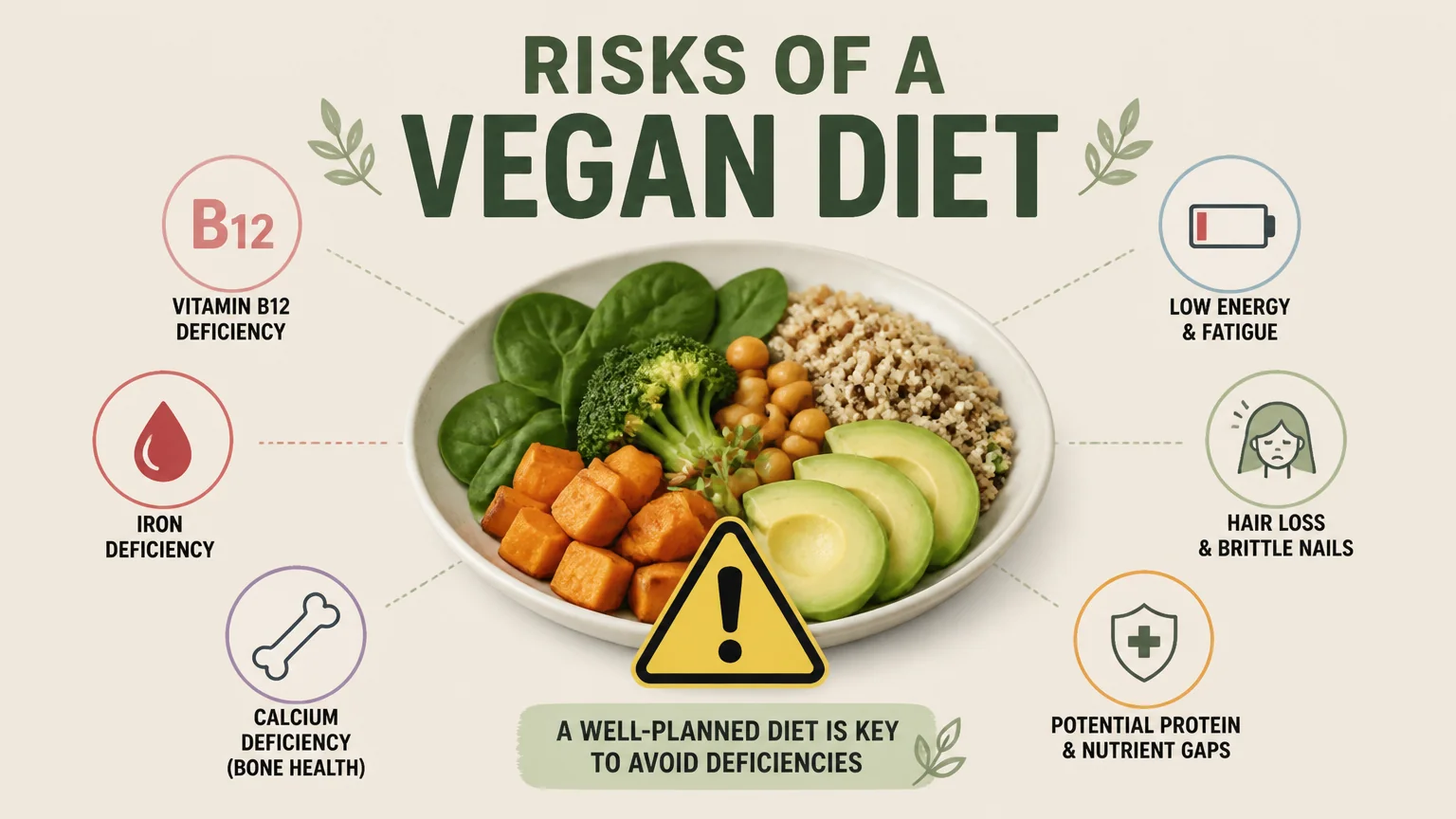
But this is where things get a bit complicated. By eliminating entire food groups, vegans can be prone to certain nutritional deficiencies.
Vitamin B12 is crucial for nerve function and red blood cell production. It is found mainly in animal products, meaning vegans must obtain it through supplements or fortified foods. Ignoring this can lead to serious neurological problems. Don't risk it!
Iron is essential for transporting oxygen in the blood. Although spinach and other leafy green vegetables contain iron, it is non-heme iron, which is less absorbable than the heme iron found in meat. Vegans should consume foods rich in Vitamin C to improve the absorption of non-heme iron.
Calcium is fundamental for bone health. Although it is found in leafy green vegetables, fortified tofu, and plant beverages, more planning is often needed to ensure adequate intake.
Omega-3 fatty acids, especially EPA and DHA, are important for brain and heart health. They are mainly found in fatty fish. Vegans can obtain ALA (a type of omega-3) from flax seeds, chia seeds, and walnuts, but the conversion to EPA and DHA in the body is limited. Consider an algae supplement to obtain EPA and DHA directly.
Some studies suggest that vegans may have slightly lower bone density than non-vegans. This is due to the difficulty in obtaining enough calcium and Vitamin D.
The vegan diet is rich in fiber, which is great for digestive health. But too much fiber too suddenly can cause bloating, gas, and stomach discomfort. Take it slowly!
Some vegans may develop intolerances to certain foods like legumes or gluten due to the high consumption of these items. Pay attention to how you feel after eating certain foods.
Vegan children can thrive, but they require careful planning to ensure they get all the nutrients they need to grow and develop properly. Consult with a pediatrician or specialized nutritionist!
Pregnant vegan women need to ensure adequate intake of iron, calcium, Vitamin B12, omega-3, and iodine. Supplementation is almost essential!
Vegan athletes can achieve excellent performance, but they need to pay attention to their intake of protein, iron, calcium, and creatine. A well-planned diet can provide the necessary energy and nutrients for training and recovery.
The key to a healthy vegan diet is planning. Use nutritional tracking apps, plan your meals, and consider supplementation to cover potential deficiencies.
Don't limit yourself to eating the same things constantly. Experiment with different fruits, vegetables, legumes, grains, and seeds to get a wide range of nutrients.
A registered nutritionist or dietitian can help you plan a balanced and safe vegan diet, tailored to your individual needs.
The vegan diet can be healthy and beneficial, but it is not without risks. With planning, knowledge, and attention to your individual needs, you can minimize these risks and enjoy the benefits of a plant-based diet. Don't jump in blindly—get informed and take care of your health!
1. Is it necessary to take supplements on a vegan diet? Yes, Vitamin B12 supplementation is essential. Other supplements like Vitamin D, omega-3, and iron may be beneficial depending on your individual needs.
2. How can I get enough protein on a vegan diet? Legumes (lentils, chickpeas, beans), tofu, tempeh, chia seeds, and nuts are excellent sources of plant protein.
3. Is the vegan diet suitable for children? Yes, but it requires careful planning and supervision by a health professional to ensure adequate nutrient intake.
4. What should I do if I experience digestive problems when starting a vegan diet? Gradually increase fiber intake, drink plenty of water, and consider trying different types of fiber to see which ones suit you best.
5. Where can I find healthy and balanced vegan recipes? There are many online resources, cookbooks, and blogs dedicated to vegan cooking. Research and experiment!
Do you prefer learning by watching and listening? Expand your knowledge with these free videos related to this topic.
Search
Popular searches