What it means for a process to be effective and how it impacts time
Effectiveness in coaching is not measured by the number of sessions, but by the clarity of the objective, the quality of the work done, and the transfer to real life. A process is effective when it produces observable and sustainable changes in behaviors, decisions, and outcomes. This directly influences time: the more concrete and measurable the objective, the easier it is to bound the duration; when goals are diffuse or multiple, the process tends to lengthen.
Additionally, effectiveness depends on the combination of reflection and action. The session space drives awareness and design; the time between sessions allows for experimenting, measuring, and adjusting. Therefore, duration is not a fixed number but a range that usually moves between a few weeks and several months, depending on context, commitment, and the type of support.
Factors that define duration
Several elements explain why a process can be shorter or longer.
- Definition of the objective: a specific, bounded goal reduces time; complex or systemic objectives require more cycles.
- Starting point: a small gap between current and desired situation accelerates progress; a large gap with entrenched habits extends it.
- Urgency and context: decision windows (promotion, role change) favor focus; volatile environments require adjustments.
- Frequency and cadence: regular sessions and tasks between sessions maintain momentum; long gaps slow it down.
- Availability and commitment: constant practice and follow-up increase speed; resistance to change reduces it.
- Type of coaching: executive, life, career, team coaching—each has different dynamics and rhythms.
- Complementary supports: 360 feedback, leader sponsorship, or learning resources accelerate consolidation.
Typical phases of work
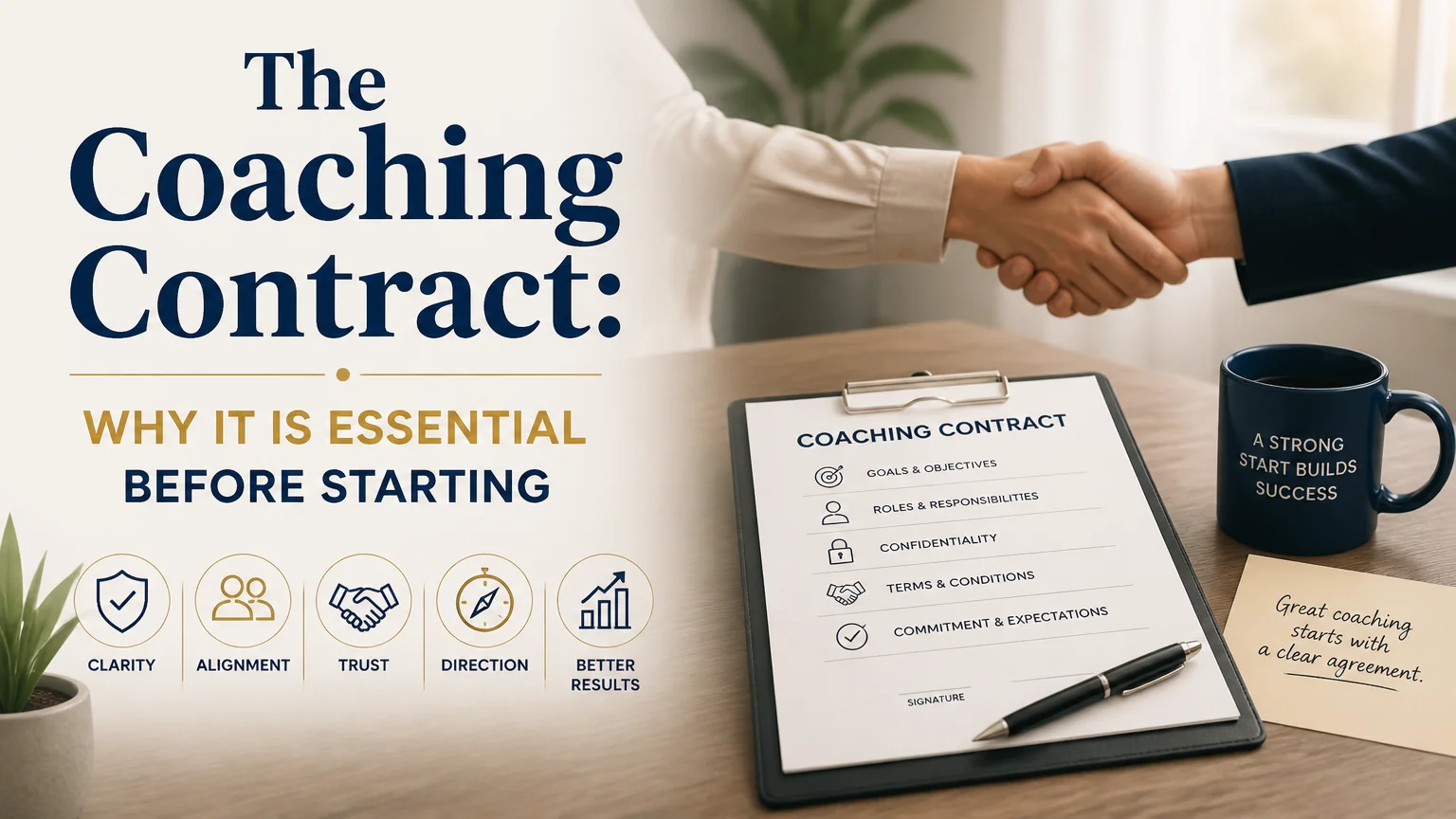
Agreement and objectives
Scope is defined, expectations and success criteria are clarified, and confidentiality rules are agreed upon. A broad desire is translated into operational and measurable objectives, with progress indicators and a time horizon.
Assessment and baseline
The current situation is explored with data: self-assessment, third-party feedback, performance review, or business metrics. The purpose is to understand patterns, strengths, and levers for change. This phase creates the comparison point to measure progress.
Plan design and initial experiments
Impact levers are selected and key habits or competencies are prioritized. Action hypotheses are formulated and small, safe experiments are agreed to generate quick evidence, adjust beliefs, and build confidence.
Session cycles and transfer
60- to 90-minute sessions alternate with practice in the field. Each cycle includes reflection, design, action, and review. The focus is on incorporating learnings into day-to-day life and sustaining them under contextual pressure.
Closure and maintenance plan
Achievement is evaluated against the indicators, critical elements that worked are identified, and a sustainment plan is agreed: rituals, reminders, support networks, and tracking metrics to avoid losing progress.
Indicative durations by type of process
- Individual focused on a concrete goal: 4 to 6 sessions over 6 to 10 weeks. Useful for decisions, difficult conversations, or milestone preparation.
- Executive with role change or leadership development: 8 to 12 sessions over 3 to 6 months. Includes work with stakeholders and business metrics.
- Development of habits or complex competencies: 10 to 16 sessions over 4 to 8 months. Requires consolidating behaviors under different conditions.
- Career transition or purpose work: 6 to 10 sessions over 3 to 5 months. Combines deep exploration with design of validation experiments.
- Teams and collective leadership: 4 to 8 team sessions over 3 to 6 months, with occasional individual meetings and climate and performance measurements.
These ranges are references, not rules. What matters is objective progress and the relevance of changes in the real context.
Cadence of sessions and work between sessions
The most effective frequency is usually biweekly. It gives time to try new behaviors, receive feedback, and integrate learnings without losing momentum. Alternate weeks also make demanding schedules easier to manage.
Between sessions, progress happens with concrete tasks: key conversations, experiments in real meetings, 10- to 15-minute reflection rituals, and evidence logging. Brief micro-contacts (follow-up messages or short check-ins) can correct deviations without lengthening the process.
Signals to adjust, pause or close
- Consistent progress on defined indicators (for example, increased delegation, timely decisions, better team results): confirms the cadence is working.
- Stagnation for two or three consecutive sessions: invites redefining the objective, changing tactics, or involving external feedback.
- Achievement of the objective earlier than expected: it is advisable to formalize closure and agree a maintenance plan instead of prolonging unnecessarily.
- Relevant context change (new boss, strategy, structure): may require a brief pause for reframing and plan adjustment.
- Confidentiality breached or loss of trust: priority is to restore the psychological framework; if not possible, close the process.
Factors that lengthen the process and how to mitigate them
- Vague objectives: translate them into observable results with indicators and intermediate deadlines.
- Overloaded agenda: reserve fixed blocks and protect them as non-negotiable appointments.
- Lack of feedback: include 2 or 3 stakeholders and ask for specific, not generic, signals.
- Dependence on the session space: design daily anchor habits that do not depend on the coach.
- Perfectionism: work with minimal viable experiments and learning metrics, not only outcome metrics.
- Unsupportive environment: identify sponsors and systemic barriers, and negotiate conditions of support.
Good practices to make the most of each phase
- Clarity from the start: SMART objectives or OKRs with verifiable key results.
- Design of experiments: small weekly actions with explicit hypotheses and success criteria.
- Mixed measurement: combine "hard" metrics (timelines, deliverables, KPIs) with "soft" ones (perception, climate, trust).
- Structured reflection: brief journaling after critical events to capture learnings.
- Periodic review: every 3 or 4 sessions, formal feedback and possible refocus.
- Conscious closure: document achievements, learnings, and sustainment rituals to prevent relapse.
In summary, the optimal duration is the one that allows converting objectives into sustainable results with the least amount of effective time possible, without sacrificing depth. Designing the objective well, maintaining a realistic cadence, and measuring progress rigorously are the levers that make the difference.