Communication as an Essential Skill for Achieving Success
Learn to communicate clearly and confidently, overcome fears that block self-expression, and use tools in interviews, presentations, and relationships.
Watch Video For Onlinecourses55
|
2026-11-13
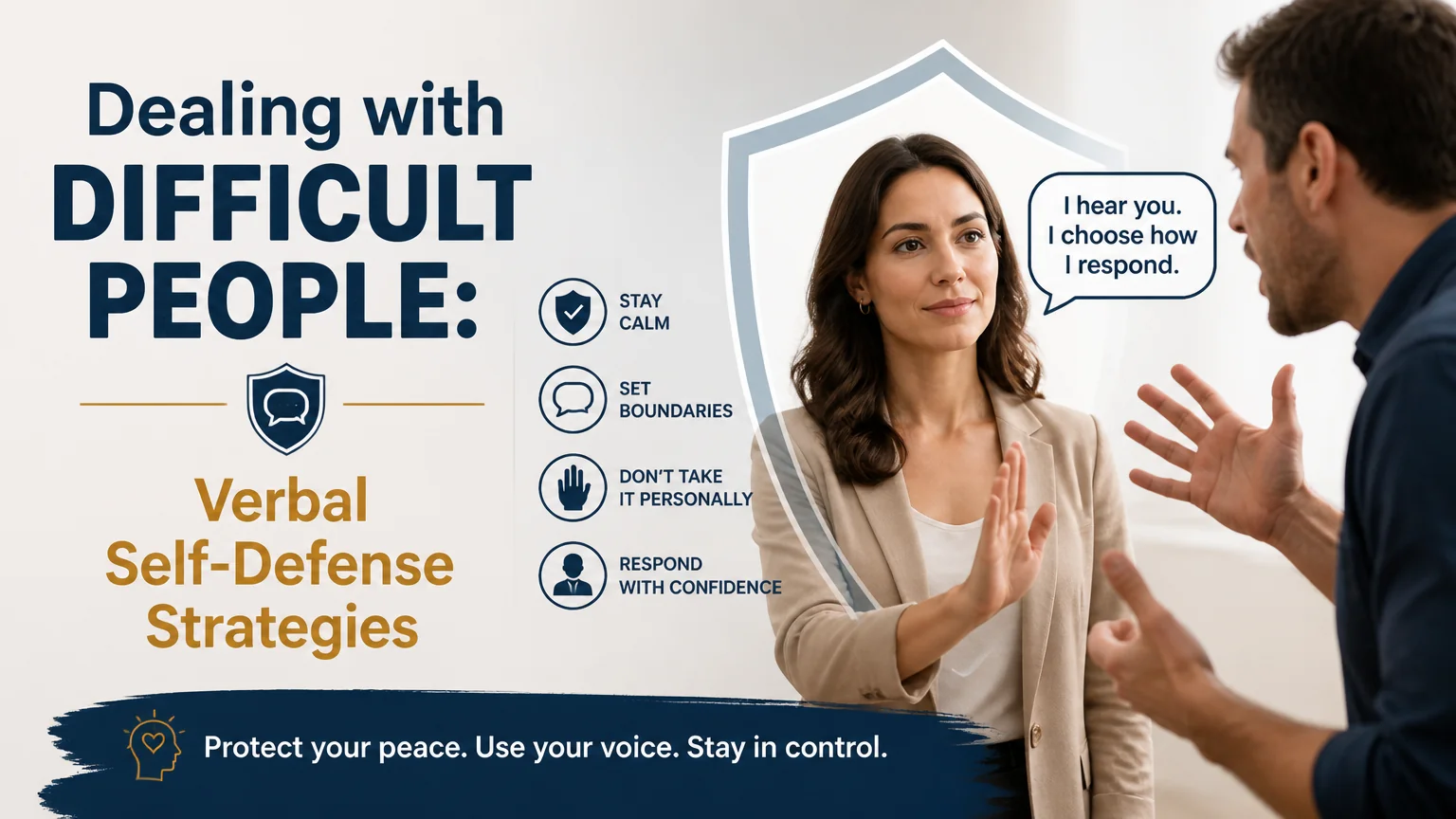
Dealing with difficult people: verbal self-defense strategies
Manage conversations with difficult individuals more effectively by applying verbal techniques that protect your boundaries while fostering respect.
We can all be difficult at times, but there are recurring behaviours that wear you down: constant interruptions, sarcasm, aggressiveness, victimhood or attempts to manipulate. Naming them is not to judge the other person, but to choose how to respond without losing your calm or giving up your dignity.
The key is not to change the other person, but to protect our boundaries and keep the conversation on respectful and useful ground.
Practicing deliberate responses reduces stress and improves relationships. With a handful of simple verbal techniques you can avoid escalations, clarify misunderstandings and end conversations when they are not progressing. These tools are not to win arguments; they are to take care of your well-being and your objectives.
Before saying a single word, check your internal state. A slow breath, a three-second pause and an anchoring phrase like “I can handle this” help lower arousal. Responding with a relaxed body and an even tone gives you an advantage: your calm is the foundation of all verbal self-defense.
It consists of repeating your central message with small variations, without entering provocations or diversions. It keeps you on course and shows consistency.
Partially accept what is reasonable without giving up the essential. It lowers friction and avoids the trap of arguing every detail.
Name the other person's emotion and, in the same sentence, state your need or limit. It reduces defensiveness and positions you firmly.
Avoid accusations and focus on your experience and what is observable. They reduce the “you always/you never” statements that tend to ignite the discussion.
Asking a concrete question forces specification and, if necessary, anchors a limit. Useful to cut vagueness or diffuse blame.
You start by acknowledging something valid, state your request or limit, and close reinforcing cooperation. It reduces initial resistance.
Loud phrases, raised tones or veiled threats aim to dominate. Your task is to stop the escalation and frame the conversation.
Ironic comments and backhanded compliments disorient. Name them and ask for clarity.
They appeal to fear, obligation or to urgently saving the situation. Return to facts and your boundaries.
When the conversation becomes a complaint loop, ask for concreteness and steer toward options.
Protecting the space to speak and the focus of the topic is part of mutual respect.
Form matters as much as content. A calm tone, short sentences and a measured pace convey confidence. An open posture, visible hands and a friendly but firm gaze defuse tensions. Avoid pointing with your finger and sarcastic smiles; they confuse the message.
Closing is an act of protection. If the dialogue does not improve, cut it off with respect and clarity. Define the next step or close it abruptly if necessary.
After a difficult interaction, review what worked and what to adjust. Document agreements if applicable and seek support when you need it. Rest, movement and conversations with trusted people help process the tension and return to your center.
Skill is strengthened by practicing when calm. Choose two phrases per technique and repeat them until they feel natural. Role-play scenarios with a friend or in front of a mirror. Preparing today reduces the emotional cost tomorrow.
You don’t need to be brilliant, just consistent. With calm, clarity and firm boundaries, difficult conversations stop being a threat and become spaces where you take care of yourself and, when possible, also care for the relationship.
Do you prefer learning by watching and listening? Expand your knowledge with these free videos related to this topic.
Learn to communicate clearly and confidently, overcome fears that block self-expression, and use tools in interviews, presentations, and relationships.
Watch VideoIdentify internal barriers to clear self-expression and learn practical tools to communicate confidently, preventing common misunderstandings and conflict.
Watch VideoMaster clear communication and empathetic listening to resolve conflicts, strengthen relationships, and lead effectively in professional and social settings.
Watch VideoSearch
Popular searches