For Onlinecourses55
|
2026-07-22
For Onlinecourses55
|
2026-07-22

How a couple's coach helps manage jealousy and control - couples coach
Understanding the dynamics of jealousy and control is a vital step in fostering a healthy relationship. By attending a course designed around these sensitive topics, you can learn to transform negative feelings into growth opportunities. Start your journey by exploring educational resources on relationship dynamics that promote healthier interactions.
Jealousy and controlling attitudes often appear as reactions to insecurities, past experiences or dysfunctional relational dynamics. They are not always synonymous with love; many times they hide fear of loss, low self-esteem or past hurts. Understanding their origin is the first step in transforming that energy into something manageable and, eventually, into an opportunity for growth for both partners.
Jealousy can be a temporary sign of a real threat, but when it becomes frequent, invasive or generates constant vigilance, it becomes destructive. Healthy jealousy allows you to talk, set boundaries and find solutions; destructive jealousy imposes rules, limits freedom and erodes trust. Recognizing this breaking point helps to make conscious decisions about the relationship.
Control is often fueled by distorted thoughts, automatic beliefs and patterns learned in childhood or previous relationships. The presence of anxiety, emotional dependence, substance use, or major life changes (moves, unemployment, past betrayal) can intensify controlling behaviors. Identifying these factors allows them to be specifically addressed.
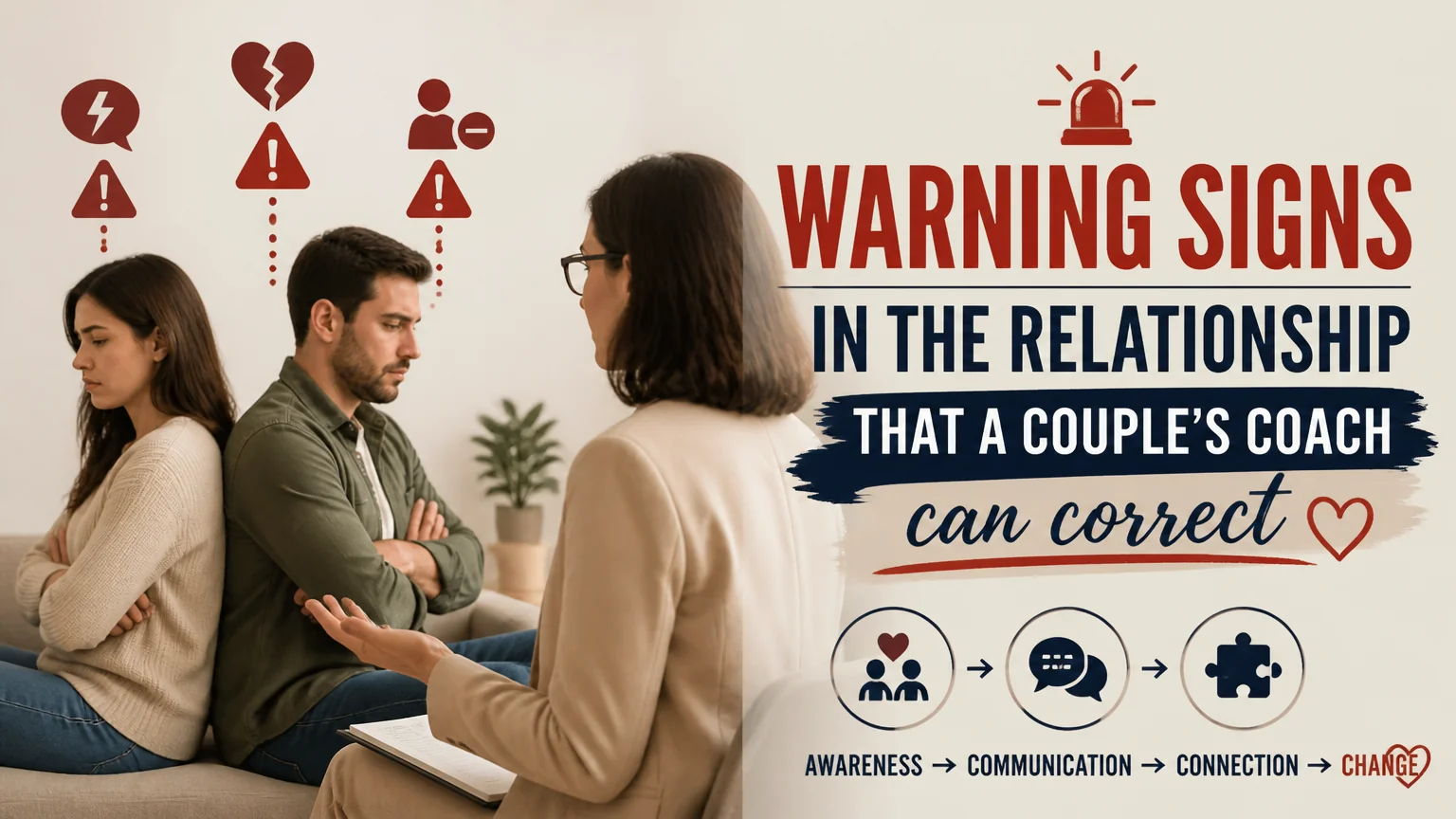
A couple's coach is neither a judge nor a clinical therapist; his role is to accompany the couple in developing practical skills, improving communication and designing concrete strategies to resolve conflicts. They work from the present and the future: they detect patterns, propose exercises and facilitate agreements to reduce episodes of jealousy and control, always with the consent and collaboration of both partners.
Coaching differs in its goal-oriented approach and its emphasis on action. While therapy can delve into the deep past and treat disorders, coaching seeks concrete results in the short and medium term: improving communication, creating trust agreements and teaching techniques to manage emotions as they arise. This makes it complementary to therapy, not necessarily a substitute.
A couple coach has structured tools that combine emotional intelligence, non-violent communication and behavioral exercises. These techniques help keep moments of jealousy from escalating into control and turn arguments into opportunities to strengthen the relationship.
This consists of writing down when and what you feel in situations that trigger jealousy: automatic thoughts, emotional intensity and the actions you take. Recording allows one to identify patterns, check the frequency of distorted thoughts and work on restructuring them more clearly.
The coach helps to formulate agreements that you both consider fair: transparency in social networks, personal time, how to act in the face of uncomfortable messages, etc. Boundaries are not walls, but agreed-upon rules that provide security and reduce the need for constant vigilance.
Simulating difficult conversations in a safe environment allows you to practice phrases, tones and tenses. Role-play helps to deactivate automatic responses and incorporate more assertive responses. The coach guides the practice, corrects and suggests alternatives to make the actual interaction more effective.
The usual process begins with a brief assessment where the coach identifies priorities, recurring dynamics and shared goals. From there, a plan is designed with regular sessions, tasks between sessions and metrics to measure progress. The duration varies according to complexity: it can range from a few sessions for a specific problem to several months for more profound changes.
Not all changes are dramatic; many improvements are subtle but significant. Positive signs include: fewer impulsive reactions, longer and calmer conversations about sensitive issues, compliance with agreements, and increased emotional autonomy for each partner. It is also evident when both can put their fears into words without the conversation escalating into accusations.
If jealousy is accompanied by physical violence, threats, addiction or severe psychiatric symptoms, coaching is not enough. In such cases, it is imperative to turn to mental health professionals, protective services or specialized individual therapy. The coach can, and usually does, refer to experts when he or she detects that the situation exceeds his or her scope.
Jealousy and control need not define a relationship. With willingness, honest communication and the right tools, it is possible to transform anxiety into trust and mistrust into constructive agreements. A couple coach acts as a practical companion: he or she detects patterns, proposes exercises and facilitates mutual commitment so that the couple can regain freedom, respect and a healthier coexistence.
Search
Popular searches