For Onlinecourses55
|
2026-11-04
The role of the couple's coach in preventing separation - couples coach
A relationship coach can be a valuable ally in navigating challenges. Dive deeper into practical strategies and techniques tailored for couples by joining this insightful course that empowers partners to strengthen their connection and thrive together.
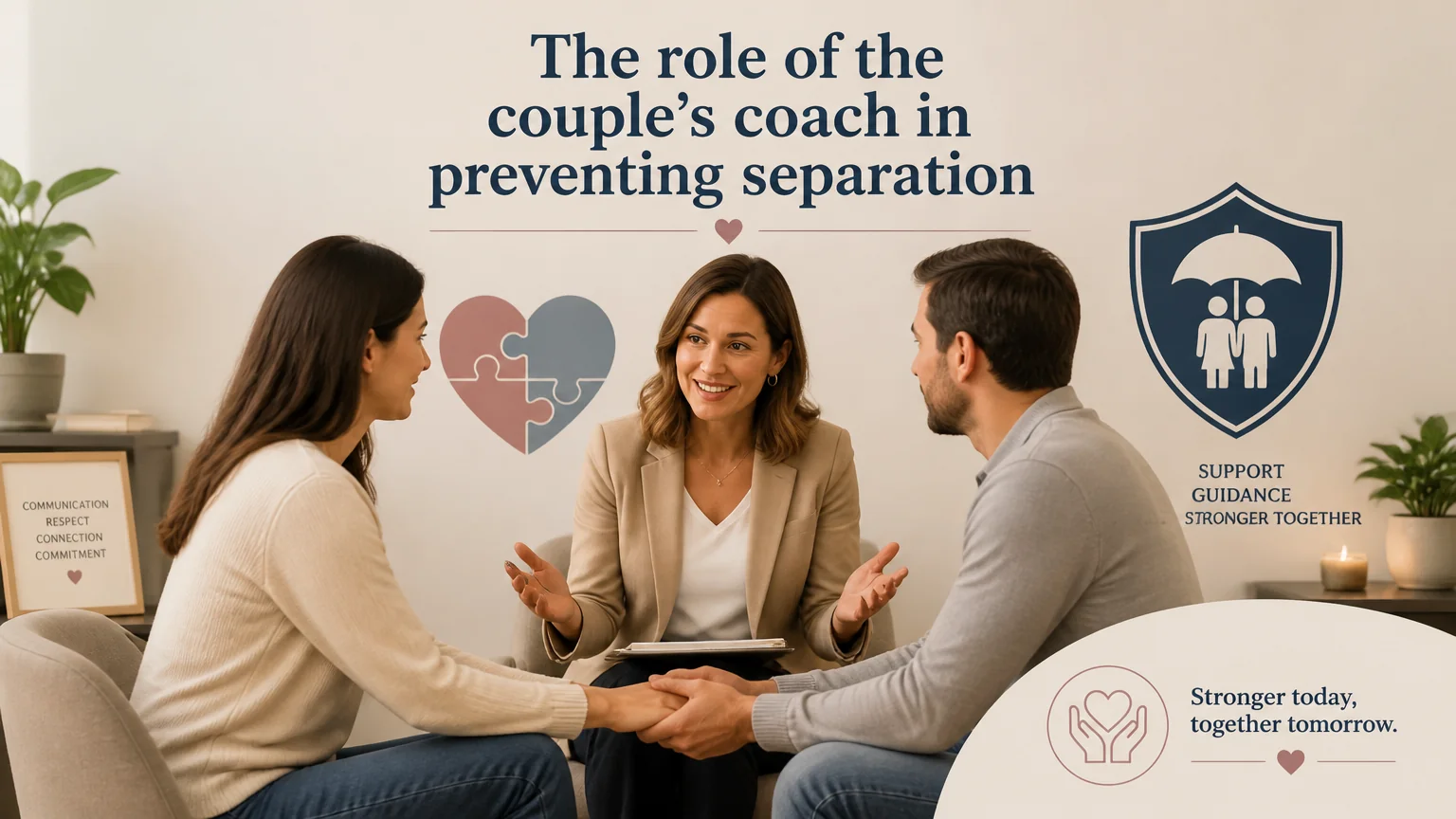
A couple's coach is neither a therapist nor a judge; he or she is a practical, goal-oriented companion who helps the couple identify patterns, improve communication and design concrete steps to strengthen the partnership. His work focuses on the present and the future: detecting signs of deterioration, working on concrete skills and generating agreements that reduce the risk of rupture. Unlike other professional figures, the coaching approach is usually brief, structured and oriented to measurable results, which can be very useful when the goal is to prevent a separation before it worsens.
Detecting problems when they are young is one of the keys to preventing separation. The coach helps to recognize common signs: evasive communication, decreased intimacy, unexpressed resentments, avoidance of shared responsibilities or postponed decisions. Working on these signals involves putting into words what is happening, validating emotions and transforming complaints into concrete requests. The goal is to stop the emotional escalation that leads, over time, to irreconcilable distance between the two.
Communication is the backbone of any healthy relationship. A coach works to transform unproductive discussions into constructive dialogues. He or she teaches techniques such as reflective listening, use of first-person messages and time-outs when emotions escalate. It also helps identify recurring themes and establish routines for addressing them in a structured way, preventing resentment from building up. When couples learn to communicate clearly, important decisions are made together and misunderstandings that often end in painful disagreements are reduced.
Couples coaching employs practical tools and structured exercises that facilitate rapid and sustainable change. These exercises include agendas for difficult conversations, tasks to regain emotional connection, daily gratitude exercises and practices to improve intimacy. In addition, weekly or monthly goals are often set to generate accountability and measure progress. These tools do not guarantee that all problems will be solved, but they significantly increase the couple's ability to resolve conflicts and make shared decisions before a crisis escalates into separation.
Coaching is especially useful when the partner still wants to save the relationship and there is a willingness to change. If there is indifference, recent betrayal, or problems involving violence or abuse, other professional interventions (specialized therapists, lawyers or social services) are more appropriate. The coach can collaborate with therapists if both agree, but its strength lies in offering practical tools and a framework oriented to concrete and achievable goals within a limited time frame.
A well-managed coaching process can reduce the frequency of fights, restore emotional intimacy, improve joint decision-making and re-establish a climate of respect. However, it is important to have realistic expectations: the coach does not automatically "fix" people or create love. Their value lies in accompanying sustained change through practice, accountability and follow-up. If one or both partners are not involved, results will be limited; transformation depends on daily action outside the sessions.
When looking for a professional, it is important to assess training, specific experience with couples, references and methodological approach. Useful questions: what tools does he/she use, what is the typical duration of the process, does he/she work with measurable objectives, and does he/she work with measurable objectives? Personal compatibility is also key: both partners should feel listened to and respected. A first trial session can help assess whether the coach's style matches the needs of the couple.
The real work happens between sessions. Some practical recommendations: set up a weekly couple's meeting to review progress, leave the phone out at times of important conversation, practice daily gratitude, and agree on small actions that demonstrate commitment. In addition, documenting agreements and reviewing them periodically avoids ambiguity. These routines create a fabric of emotional security that reduces the likelihood of separation by ensuring that needs and expectations are regularly reviewed and adjusted.
Having a professional guide the change process can make the difference between a relationship that fades into silence and resentment and one that reinvents itself with dialogue and compromise. Preventing separation involves detecting problems early, working on communication, practicing concrete changes and maintaining shared responsibility. With the right tools and will, many couples find ways to rebuild closeness and design a healthier and more sustainable coexistence.
Search
Popular searches