For Onlinecourses55
|
2026-11-04

How to talk to your partner about starting therapy without creating conflict - couples therapy training
Set the stage for open communication in your relationship. Discover helpful strategies in our interactive online course for couples focused on fostering healthy discussions.
Before starting an important conversation it is helpful to review how you feel and why you want to take this step. Pause to distinguish between your personal need, your concerns about the relationship, and specific expectations. Mentally practicing what you are going to say reduces the likelihood of reacting defensively and helps you stay calm. It also helps to decide what your main goal is: to seek support, improve communication, address specific problems, or simply propose exploring outside help together?
Context greatly influences how a message is received. Find a time when both of you are calm, unhurried and uninterrupted. Avoid bringing up the subject when either is exhausted, angry or distracted. A private, comfortable setting facilitates openness and reduces the likelihood that the conversation will escalate into conflict. If you know your partner is easily stressed, suggest talking at a neutral time, such as after a quiet dinner or during a walk.
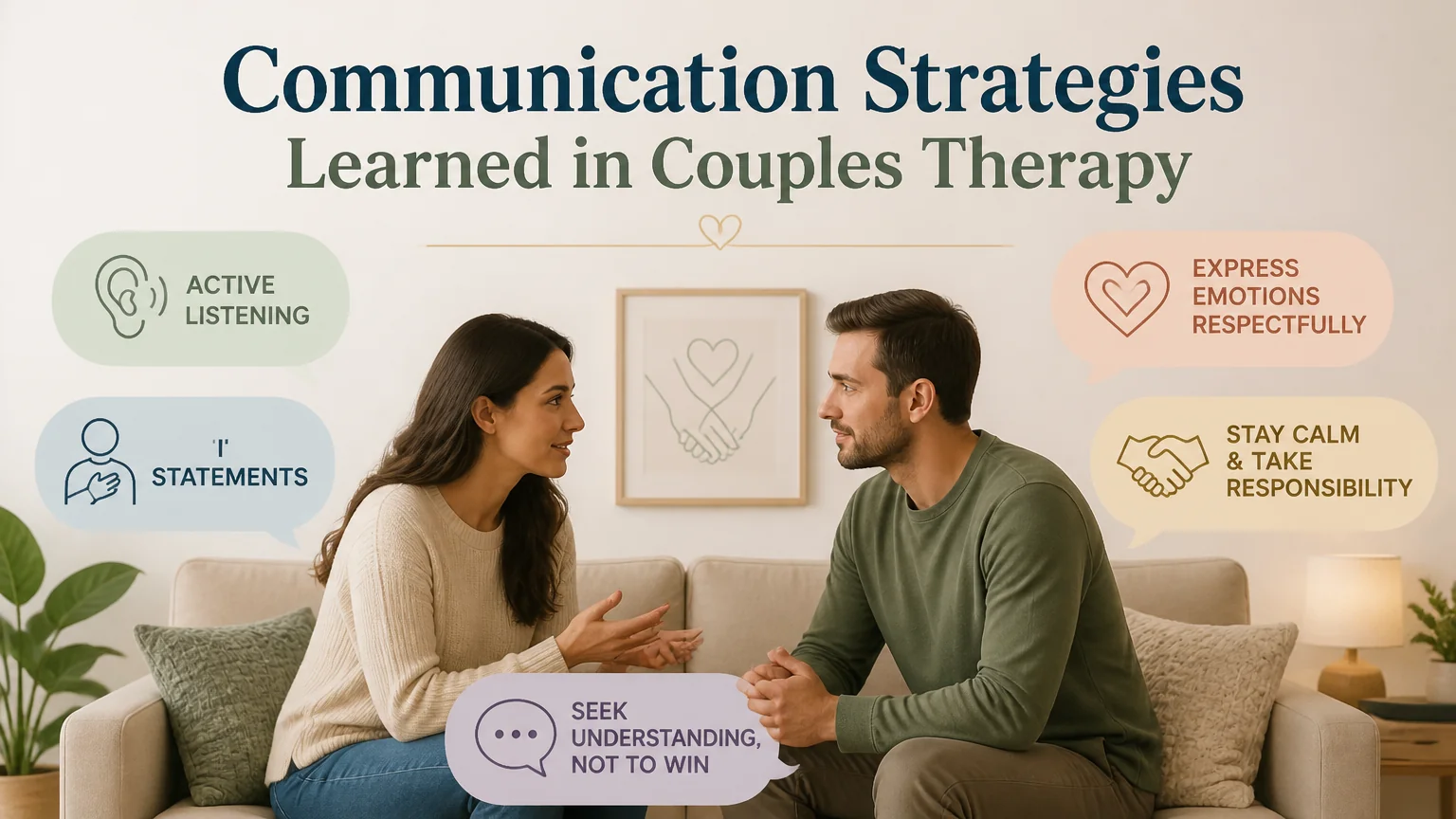
The way you introduce the topic is often more important than the exact words. Use a calm tone and avoid accusations. Instead of "You always..." or "You never...", opt for phrases that express your experience: how you feel, what worries you and what you would like to change. Showing that you understand the other person's perspective helps to lower defenses and open a dialogue rather than a hostile exchange.
It is normal for the other person to respond with surprise, denial, fear, or anger. Preparing for these reactions will allow you to respond more calmly. If the reaction is defensive, remain calm, acknowledge their feelings and return to your initial intention: to improve the relationship and seek shared solutions. If there is fear or embarrassment, validate those feelings and suggest moving forward slowly. If there is denial, offer clear information and concrete examples without pressure.
Talking is not just about presenting an idea: it is also about listening. Leave space for your partner to express his or her doubts and fears. Practice active listening by repeating with your words what you understood and asking if you interpreted it correctly. Validation does not mean necessarily agreeing, but acknowledging that your feelings are real and make sense. This creates a climate of collaboration.
Offering concrete alternatives makes it easier to make a decision and prevents the proposal from sounding vague or intimidating. You can suggest trying an information session, seeking out different professionals together, starting with individual sessions before evaluating couples therapy, or agreeing to a trial period. Giving small, manageable options reduces resistance and allows you to move forward one step at a time.
If your partner refuses outright, it is important to respect his or her position but also guard your boundaries. Ask what exactly is bothering him/her and if he/she would be willing to reconsider in the future. Evaluate alternatives that do not involve pressure: joint readings, workshops, mediation with a trusted third party or even individual sessions for you while keeping the offer open. If unwillingness seriously impacts your well-being, it is worth defining what you are willing to accept and what you are not.
Small changes may indicate that the proposal is working: more willingness to talk, less defensive reactions, attempts to seek solutions together, or actively seeking information. When you see these gestures, be grateful and reinforce the positive attitude without overdoing it. Celebrating modest progress helps cement the collaboration and makes it easier to keep moving forward.
Bringing up the idea with calm, empathy and concrete proposals greatly increases the chances that the conversation will be constructive. You don't have to solve everything in one talk: think of a gradual process, where listening and validation are at the center. If at some point the conversation becomes very tense, it is preferable to pause and resume when both are calmer. With patience, respect and clear communication it is possible to bring up important changes without turning the conversation into a conflict.
Search
Popular searches