For Onlinecourses55
|
2026-10-05
For Onlinecourses55
|
2026-10-05
Communication strategies learned in couples therapy - couples therapy training
Embarking on the journey towards better understanding and communication can start today. Join our interactive course focused on enhancing relational dynamics and learn how to resolve conflicts compassionately.
In many relationships, conflicts arise not so much from what each partner does, but from how actions are interpreted and responded to. Careful communication helps prevent misunderstandings, reduces accumulated tension and allows both people to feel heard. In therapy we often work to identify repetitive patterns: interruptions, minimizations, prolonged silences or indirect attacks. Recognizing these patterns opens the possibility of changing them and establishing more respectful and effective ways of connecting.
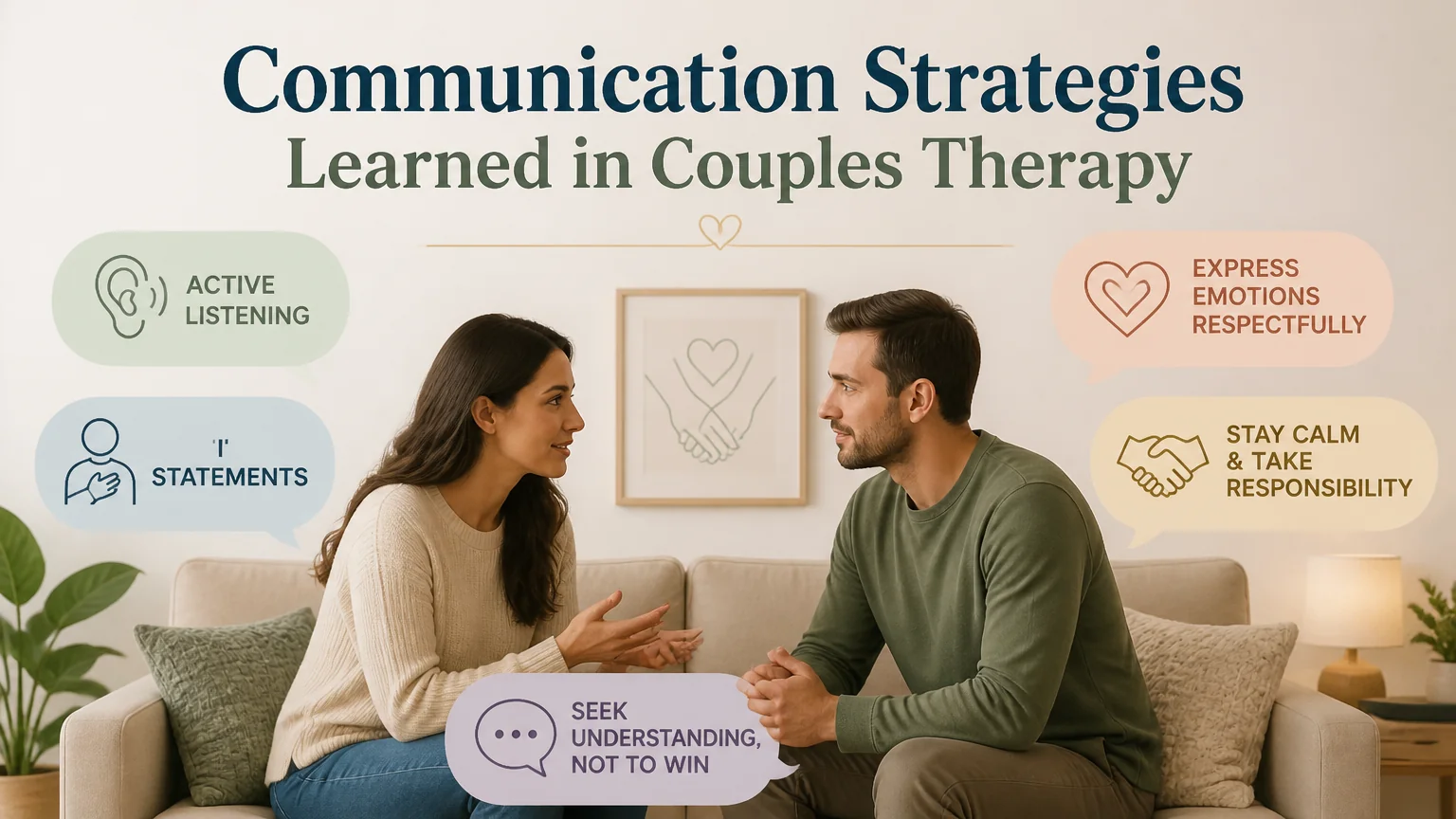
Learning to truly listen is one of the most transformative skills. Active listening is not simply waiting your turn to speak; it involves paying attention, interpreting feelings and putting back into words what you have understood. Validation, on the other hand, is about acknowledging the other's experience without necessarily agreeing. These two practices reduce defensiveness and create a safe space where it is easier to address sensitive issues.
In therapy, you are taught to differentiate between judgments and needs. Instead of accusing ("you are always late"), communicating a concrete need and impact is often more effective ("I feel lonely when you are late and would like to coordinate better"). Speaking from one's own experience with phrases that begin with "I" reduces the likelihood that the other will become defensive and facilitates the joint search for solutions.
When emotions run high, continuing the conversation often makes things worse. The "time-out" strategy is not to run away from the problem, but to pause to regulate. In therapy, it is practiced to identify early signs of escalation (heart rate, tone of voice, blank thoughts) and agree to a pause with a defined return: e.g., "I need 30 minutes to calm down; we'll be back at 8:30." Honoring that agreement is key to regaining confidence.
Tone can totally change the meaning of a message. In therapy we work on both the content and how it is said. Phrases that sound accusatory often close doors; a calm tone opens possibilities. It is also helpful to avoid generalizations ("always", "never") and focus on specific instances so that the other person can understand and respond without feeling attacked.
Couples who maintain small communication routines tend to resolve large conflicts better. Some practices taught in therapy are weekly check-ins, screen-free dinners, and gratitude and worry rounds. These routines don't eliminate problems, but they build a habit of listening and connection that makes it easier to deal with the difficult when it comes up.
Even with good intentions, it is easy to fall into communication traps. Minimizing the other person's feelings, defending oneself without listening, or accumulating grudges are common mistakes. Therapy helps to identify these patterns and replace them with habits that foster emotional responsibility and mutual support.
If, despite attempts, the same problems recur or issues arise that generate ongoing harm (violence, abuse, persistent avoidance), seeking a therapist is a responsible step. Therapy offers a neutral space, specific tools and accompaniment to rebuild ways of relating. It is advisable to choose a professional with experience in couples therapy and with whom you both feel comfortable.