For Onlinecourses55
|
2026-10-24
The importance of validation: how to improve communication with a family member with bpd - dialectical behavioral therapy
Improve your ability to validate loved ones by participating in the supportive course on effective communication and emotional understanding that fosters healthier interactions.
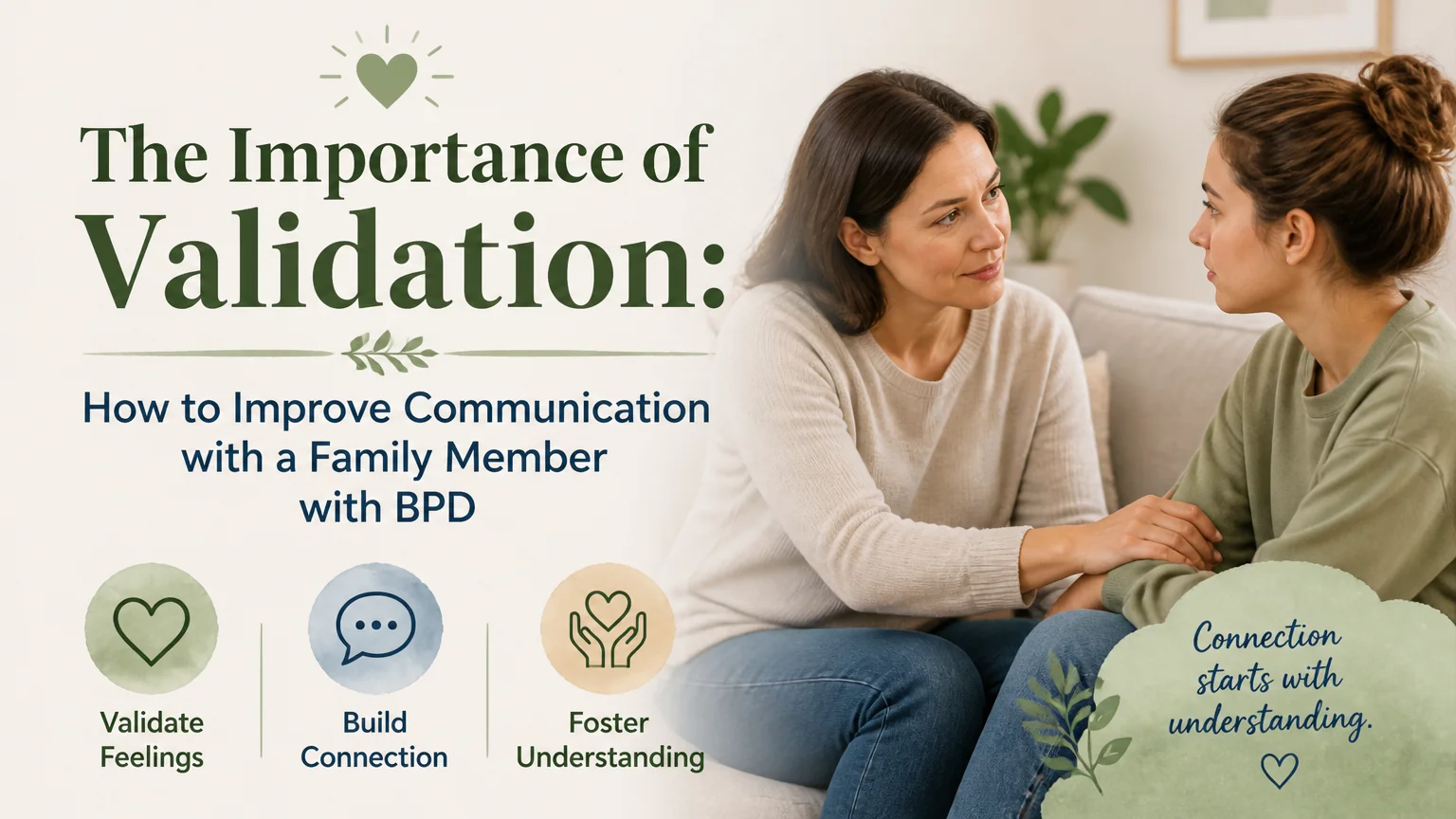
When a loved one is living with intense emotions and challenging relationships, what we say and how we say it can make a huge difference. Validation is not a trick or a concession: it is a way of acknowledging the other person's experience so they feel seen, understood and therefore safer. By practicing it, the conversation becomes less reactive and more collaborative, and that opens the door to healthier solutions and boundaries.
Validating is communicating to the other person that what they feel makes sense from their perspective. It does not imply approving harmful behaviors or giving up your own boundaries. It's about saying: “I understand why you feel that way,” even when you do not share the interpretation of the facts. Validation reduces the sense of judgment, lowers defenses and helps the conversation move forward.
Borderline personality disorder often involves sensitivity to rejection, fear of abandonment, sudden mood swings and difficulty regulating intense emotions. In that context, phrases that sound neutral to others can be perceived as critical or distant. Understanding this is not labeling; it's adjusting the way you communicate so it's safer and clearer. The goal is not to “control” the person, but to create a relationship where both parties feel heard, respected and able to seek solutions.
Validating does not mean accepting any behavior. You can hold a boundary and, at the same time, acknowledge the emotion. The key is to anticipate, be specific and maintain consistency. A clear and compassionate boundary protects the relationship and reduces escalation.
“I see this overwhelmed you and it feels very intense. It makes sense that you feel this way after what happened. I'm here; let's take a breath together and think about the next step when it calms down a bit”. Here you validate the intensity and offer shared regulation, without rushing solutions.
“I understand that it hurt you that I didn't respond earlier; for you, silence feels like indifference. What you feel matters to me, and next time I will let you know if I can't answer immediately”. You validate the hurt and propose a concrete adjustment.
“I know the curfew bothers you and I understand that you want more freedom. At the same time, I need to maintain this rule for safety. We can look together for an alternative for weekends”. You uphold the boundary, validate the need and offer negotiation.
Sustained validation creates an environment where talking is less dangerous and more useful. Over time, that shared safety makes it easier for the person to ask for help before a crisis, tolerate frustration better and accept boundaries without feeling them as abandonment. It also gives you room to care for your energy and set boundaries without guilt.
Additionally, you can complement this with everyday habits: brief moments of connection without an agenda, recognizing progress (no matter how small), and repair rituals after conflicts. Along with validation, these gestures consolidate a more stable and flexible bond.
If conversations escalate frequently or you feel you are running out of tools, it's advisable to seek support from professionals and psychoeducational resources. Learning communication and emotion-regulation skills together can ease the burden for everyone. If at any time you perceive a risk to safety, prioritize protective measures and seek immediate help from your local service.
Validation is not a perfect speech, but a practice: listening with curiosity, acknowledging the pain and holding boundaries with warmth. With consistency and patience, communication becomes clearer, reactivity decreases and the relationship finds a safer ground where both can grow.
Search
Popular searches