For Onlinecourses55
|
2026-10-23
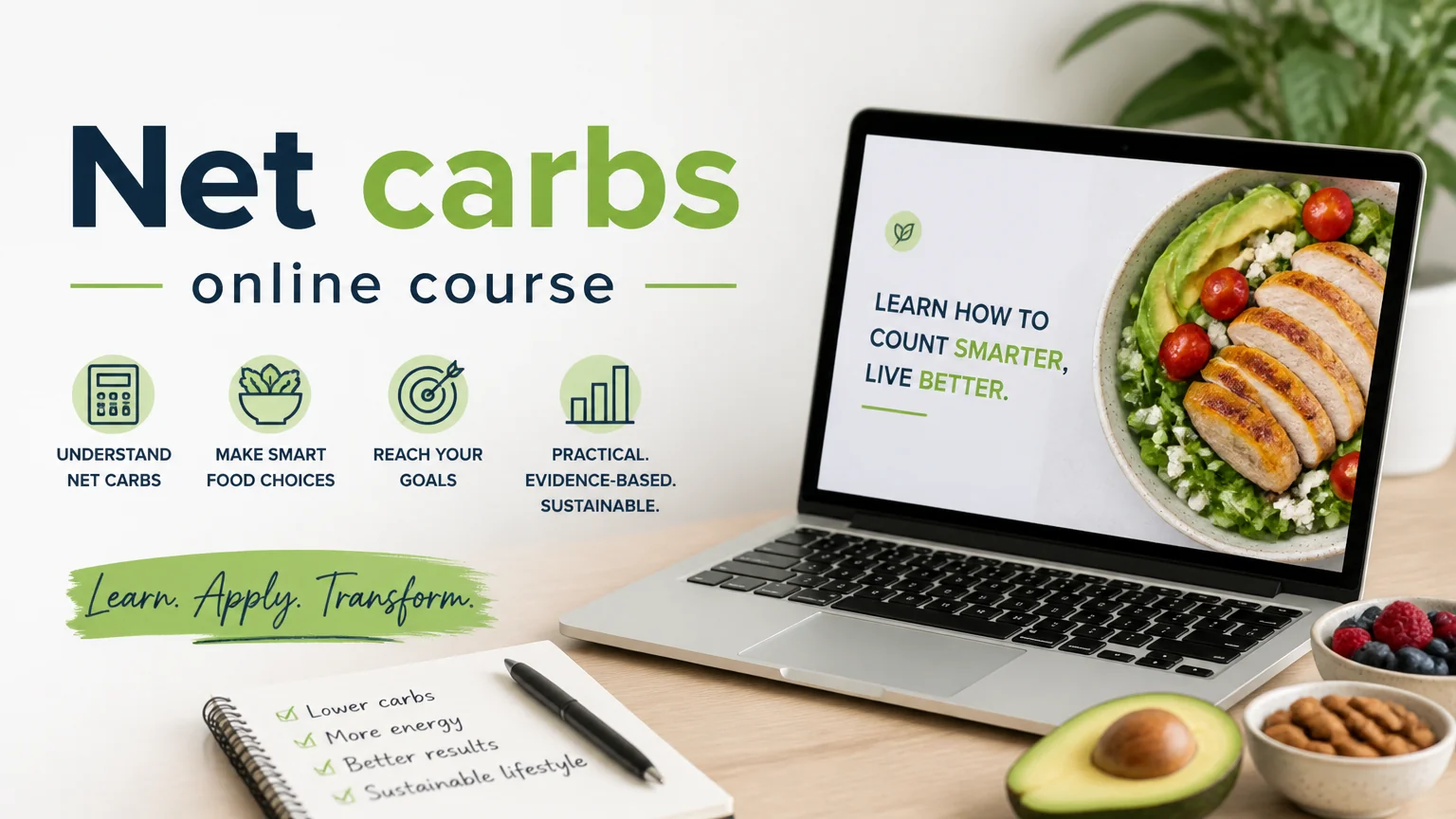
Net carbs online course - ketogenic nutrition
Explore the fascinating details about net carbs by mastering the skill through our course on effective low-carb diets, making dietary choices less stressful.
Have you ever felt confused by nutritional labels, especially when trying to manage your carbohydrate intake? You are not alone! Counting carbohydrates might seem complicated, but with the right knowledge, it becomes a powerful tool for improving your health. This article will guide you through the world of net carbs and how an online course can help you master them.
Net carbs are the total amount of carbohydrates in a food minus the fiber and sugar alcohols. In other words, they are the carbohydrates your body actually digests and converts into glucose (blood sugar). Imagine that total carbohydrates are like a main road; fiber and sugar alcohols are like detours; they do not significantly contribute to the traffic (glucose) on the main road.
Counting net carbs is crucial for:
If you have diabetes, controlling your blood sugar levels is essential. Learning to count net carbs empowers you to make informed decisions about your diet and adjust your medication if necessary, always under the supervision of a health professional.
Low-carb diets, such as keto and Atkins, significantly restrict carbohydrate intake. An online course will provide you with the necessary tools and knowledge to accurately calculate net carbs and ensure you are following the diet correctly. Goodbye to confusion and hello to results!
If you are a health professional, an online course on net carbs can enhance your knowledge and skills to better assist your patients. You will be able to provide them with accurate information and practical guidance on how to manage their carbohydrate intake and improve their health.
You will learn the formula for calculating net carbs: Total Carbohydrates - Fiber - Sugar Alcohols = Net Carbohydrates. The course will teach you how to interpret nutritional labels and identify the amount of fiber and sugar alcohols in different foods.
You will discover which foods are naturally low in carbohydrates and which ones you should avoid. You will learn about the different sources of carbohydrates, including simple and complex carbohydrates, and how they affect your body differently. Did you know that some vegetables, such as broccoli and cauliflower, are excellent low-carb options?
The course will provide you with ideas and recipes for low-carb meals that are nutritious and tasty. You will learn how to create balanced weekly menus that help you achieve your health goals. Don't worry, you won't have to eat just lettuce!
You will become an expert at reading nutritional labels. You will learn to identify hidden ingredients that can increase your carbohydrate intake, such as high-fructose corn syrup and modified starch. Information is power!
Ensure that the instructor is a qualified professional with experience in nutrition and carbohydrate management. Look for credentials such as a degree in nutrition, dietetics, or a related field, and relevant certifications.
Research the course content and teaching methodology. Does the course cover all important topics related to net carbs? Does the instructor use effective teaching methods, such as videos, presentations, and practical exercises?
Read reviews and testimonials from previous students to get an idea of the course quality. Are students satisfied with the course content and the learning experience? Have they achieved positive results after completing the course?
Compare the price and duration of different courses to find one that fits your budget and schedule. Some courses are more intensive and last only a few weeks, while others are more flexible, allowing you to learn at your own pace over several months.
Online courses offer unparalleled flexibility and convenience. You can learn from the comfort of your home, at your own pace, and on your own schedule. You don't have to worry about commuting to a physical location or attending classes at specific times. Learn whenever and wherever you want!
Counting net carbs might seem intimidating at first, but with the right knowledge and tools, it can become an integral part of your healthy lifestyle. An online course will provide you with the guidance and support you need to master the art of counting carbs and transform your health. Don't wait any longer; enroll in an online net carbs course today!
In addition to an online course, there are many other resources available for learning about net carbs, such as:
In summary, an online course on net carbs is a valuable investment for anyone looking to manage their blood sugar, lose weight, or simply improve their overall health. By learning to count net carbs, you can make informed decisions about your diet and create a healthier, more sustainable lifestyle. Take the first step and discover the power of net carbs!
What is the difference between total carbohydrates and net carbohydrates?: Total carbohydrates are all the carbohydrates present in a food, while net carbohydrates are the total carbohydrates minus fiber and sugar alcohols.
Is it necessary to count net carbohydrates if I don't have diabetes?: It is not strictly necessary, but it can be beneficial if you are following a low-carb diet or if you simply want to manage your carbohydrate intake to improve your health.
Are all sugar alcohols the same?: No, some sugar alcohols have a greater impact on blood sugar than others. Erythritol is generally considered one of the best sugar alcohols for people trying to manage their glucose levels.
How much does an online course on net carbs cost?: The price of an online course on net carbs can vary depending on the course content, the instructor's reputation, and the course duration. Generally, you can expect to pay between $50 and $300.
Where can I find a good online course on net carbs?: You can find online courses on net carbs on platforms like Udemy, Coursera, and edX. You can also look for courses offered by certified nutritionists and dietitians.
Search
Popular searches