For Onlinecourses55
|
2026-07-23
For Onlinecourses55
|
2026-07-23

Carnivore diet supplements - nutrition carnivore
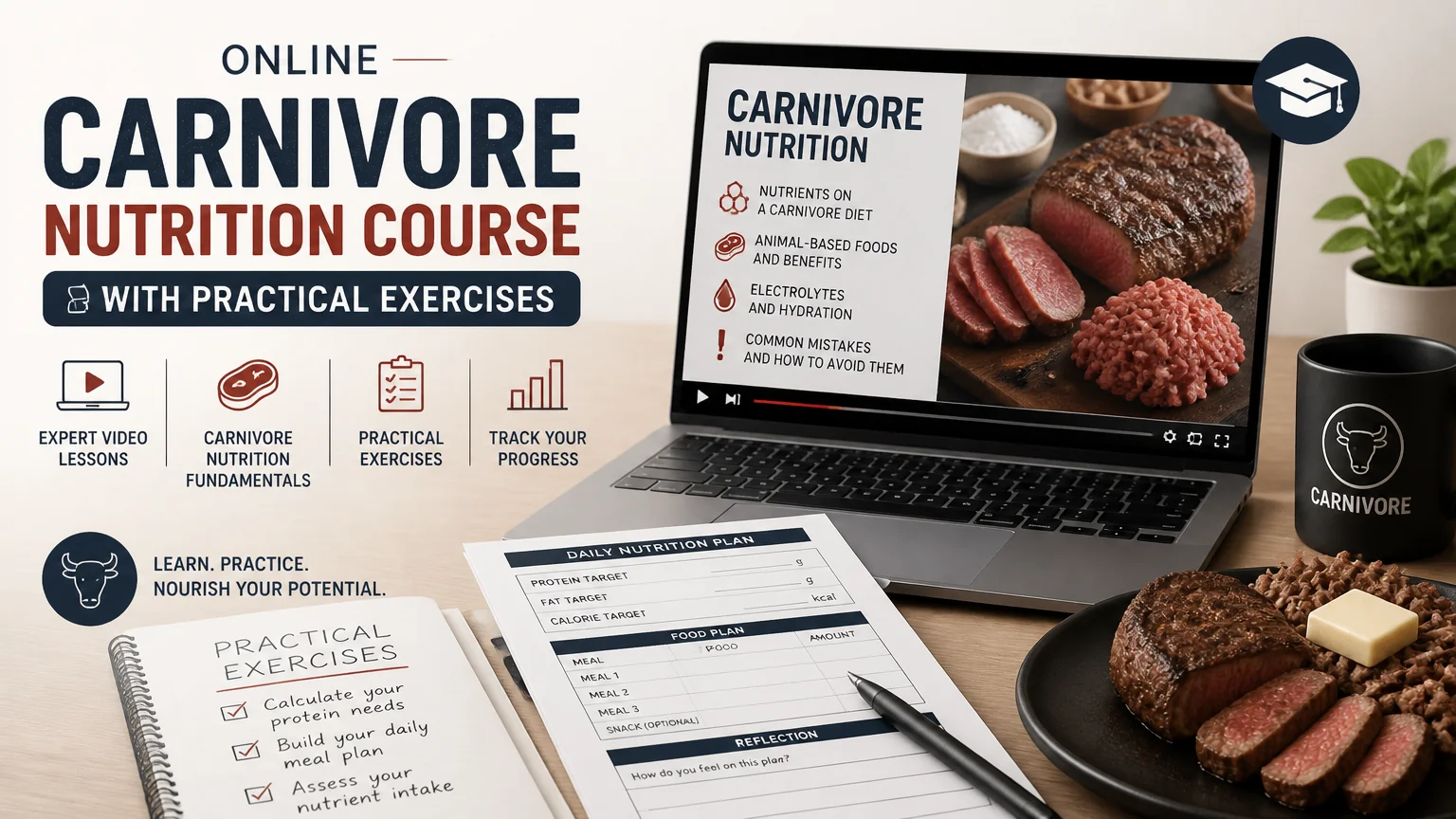
As you reflect on whether supplements are needed for this diet, deepen your understanding by taking up a special course on carnivore nutrition that covers essential topics.
Hello, carnivores! Have you ever wondered if you need supplements on your carnivore diet? Well, the answer is not as simple as a straightforward "yes" or "no". Let's break it down together! The carnivore diet has gained popularity in recent years, and with it, the question of whether we need to give it a boost with supplements. In this article, we will explore the most common supplements on the carnivore diet, when to consider them, and the potential risks you should be aware of.
Before diving into the world of supplements, let's talk about what the carnivore diet really means. In essence, it is a diet based on animal-sourced foods. Think meat, fish, eggs, and some dairy products.
The basic principles are quite simple: primarily consume meat and eliminate all other foods like fruits, vegetables, grains, and legumes. Does it sound extreme? Maybe a little! But for some, the results are worth it.
Why would someone follow such a restrictive diet? Some proponents claim it can help with digestive issues, inflammation, food allergies, and even mental health problems. Watch out! Not all of these benefits are scientifically proven, so it is important to be cautious.
Now, let's get to the supplements! Although the carnivore diet focuses on obtaining all nutrients from animal-sourced foods, some may consider supplements to cover potential deficiencies or improve performance.
Creatine is one of the most popular supplements, especially among athletes and those looking to increase muscle mass and strength. Did you know that creatine is naturally found in meat?
The typical creatine dosage is 3-5 grams per day. You can take it in powder mixed with water or juice, and you're all set!
When you eliminate carbohydrates from your diet, your body can flush out more water and electrolytes. This can lead to dehydration and muscle cramps.
You can get electrolytes from bone broth, unrefined sea salt, and even some meats. But sometimes, a supplement can be helpful!
Vitamin D is crucial for bone health, the immune system, and many other bodily functions. We mainly get it from the sun, but if you live in a place with little sunshine or spend a lot of time indoors, you might be at risk of deficiency!
A Vitamin D deficiency can lead to fatigue, muscle weakness, and bone problems. If you are not getting enough sun, a supplement might be a good idea. The recommended dosage varies, but it is generally between 1000-5000 IU per day.
Magnesium is another important mineral that is involved in hundreds of reactions in the body. It helps with muscle function, heart health, and sleep.
Signs of magnesium deficiency may include muscle cramps, fatigue, insomnia, and anxiety. If you suspect you have a deficiency, talk to your doctor and consider a magnesium supplement.
Not everyone following the carnivore diet needs supplements. But there are situations where they might be beneficial!
Every person is different, and what works for one may not work for another. Consider your activity levels, your overall health, and any symptoms you are experiencing.
Before starting any supplement, it is crucial to speak with a doctor or nutritionist! They can help you assess your individual needs and determine if supplementation is right for you.
Although supplements can be useful, they also carry risks. Taking too much of a nutrient can be harmful and cause unwanted side effects. Always follow the recommended dosages and consult a professional!
The decision to take supplements on the carnivore diet is personal. Evaluate your individual needs, consult a health professional, and be aware of the potential risks. Remember that the carnivore diet is based on getting nutrients from food, so prioritize the quality of the meat you consume! There is no one-size-fits-all answer, so do what is best for your body and your health.
I hope this guide has been helpful! Enjoy your carnivore diet!
FAQ 1: Can I get all the nutrients from meat?
Theoretically, yes. Meat is rich in many essential nutrients. However, some people may benefit from supplements, especially if they have pre-existing deficiencies or specific needs.
FAQ 2: Is creatine only for athletes?
Not at all! Although creatine is popular among athletes, it can also be beneficial for people looking to improve their strength, energy, and brain function.
FAQ 3: What happens if I take too many electrolytes?
Taking too many electrolytes can cause imbalances and side effects such as nausea, vomiting, and diarrhea. Always follow the recommended dosages!
FAQ 4: What is the best way to get Vitamin D if I don't take supplements?
The best way is to safely expose yourself to the sun for about 15-20 minutes a day. You can also get Vitamin D from some foods like fatty fish.
FAQ 5: How do I know if I have a magnesium deficiency?
Symptoms of magnesium deficiency may include muscle cramps, fatigue, insomnia, and anxiety. If you suspect you have a deficiency, talk to your doctor and consider a blood test.
Search
Popular searches