Introduction to Child Nutrition: Essential Fundamentals
Plan balanced diets for babies and children, support breastfeeding, build healthy eating habits, and help prevent anemia, obesity, and growth disorders.
Watch Video For Onlinecourses55
|
2026-11-04
What is complementary feeding and when to start?
Introducing solids is an exciting milestone for babies, and to learn all about it, check out a specialized guide on complementary feeding practices that enrich your baby's diet.
Hello, moms and dads! Ready to embark on the exciting adventure of introducing solid foods? We know it can raise a lot of questions, so let’s break it down in a simple, friendly way.
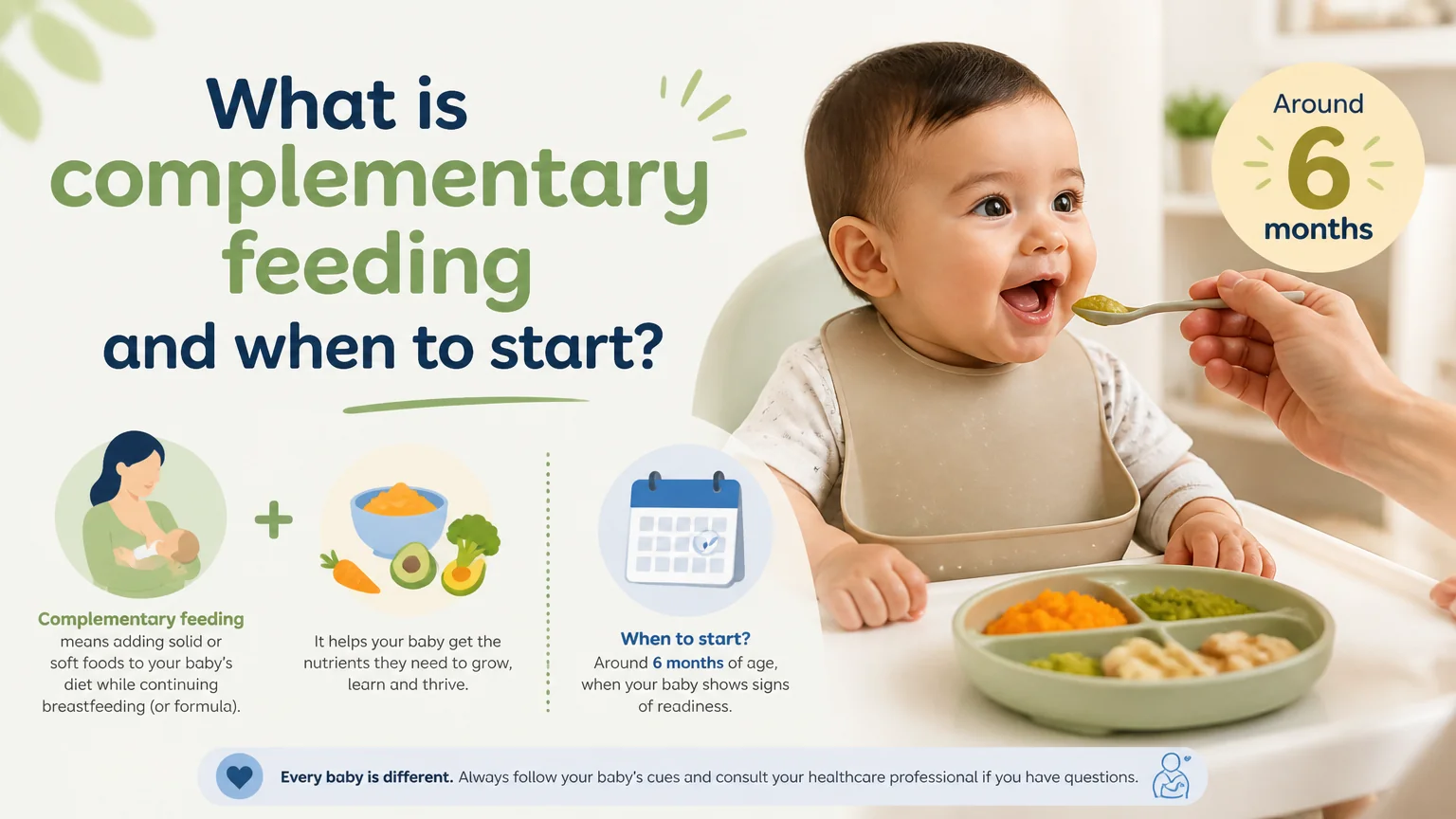
Complementary feeding, as the name suggests, is the introduction of solid or semi-solid foods into a baby’s diet, complementing breast milk or formula. It’s not about replacing milk—far from it!—but about adding new flavors, textures, and nutrients. Think of it as an “extra” alongside their main menu.
Why is it so important? Well, breast milk or formula is perfect up to a certain point. As a baby grows, they need more nutrients, such as iron and zinc, which milk alone may not provide in sufficient amounts. Plus, it’s a wonderful opportunity for them to explore the world through food!
Here comes the million-dollar question. There’s no magical date on the calendar—every baby is different! However, there are some signs that your little one may be ready to start:
The World Health Organization (WHO) recommends starting complementary feeding at around 6 months of age. Before then, breast milk or formula is enough to meet all of a baby’s needs. If you have questions, consult your pediatrician. They can give you the best guidance for your baby.
There are no strict rules, but some foods are usually good options to start with:
Remember to offer one new food at a time and wait a few days to see if there’s any allergic reaction!
Traditionally, babies start with very smooth, liquid purées or baby foods. You can make them at home or buy them ready-made. Make sure they don’t contain salt, sugar, or preservatives!
BLW (Baby-Led Weaning) is an alternative approach that involves offering your baby pieces of soft food they can pick up and bring to their mouth. It’s a way to encourage their independence and let them explore different food textures. Learn all you can before starting this method, and make sure the pieces are safe to reduce the risk of choking!
Be patient! At first, your baby will probably play with food more than eat it. That’s normal—they’re learning. Don’t get frustrated; keep offering food with love and consistency.
As mentioned earlier, it’s important to introduce one new food at a time and wait a few days to see if there’s any allergic reaction. Symptoms may include skin rashes, diarrhea, vomiting, or difficulty breathing. If you notice any of these symptoms, consult your pediatrician!
Offer a variety of foods so your baby can experience different flavors and textures. Don’t force them to eat if they don’t want to. If they reject a food, don’t give up. Try again another time!
It’s common for babies to eat very little at first. Remember that milk is still their main source of nutrition. Don’t worry if they only taste a little or play with their food!
This is a myth! Orange juice isn’t necessary and can be harmful to babies because of its high sugar content. It’s better to offer whole fruits in soft pieces.
Complementary feeding is an exciting stage full of discoveries. Enjoy the process and trust your instincts! Remember that every baby is different and has their own pace. The most important thing is to offer nutritious, safe foods with love and patience. Good luck on this culinary adventure!
Do you prefer learning by watching and listening? Expand your knowledge with these free videos related to this topic.
Plan balanced diets for babies and children, support breastfeeding, build healthy eating habits, and help prevent anemia, obesity, and growth disorders.
Watch VideoLearn the difference between diet and nutrition, what foods and nutrients are, macro and micronutrients, and key tips for healthy eating in childhood.
Watch VideoLearn how carbohydrates, protein, and fats provide energy, how many calories each gram supplies, and why complex carbs and fiber support better health.
Watch VideoSearch
Popular searches