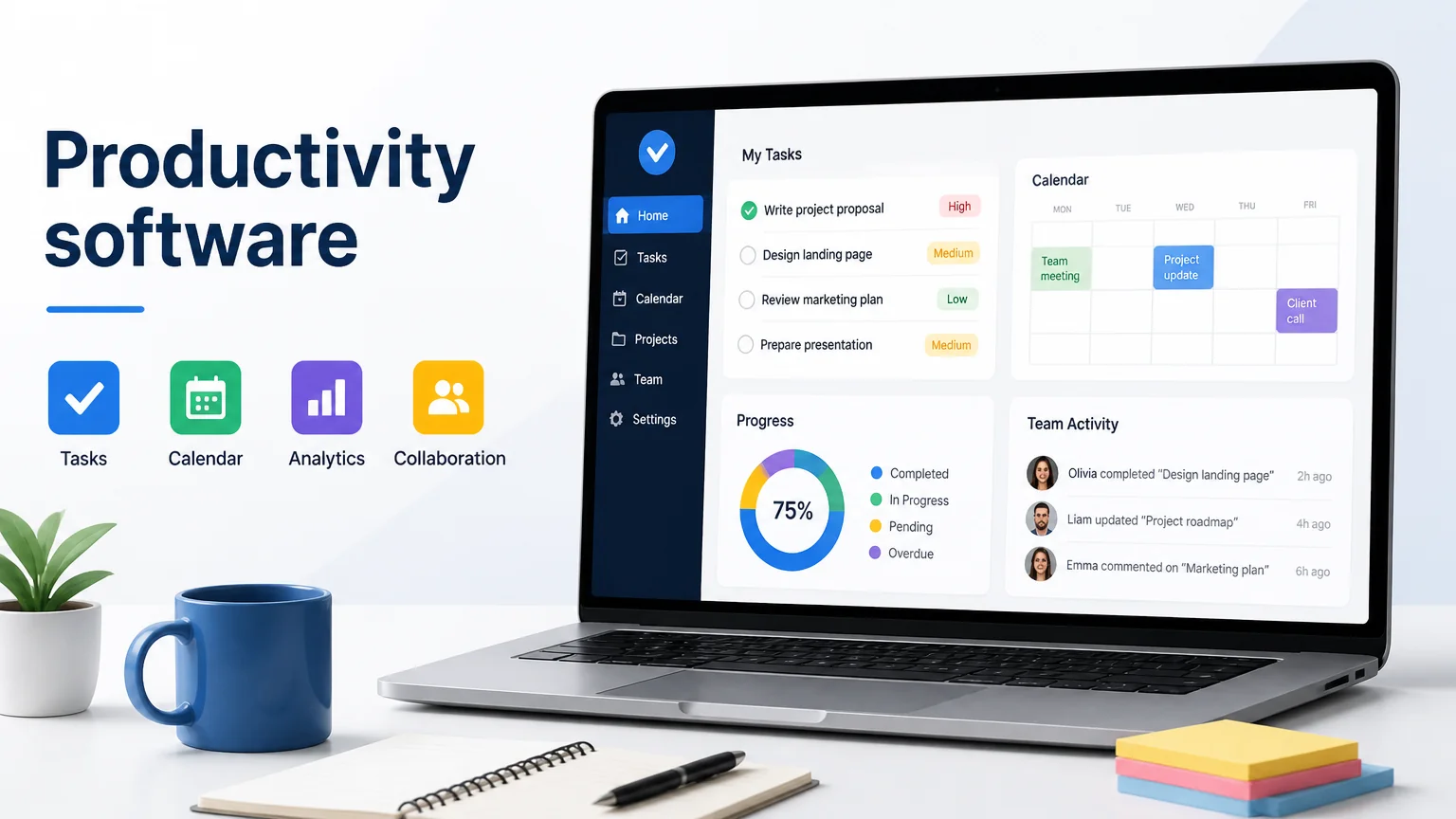
In the constant hustle of the modern world, where personal and professional demands compete for our attention, productivity has become an essential skill. Whether you're a student, an entrepreneur, an employee of a large corporation, or just someone looking to optimize your time, productivity software can be your secret ally in achieving your goals.
But what exactly is productivity software? And how can you choose the right one for you? In this article, we will explore the world of productivity software in depth, from its benefits to the most popular tools and how to implement them effectively in your life. Get ready to transform the way you work and live!
What is Productivity Software and Why Do You Need It?
Productivity software is a broad category that encompasses a variety of tools designed to help you organize, plan, collaborate, and execute tasks more efficiently. These tools can take many forms, from task management applications and calendars to collaboration platforms and automation tools.
But why do you need productivity software? The answer is simple: to optimize your time, reduce stress, and achieve more in less time. Imagine being able to manage your projects without missing any details, collaborating smoothly with your team, and having a clear vision of your goals and how to achieve them. That's what productivity software can offer you.
Key Benefits of Productivity Software
The benefits of using productivity software are numerous and can positively impact your personal and professional life. Here are some of the most notable:
- Improves time management: It allows you to plan your activities, set priorities, and avoid procrastination.
- Increases organization: It centralizes your tasks, projects, and documents in one place, making access and management easier.
- Facilitates collaboration: It allows teams to work together more efficiently, sharing information and coordinating efforts.
- Automates repetitive tasks: It frees up your time for more important activities by automating routine and repetitive tasks.
- Reduces stress: By having a clear view of your responsibilities and progress, you reduce the feeling of being overwhelmed and increase your well-being.
- Improves decision-making: It provides data and analysis that help you make informed and strategic decisions.
- Increases overall productivity: Ultimately, productivity software helps you achieve more in less time, maximizing your efficiency and results.
Types of Productivity Software: A Universe of Options
The productivity software market is vast and diverse, with options for every need and budget. Here are some of the most common categories:
- Task Managers: (e.g., Todoist, Asana, Trello) These tools allow you to create task lists, set deadlines, assign responsibilities, and track progress. They are ideal for managing personal projects or small teams.
- Calendars: (e.g., Google Calendar, Microsoft Outlook Calendar) They help you schedule events, meetings, and appointments, and receive reminders so you don't miss anything important.
- Note-Taking Apps: (e.g., Evernote, OneNote, Notion) They allow you to take notes, save ideas, organize information, and create personalized knowledge bases.
- Project Management Software: (e.g., Monday. Com, Jira, ClickUp) They offer more advanced functionalities for managing complex projects, including Gantt charts, resource management, and performance analysis.
- Collaboration Tools: (e.g., Slack, Microsoft Teams, Google Workspace) They facilitate communication and collaboration among teams, allowing for file sharing, video calls, and simultaneous work on documents.
- Automation Software: (e.g., Zapier, IFTTT) They allow you to automate repetitive tasks by connecting different applications and services, saving time and effort.
- Time Tracking Software: (e.g., Toggl Track, Clockify) They help you log the time you spend on each task or project, so you can analyze your productivity and optimize your workflow.
The Most Popular Productivity Software Tools in 2024-2025
Below are some of the most popular and highly-rated productivity software tools on the market today:
- Asana: A robust and flexible project manager, ideal for teams of all sizes. It stands out for its intuitive interface and powerful collaboration features.
- Trello: A visual task management tool based on the Kanban system. It is easy to use and perfect for simple projects and small teams.
- Todoist: A minimalist and powerful task manager, ideal for personal time and productivity management.
- Notion: A versatile tool that combines the functionalities of a note manager, a database, and a collaborative workspace. It is very popular among entrepreneurs and creative teams.
- Slack: A communication platform for teams that facilitates real-time collaboration and communication.
- Google Workspace: A suite of productivity tools that includes Gmail, Google Calendar, Google Drive, Google Docs, Google Sheets, and Google Slides. It is ideal for teams that already use other Google products.
- Microsoft 365: A suite of productivity tools that includes Word, Excel, PowerPoint, Outlook, Teams, and OneDrive. It is ideal for companies that already use other Microsoft products.
- Zapier: An automation tool that allows you to connect different applications and services to automate repetitive tasks.
How to Choose the Right Productivity Software for You
With so many options available, choosing the right productivity software can seem overwhelming. Here are some tips to make the best decision:
- Define your needs: What tasks do you want to automate? What problems do you want to solve? What features do you need?
- Consider your budget: How much are you willing to spend on productivity software?
- Try different options: Most tools offer free trials or basic subscription plans. Take advantage of these opportunities to try different options and see which one best suits your needs.
- Read reviews and opinions: Research what other users are saying about the different tools.
- Ask for recommendations: Ask your friends, colleagues, or mentors what tools they use and what results they have obtained.
- Make sure it is easy to use: The tool should be intuitive and easy to learn. If it takes you too long to learn how to use it, you probably won't use it.
- Check compatibility: Make sure the tool is compatible with the devices and operating systems you use.
- Consider scalability: If your business is growing, make sure the tool can scale with your needs.
Implementing Productivity Software: Tips and Best Practices
Once you have chosen the right productivity software, it is important to implement it correctly to get the best results. Here are some tips and best practices:
- Start small: Don't try to implement all the tool's features at once. Start with the basic functions and add more as you become more comfortable.
- Set clear goals: Define what you want to achieve with the productivity software. Do you want to increase your productivity by 20%? Do you want to reduce the time you spend on repetitive tasks by 50%?
- Integrate the tool into your workflow: Don't use the productivity software as a standalone tool. Integrate it into your daily workflow.
- Train your team: If you are going to use the productivity software as a team, make sure all team members know how to use it correctly.
- Track your progress: Measure your results and adjust your strategy as needed.
- Be patient: It takes time to master a new tool. Don't get discouraged if you don't see immediate results.
Common Mistakes When Using Productivity Software (and How to Avoid Them)
Even with the best intentions, it's easy to make mistakes when using productivity software. Here are some common mistakes and how to avoid them:
- Tool overload: Using too many tools can be counterproductive. Choose only the tools you really need and focus on using them to the fullest.
- Not defining clear objectives: Using productivity software without clear objectives is like driving aimlessly. Define your goals and use the software to achieve them.
- Not integrating the tool into your workflow: Using productivity software as a standalone tool is a mistake. Integrate it into your daily workflow for the best results.
- Not training the team: If you are going to use the productivity software as a team, make sure all team members know how to use it correctly.
- Not tracking progress: Not measuring your results is like flying blind. Track your progress and adjust your strategy as needed.
- Being impatient: Expecting immediate results is unrealistic. Be patient and persistent.
The Future of Productivity Software: Emerging Trends
The world of productivity software is constantly evolving. Here are some emerging trends that could shape the future of this sector:
- Artificial intelligence (AI): AI is being used to automate tasks, provide personalized information, and improve decision-making.
- Virtual reality (VR) and augmented reality (AR): VR and AR are being used to create more immersive and collaborative work experiences.
- Blockchain: Blockchain is being used to create more secure and transparent project management systems.
- Emphasis on well-being: More and more companies are incorporating wellness features into their productivity tools to help employees manage stress and improve their mental health.
- Greater personalization: Users are demanding tools that adapt to their individual needs and preferences.
Success Stories: Companies that Thrived with Productivity Software
Many companies have successfully transformed their productivity by strategically using productivity software. Here are some examples:
- Buffer: The social media management company uses Asana to manage its projects and tasks, which has allowed them to improve their efficiency and productivity.
- Zapier: The automation company uses its own tool (Zapier) to automate repetitive tasks and free up time for more important activities.
- Atlassian: The software company uses Jira to manage its software development projects, which has allowed them to improve the quality of their software and reduce launch time.
- Netflix: The streaming company uses Google Workspace to facilitate collaboration among its employees and improve internal communication.
Conclusion: Invest in Your Productivity and Transform Your Life
In summary, productivity software is a powerful tool that can help you optimize your time, reduce stress, and achieve more in less time. Whether you are a student, an entrepreneur, an employee, or simply someone looking to improve your life, productivity software can be your secret ally to achieve your goals.
Do not hesitate to research the different options available, try the ones that seem most interesting to you, and find the tools that best suit your needs and work style. Investing in your productivity is investing in your future. Start today and discover the power of productivity software!


 For Onlinecourses55
|
2026-11-16