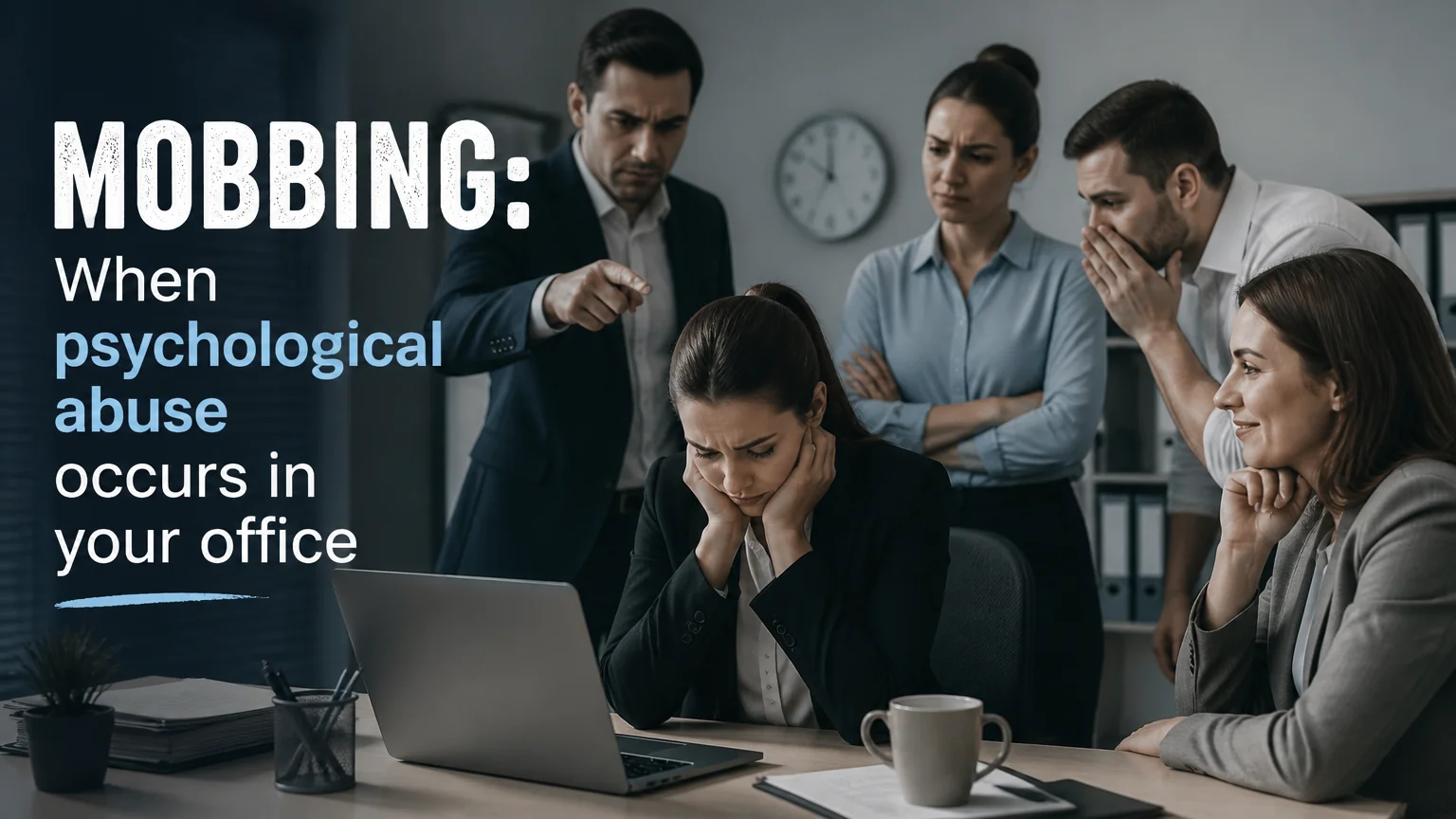
Mobbing: when psychological abuse occurs in your office - violence psychology
Mobbing in the workplace can destroy mental health and well-being. To equip yourself against this hidden threat, explore the resources available in this informative course about psychological harassment that can empower you at work.
The mobbing, or workplace bullying, is a silent reality that eats away at the mental health and well-being of countless workers. It is not simply a stressful work environment or occasional conflicts. Mobbing involves systematic and prolonged psychological abuse, aimed at undermining the victim’s self-esteem, isolating them from the group and, ultimately, forcing them to leave their job.
What Exactly Is Mobbing or Workplace Bullying?
The mobbing, also known as moral harassment or psychological harassment in the workplace, is defined as a series of negative and hostile actions directed at an employee in a persistent and systematic manner. These actions can come from a superior (downward vertical harassment), from colleagues (horizontal harassment) or even from subordinates (upward vertical harassment), although the latter is less common. The key lies in the repetition and intentionality of the behaviors.
Unlike a simple workplace conflict, mobbing seeks to emotionally destabilize the victim, creating an atmosphere of psychological terror that undermines their confidence and sense of security. The ultimate objective is usually for the person to leave the company, either by voluntary resignation or dismissal.
How to Identify Mobbing: Key Signs in Your Office
Detecting mobbing early is crucial to protect the victim’s mental health and well-being. Some warning signs include:
- Constant and exaggerated criticism: Continuous belittling of the work performed, even when it is well done.
- Social isolation: Exclusion from meetings, important projects or team social activities.
- Rumors and defamation: Spreading false or harmful information about the victim to damage their reputation.
- Overload or lack of work: Assigning tasks that are impossible to complete or, conversely, depriving the person of meaningful work to make them feel useless.
- Personal attacks: Insults, public humiliation, threats and other aggressive behaviors.
- Blocking communication: Constantly interrupting the person, ignoring their opinions or refusing to answer their questions.
It is important to remember that a single isolated action does not necessarily constitute mobbing. However, the repetition and combination of several of these behaviors over time can indicate a situation of workplace harassment.
Devastating Consequences of Mobbing: Impact on Physical and Mental Health
Mobbing not only affects the workplace but has serious and lasting consequences for the victim’s physical and mental health. Some of the most common are:
- Chronic stress: Elevated cortisol levels that can damage the immune system.
- Anxiety and depression: Feelings of sadness, hopelessness, irritability and difficulty concentrating.
- Sleep disorders: Insomnia, nightmares and difficulty falling asleep.
- Physical problems: Headaches, digestive problems, muscle tension and cardiovascular diseases.
- Social isolation: Withdrawal from social and family life due to shame or fear.
- Low self-esteem: Loss of confidence in oneself and one’s abilities.
- Suicidal thoughts: In extreme cases, mobbing can lead the victim to consider suicide as an escape.
It is crucial to seek professional help if you are experiencing mobbing. A psychologist or therapist can help the victim cope with emotions, regain confidence and develop strategies to deal with the situation.
What to Do in a Mobbing Situation? Steps to Protect Yourself
If you suspect you are a victim of mobbing, it is important to act cautiously and follow these steps:
- Document everything: Record each incident of harassment, including dates, times, places, names of the aggressors and witnesses, and a detailed description of what happened. Save emails, messages and any other evidence that may support your complaint.
- Seek support: Talk to someone you trust, whether a family member, friend, coworker or a mental health professional. Emotional support is essential to face the situation.
- Inform your company: If there is a human resources department or an ethics committee, file a formal complaint for workplace harassment. Demand that the case be investigated and measures be taken to protect you.
- Consider legal action: If the company does not take appropriate measures, you can consult a labor lawyer to assess the possibility of filing a lawsuit for workplace harassment.
- Prioritize your health: Seek psychological help to cope with stress and anxiety. Take care of your diet, exercise and get enough rest to strengthen your body and mind.
Prevention of Mobbing: Creating a Healthy Work Environment
Prevention is the best way to combat mobbing. Companies should implement clear policies against workplace harassment, promote a culture of respect and open communication, and train employees to recognize and report mobbing. Some preventive measures include:
- Clear code of conduct: Define which behaviors are unacceptable and establish sanctions for those who violate them.
- Confidential reporting channels: Create a secure system so employees can report workplace harassment without fear of retaliation.
- Training and awareness: Train employees about mobbing, its consequences and how to prevent it.
- Work climate assessment: Conduct periodic surveys to identify potential problems and areas for improvement.
- Mediation and conflict resolution: Offer mediation services to resolve workplace conflicts in a peaceful and constructive manner.
The Role of Bystanders: Don't Remain Silent
If you witness a mobbing situation, do not remain silent. Your testimony can be crucial to help the victim and stop the harassment. You can offer your support to the victim, report the situation to the company or even testify in court. Remember that silence makes you complicit with the aggressor.