Introduction to Workplace Violence: Definitions and Scope
Spot workplace violence as a psychosocial risk, distinguish abuse from reasonable demands, and use technical/legal criteria to prevent it onsite and online.
Watch Video For Onlinecourses55
|
2026-11-11
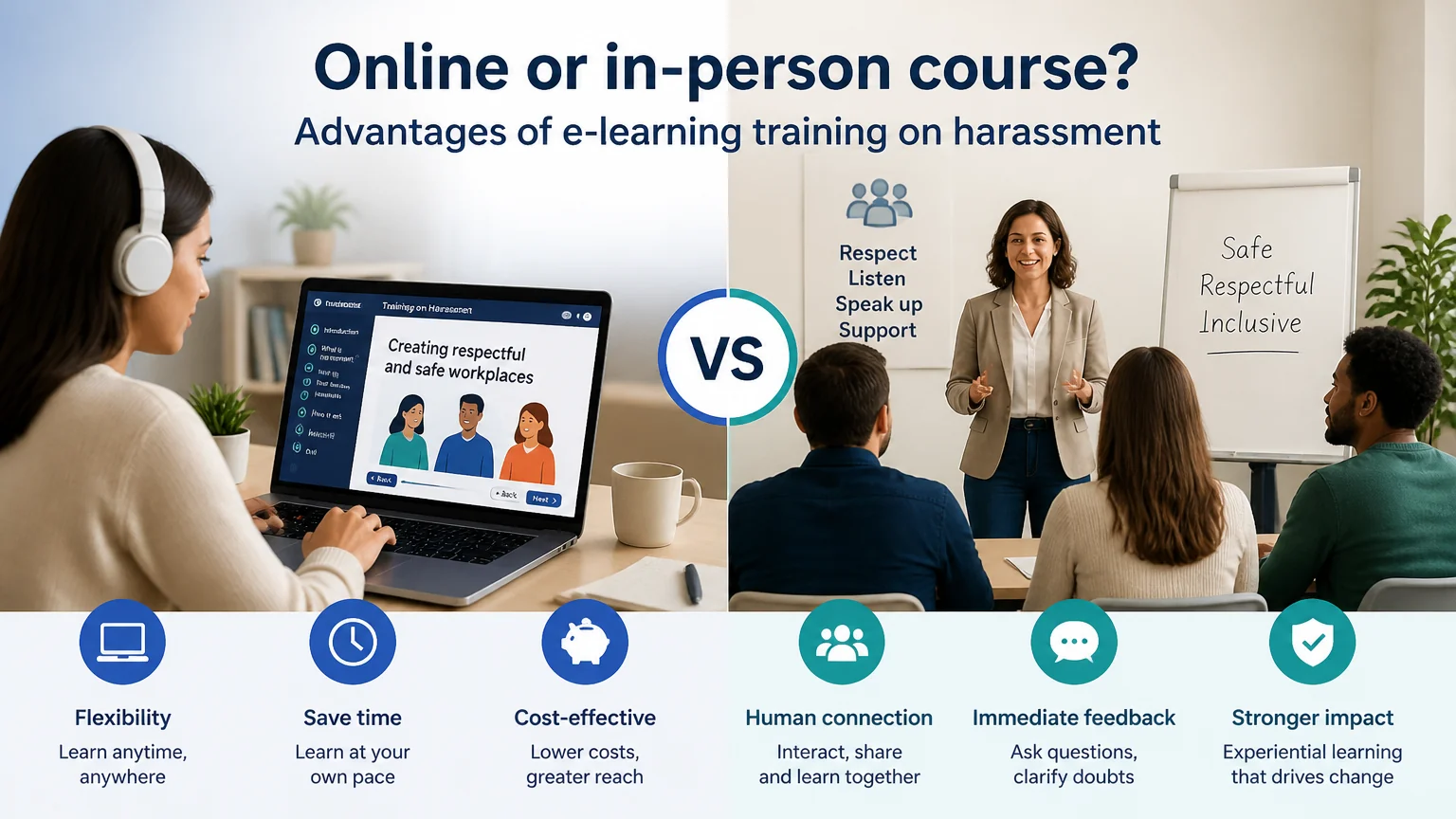
Online or in-person course? advantages of e-learning training on harassment
Online training has become a key tool for addressing harassment effectively. Explore how it can fit your needs and improve your workplace through our tailored course on addressing harassment with flexible learning options.
In the fight against harassment, training plays a crucial role. Whether in the workplace, school, or even in the digital environment, learning to identify, prevent and address situations of harassment is essential to build safe and respectful environments. But which training mode is more effective: online or in-person? Let’s examine the advantages of each to help you make the best decision.
Online training, or e-learning, has gained popularity in recent years thanks to its flexibility and accessibility. In the context of harassment prevention, it offers a number of significant advantages:
One of the greatest appeals of online courses is the ability to adapt learning to your own pace and schedule. It doesn't matter if you work full time, have other responsibilities, or live in a remote area; you can access course content whenever and wherever you want, without needing to travel.
For some people, especially those who have been victims of harassment or feel uncomfortable talking about the topic in public, online training offers a safe and private space to learn and reflect. They can interact with the content and ask questions without feeling exposed or judged.
Online courses often offer a wide range of resources, such as videos, presentations, articles, discussion forums, and interactive exercises. This variety of formats allows adaptation to different learning styles and helps maintain the participant's interest.
In general, online courses tend to be less expensive than in-person courses, since they do not involve travel, accommodation, or physical material costs. This makes them a more accessible option for a larger number of individuals and organizations.
Despite the advantages of online training, in-person training remains a valuable and effective option in the prevention and handling of harassment. It offers unique benefits that can complement or outweigh the advantages of e-learning:
In an in-person course, participants have the opportunity to interact directly with the instructor and other classmates. This allows them to ask specific questions, share experiences, debate ideas, and receive immediate feedback. Personal interaction can be especially valuable on sensitive topics like harassment.
In-person training facilitates the development of social and empathetic skills, such as assertive communication, active listening, conflict resolution, and empathy. These skills are fundamental to preventing and addressing harassment situations effectively.
Participating in an in-person course can be an opportunity to meet others who share your interest in harassment prevention and create support networks. These networks can be a valuable source of information, advice, and long-term motivation.
Some people find that in-person training helps them stay more engaged and motivated than online training. The physical presence in a classroom, interaction with other participants, and course structure can contribute to greater focus and performance.
The choice between an online course and an in-person one will depend on your needs, preferences, and personal circumstances. Here are some key questions you can ask yourself to make the best decision:
Do you prefer learning by watching and listening? Expand your knowledge with these free videos related to this topic.
Spot workplace violence as a psychosocial risk, distinguish abuse from reasonable demands, and use technical/legal criteria to prevent it onsite and online.
Watch VideoApply a zero-tolerance policy: detect abuse, promote compliance, and require consistent, exemplary intervention from leaders across the organization today.
Watch VideoUnderstand sexual harassment, discrimination, and workplace mobbing, with examples and when they qualify as workplace violence requiring proper action.
Watch VideoSearch
Popular searches