For Onlinecourses55
|
2026-11-02
What information should a restaurant provide about allergens? - allergens
Every diner deserves to know what they're consuming. Equip yourself with the essential tools from this specialized course on food allergen information in restaurants, ensuring safety for yourself and your loved ones.
Hello, diners! Have you ever wondered what information a restaurant must provide you about allergens? If you're allergic to something, surely you have. And if you aren't, you should know too! Because food safety is everyone's business. In this article, we are going to dive into the world of allergens in restaurants and discover everything you need to know to eat with peace of mind.
Imagine this: you are dining out and are dying to try that incredible-looking dish. But, oh surprise! You are allergic to one of the ingredients. If the restaurant doesn't warn you, the night could end up in the emergency room! Therefore, allergen information is vital to protect the health of customers. It allows them to make informed decisions and enjoy a safe and pleasant meal. It's like having a superpower to avoid allergic reactions.
But it is not just a matter of goodwill. Restaurants have a legal obligation to provide information about the allergens present in their dishes. In Spain, the regulations are clear: customers have the right to know what they are eating, especially if they have food allergies or intolerances. Ignoring this responsibility can lead to fines and, what is worse, jeopardize people's health. Think about it, who wants to be remembered for poisoning instead of a delicious dinner?
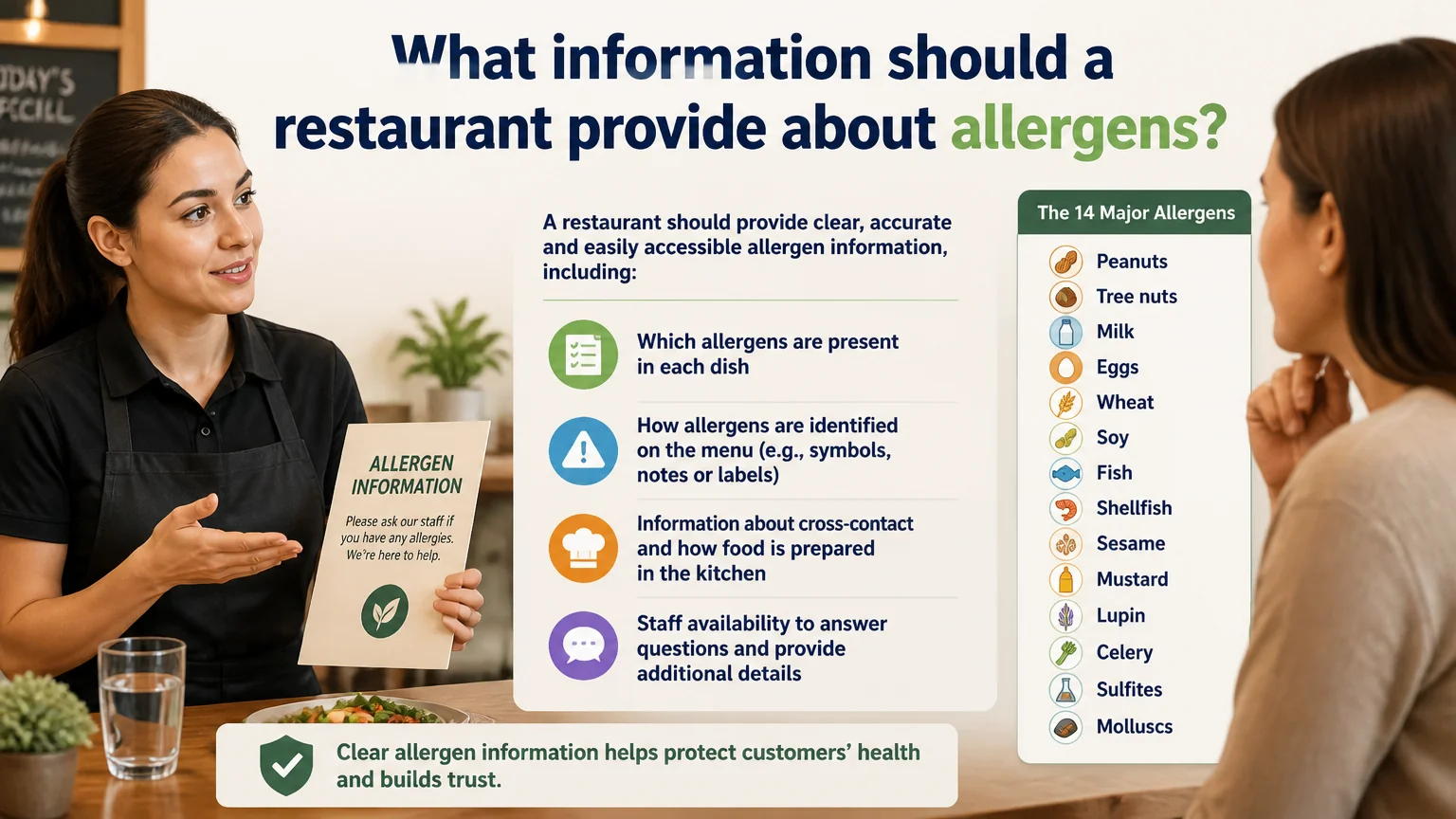
Not all foods cause allergies, but some are the "usual suspects." European legislation identifies 14 main allergens that restaurants must declare:
Remember! Restaurants must indicate whether these allergens are present in their dishes, either as a main ingredient or as a trace (i.e., a small amount that may have entered the dish through cross-contamination).
As we have already said, the law requires restaurants to inform about allergens. But how should they do it? The legislation does not specify a single format, but it does require that the information be accessible, clear, and easy for customers to understand. This can be through a specific menu, a separate allergen list, clear signage on the menu, or even verbally by the staff.
Beyond what the law requires, there are many things a restaurant can do to offer even more complete and useful information to its customers.
Well-trained staff is key to effective communication. Waiters must know the ingredients of each dish and be able to answer customer questions about allergens. Imagine the peace of mind knowing that your waiter knows what they are talking about!
A menu with clear and easy-to-understand symbols is a great ally. You can use icons to indicate the presence of each allergen in each dish. A menu that looks like a hieroglyph doesn't help anyone!
Printed menus remain a popular option, but they require constant updates to ensure that allergen information is accurate. Adding a legend with allergen symbols or a detailed list at the end of the menu can be a simple and effective solution.
QR codes and mobile applications offer a more dynamic and flexible way to present allergen information. They allow you to update the information instantly and offer additional details about the ingredients and preparation of the dishes. A menu that fits in your pocket!
| Option | Advantages | Disadvantages |
|---|---|---|
| Printed Menu | Simple, accessible for everyone, requires no technology. | Requires manual updating, may lack detail. |
| QR Code/App | Detailed and updated information, interactive, sustainable. | Requires a smartphone, may be difficult for older people. |
The key is empathy and patience. Listen carefully to the customer's questions, verify the information with the kitchen, and respond clearly and accurately. If you are unsure of something, don't hesitate to ask! It is better to be honest than to give incorrect information.
Some customers may have multiple allergies or special needs. Being willing to adapt dishes or offer alternatives is a sign of professionalism and customer service. A small gesture can make a big difference.
Cross-contamination is the transfer of allergens from one food to another. To avoid it, it is essential to follow a series of measures in the kitchen:
Storing allergenic foods separate from the rest and using airtight containers can help prevent contamination. Make sure kitchen staff are well trained in these practices.
The future of allergen information involves technology. Applications that scan dish ingredients and warn you if they contain allergens, smart menus that adapt to your needs... The possibilities are endless!
Ultimately, transparency is key. Restaurants must be honest and clear with their customers about the ingredients and preparation of their dishes. A relationship of trust is essential to guarantee everyone's safety and satisfaction.
Providing clear and accurate information about allergens is not only a legal obligation but also a sign of respect toward customers. By doing so, restaurants can create a safe and welcoming environment for everyone, allowing every diner to enjoy a gastronomic experience without worries. Happy eating!
A: In that case, you can file a complaint with the competent authorities and demand compensation for the damages suffered. It is important to keep all documentation related to the incident (invoices, medical reports, etc.).
Q2: Can I trust the allergen information given to me by the restaurant?A: Generally, yes. Restaurants have a legal obligation to provide truthful and accurate information. However, it is always advisable to verify the information with the staff and, if in doubt, opt for simpler dishes.
Q3: What should I do if I have a very serious allergy and go to a restaurant?A: It is best to call the restaurant in advance and speak to the chef or manager. Explain your situation and ask if they can adapt a dish for you. You can also carry a card with your allergies written in the local language.
Q4: Is allergen information the same in all countries?A: Not necessarily. If you travel to another country, it is important to find out about local legislation regarding allergens. Some countries may have different requirements or additional allergens to consider.
Q5: What can I do if I find an error in a restaurant's allergen information?A: The most advisable thing is to inform the restaurant staff. If you do not receive a satisfactory response, you can file a complaint with the competent authorities.
Search
Popular searches