 For Onlinecourses55
|
2026-10-08
For Onlinecourses55
|
2026-10-08
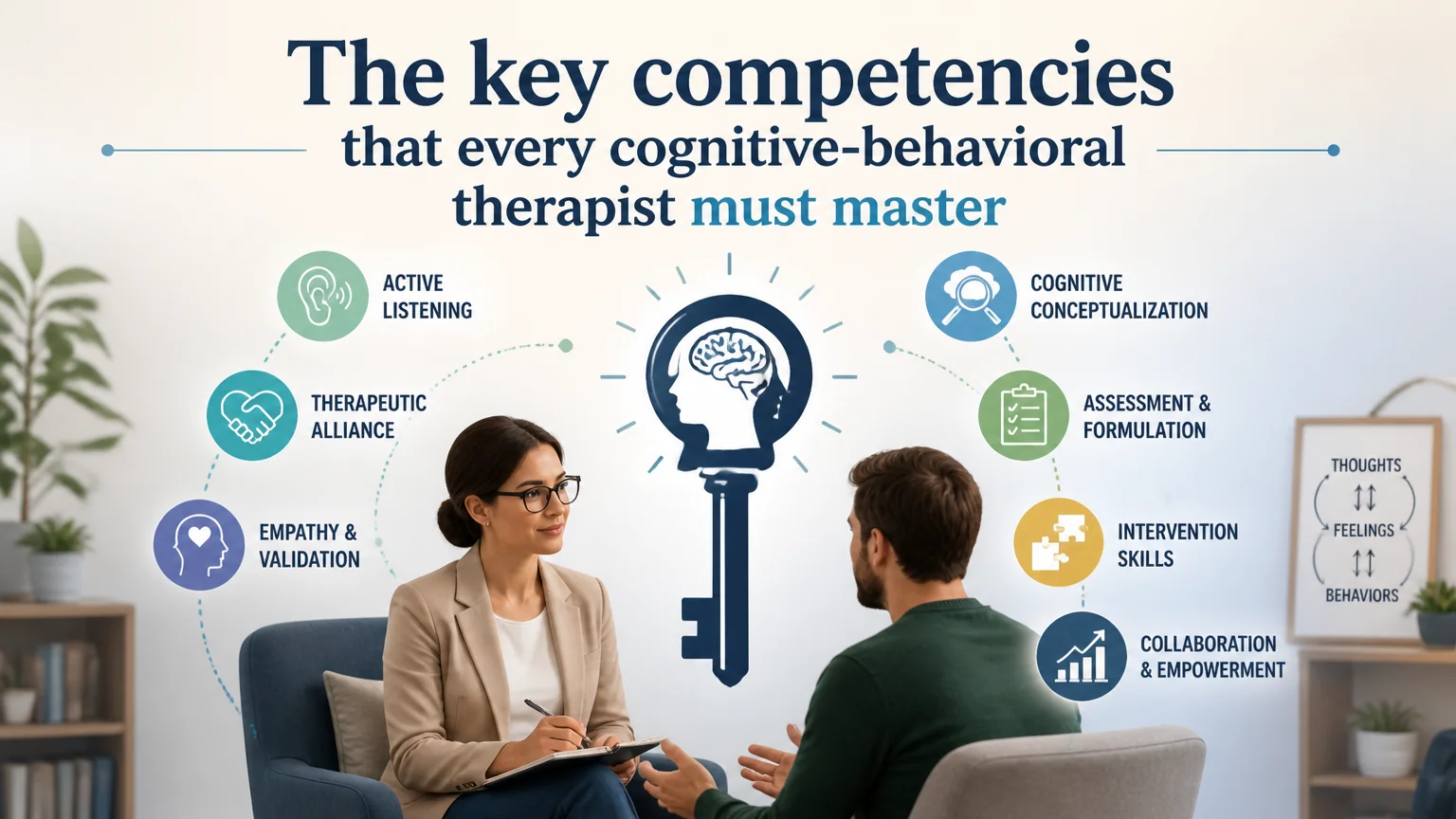
The key competencies that every cognitive-behavioral therapist must master - cognitive behavioral therapy
To master the implementation of cognitive techniques, you need a comprehensive grasp of theory and practice. Explore a course on the core competencies of cognitive therapy that focuses on integrating knowledge and skills for effective therapeutic interventions.
Mastering cognitive-behavioral therapy requires much more than knowing isolated techniques: it involves integrating theory, interpersonal skills, method, and ethics to generate real change. The following competencies form a practical map to sustain effective, safe, and sustainable interventions over time.
A solid foundation starts with understanding how thoughts, emotions, physical sensations, and behaviors influence one another. It is important to master the principles of learning (reinforcement, extinction, conditioning), cognitive conceptualization (core and intermediate beliefs, automatic thoughts), and how avoidance cycles maintain the problem. This understanding allows you to select techniques with intention, adjust the level of directiveness, and explain clearly the reason for each step, which is key for adherence. It is also useful to distinguish when a more behavioral, more cognitive, or more experiential approach (for example, behavioral experiments) is most pertinent, avoiding rigid application of protocols.
The alliance is a robust predictor of outcomes. Active listening, accurate reflection, and validating the patient’s experience create psychological safety to explore sensitive beliefs. Warmth does not exclude structure; both are complementary.
The Socratic style —asking with guided curiosity— helps the patient discover new perspectives without imposing conclusions. Asking open questions, testing hypotheses together, and summarizing agreements strengthens goal orientation and prevents resistance.
Analyzing antecedents, behavior, and consequences (the ABC model) clarifies the functions of symptoms. Understanding what maintains the problem (e.g., behavioral safety, subtle avoidance) guides priority interventions.
A living formulation integrates vulnerabilities, triggers, beliefs, rules (“should”), coping strategies, and goals. It is reviewed periodically with session data and progress measures, adjusting the treatment plan according to new clinical evidence.
Goals should be specific, measurable, achievable, relevant, and time-bound. Translating broad goals (“reduce anxiety”) into observable behaviors (“drive 30 minutes on the highway three times a week”) makes it easier to evaluate progress. The session is structured with a shared agenda, review of tasks, focused work, and a close with assignment of practices, maintaining an active and collaborative pace.
In addition to identifying automatic thoughts and biases, it is useful to maintain a flexible toolbox:
Behavior is the lever that confirms or disconfirms beliefs. Master:
The key is to adjust difficulty, measure outcomes, and learn from each trial to refine the next task.
Explaining the model and the purpose of each technique empowers the person and reduces uncertainty. Homework assignments should be specific, short at the start, and include anticipated barriers (“if X, then Y”). Agreeing on when, where, and how they will be done and reviewing them systematically in session increases adherence. If they are not completed, explore obstacles without judgment and readjust the plan.
Using standardized scales, exposure logs, and behavioral markers provides objective feedback. Plotting progress, reviewing trends, and sharing the data fosters transparency and guides micro-adjustments: increase the dose of exposure, change the cognitive focus, or reconsider goals. Continuous feedback also detects ruptures in the alliance and allows timely repairs.
Cultural competence involves adapting language, examples, and practices to the person’s values, identity, and resources. Simple changes —translation of materials, culturally relevant metaphors, compatible scheduling— make a difference. Respectful curiosity, awareness of biases, and recognition of social determinants of health prevent interpreting structural barriers as “resistance.”
Acting with integrity includes informed consent, clear confidentiality, and the use of evidence-based practices. It is crucial to assess and document risk (self-harm, violence, neglect), establish safety plans, and coordinate with support networks when appropriate. Competence also means recognizing professional limits and referring when another approach or level of care would be more suitable.
Quality clinical supervision accelerates development: reviewing recordings, receiving specific feedback, and practicing micro-skills deliberately improves expertise. Self-care is not optional: managing workload, setting time boundaries, and using personal regulation strategies prevents burnout and sustains therapeutic presence over time.
Remote work requires establishing a frame (privacy, plan for interruptions), handling secure platforms, adapting exercises for the screen, and providing materials (records, guides) in accessible formats. Maintaining eye contact, using digital whiteboards, and checking comprehension more frequently compensate for reduced nonverbal cues. It is also useful to plan tasks that leverage the patient’s real environment.
Clear notes focused on goals and outcomes facilitate continuity, ethical auditing, and communication with other professionals. Coordinating with medicine, psychiatry, family, or school —with appropriate permissions— amplifies impact and reduces contradictory messages. Documentation also serves as a mirror of the process: if progress is not reflected, it is time to reconsider hypotheses or techniques.
Expertise is not accumulating techniques, but knowing when and why to use them. Being flexible means abandoning an intervention that does not help, trying alternatives, and co-constructing solutions with the person. Clinical reasoning integrates data, values, and preferences to adjust the plan without losing direction.
Together, these competencies support effective, humane, and measurable work. Mastery is built with study, intentional practice, supervision, and a stance of continuous learning. When the relationship, formulation, and methodology align, change ceases to be a matter of chance and becomes a replicable and meaningful process for each person.
Search
Popular searches



![Treatment of post-traumatic stress [ptsd]: the role of trauma-focused cbt](/images/postDuplicados/onlinecourses55-treatment-of-post-traumatic-stress-ptsd-the-role-of-trauma-focused-cbt.webp)