How a cbt course can boost your employability in the healthcare sector - cognitive behavioral therapy
In the rapidly evolving mental health landscape, staying trained in effective methodologies is crucial. Consider enrolling in a course on cognitive therapy techniques to boost your professional profile and excel in various healthcare settings.
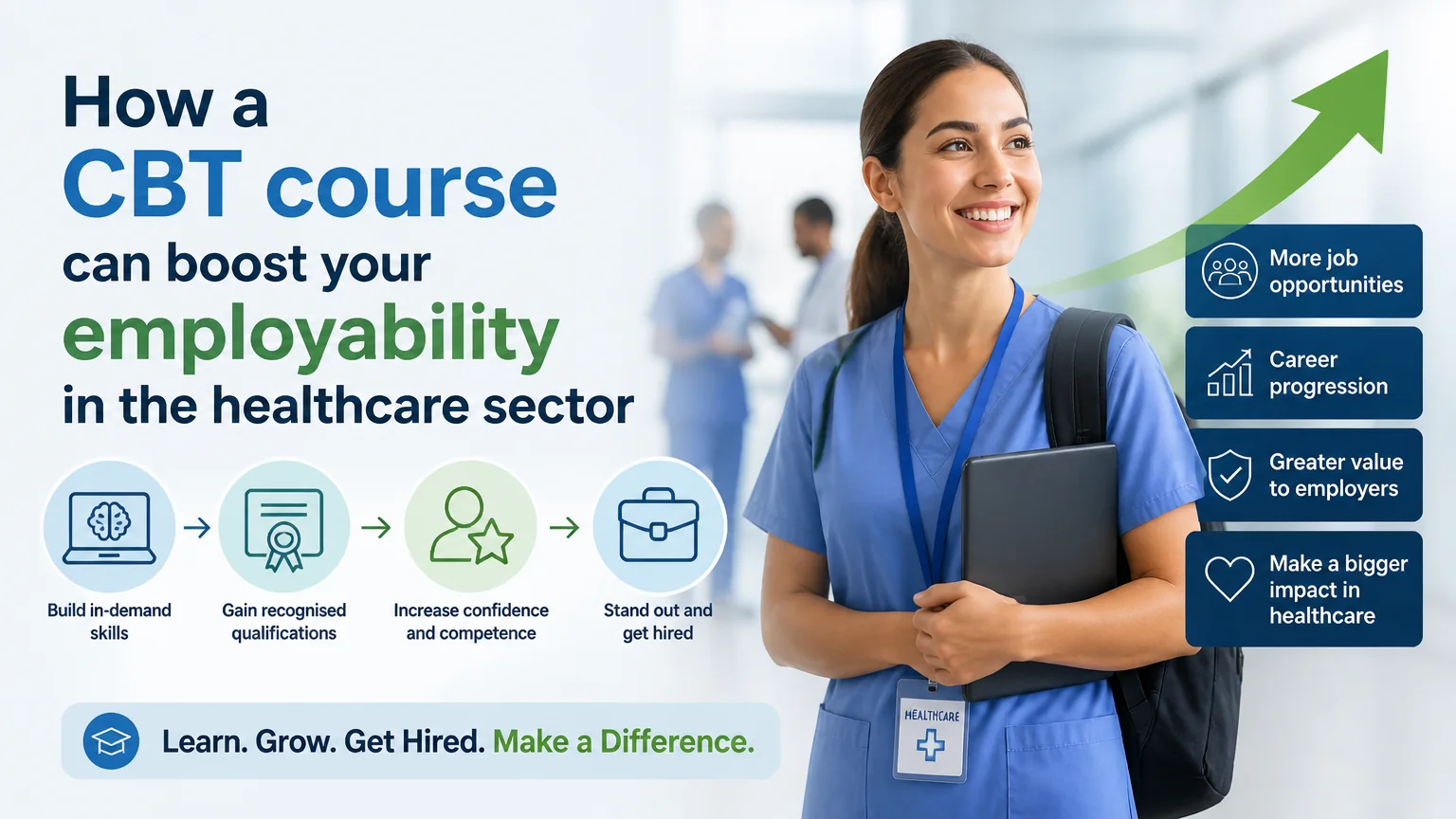
The health labor market is changing rapidly: increased demand for mental health, greater emphasis on evidence-based practices, and organizations that need professionals able to demonstrate results. In this context, training in Cognitive Behavioral Therapy (CBT) not only enriches clinical practice; it also becomes a powerful differentiator when getting interviews, improving your professional profile and accessing new work settings. Below you will see how to capitalize on that training to increase your opportunities, which competencies are most valued and how to present them convincingly to employers.
What CBT is and why it adds value in the health sector
CBT is a psychological approach focused on the relationship between thoughts, emotions and behaviors, with a strong empirical basis. In health care, this is key for two reasons: first, because multiple clinical guidelines recommend it for various mental health problems; second, because its structure makes it easier to measure outcomes and be accountable to multidisciplinary teams, insurers and managers. In an environment that rewards effectiveness and traceability, mastering CBT signals that you can work with clear goals, an intervention plan and progress evaluation.
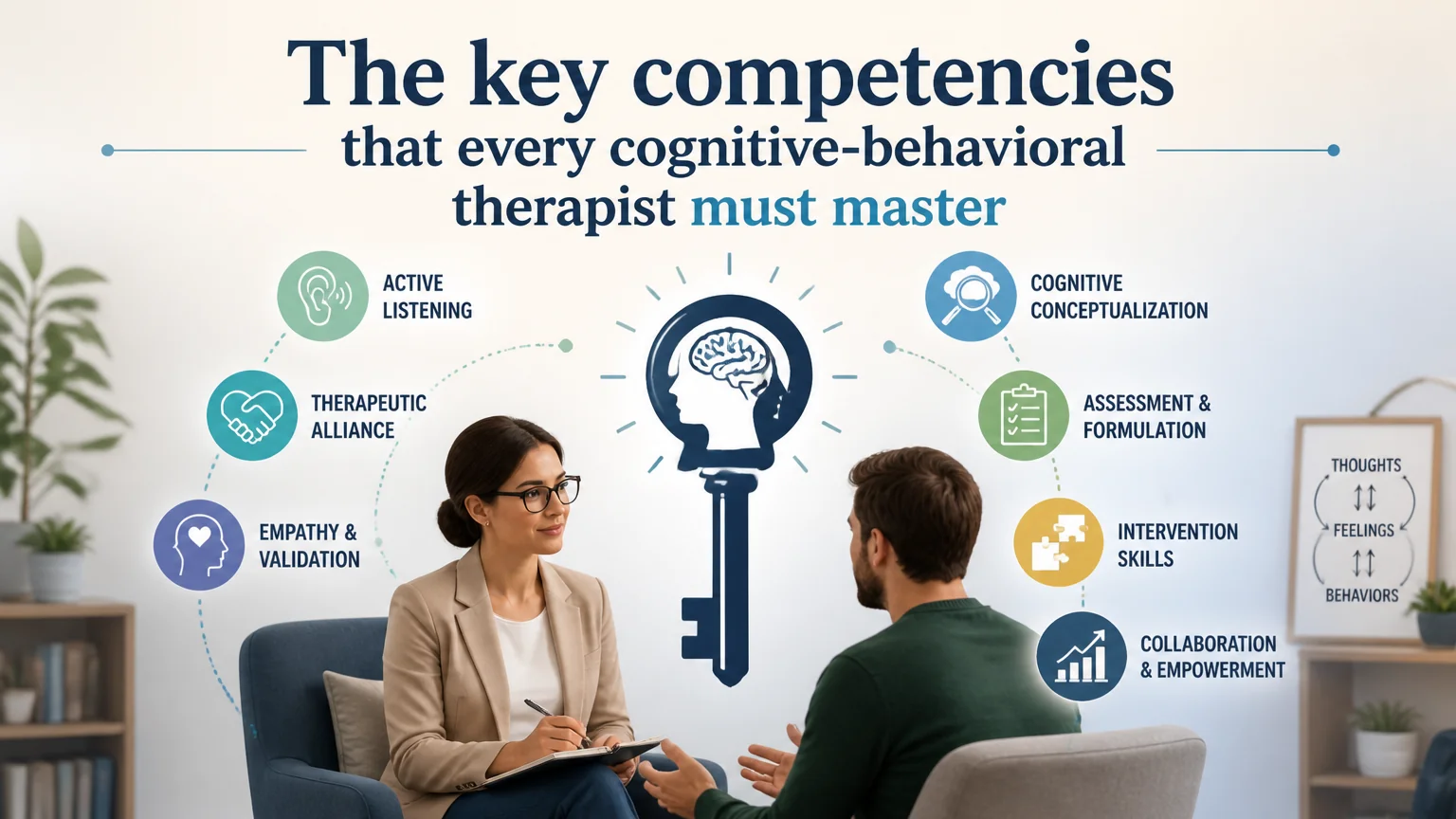
Competencies developed by a good CBT course
- Case formulation: integrate history, symptoms, maintenance factors and treatment goals.
- Goal setting and session planning: define realistic goals, prioritize and sequence interventions.
- Effective psychoeducation: explain models in a comprehensible and culturally sensitive way.
- Interview skills and therapeutic alliance: active listening, collaboration, managing expectations.
- Cognitive and behavioral interventions: apply strategies to modify patterns of thought and behavior, with ethical and safety criteria.
- Outcome measurement: use of standardized scales, definition of indicators and systematic follow-up.
- Clinical documentation: brief, clear, goal-oriented notes useful for audits and interprofessional coordination.
- Teamwork: communication with medicine, nursing, social work and psychiatry for integrated plans.
- Cultural competence and trauma-informed approach: adapt interventions to the person's context.
- Scope of practice and referral: recognize when to coordinate and escalate care.
Settings and roles where CBT makes a difference
- Outpatient clinics and private practice: sustained demand for brief, focused and measurable interventions.
- Primary care and integrated programs: collaboration with family physicians for management of anxiety, depression and chronic conditions.
- Community mental health units: brief protocols, group work and reduction of waiting lists.
- Hospitals and liaison-consultation services: structured approaches for treatment adherence and coping.
- Rehabilitation and chronic pain: behavioral strategies to improve functioning and quality of life.
- Addictions and dual disorders: frameworks that help sustain behavioral change and prevent relapse.
- School and university settings: brief interventions for academic stress, social skills and emotion regulation.
- Telehealth and digital platforms: protocolized, measurable formats that scale well in remote settings.
- Employee Assistance Programs (EAPs): return to productivity with brief interventions and work-related goals.
- Insurers and capitated providers: appreciation of the approach for its cost-effectiveness and traceability.
How this training boosts your employability
- Keywords for ATS filters: including technical terminology (case formulation, outcome-based measurement, behavioral interventions) increases visibility.
- Differentiation from generalist profiles: demonstrate observable competencies and concrete use cases.
- Transferability: CBT adapts to multiple diagnoses, age groups and care settings.
- Alignment with clinical guidelines and audits: facilitates meeting standards, which reduces risk for employers.
- Ability to show impact: pre-post data and clinical KPIs that support your practice.
Professional evidence you can present without breaching confidentiality
- Anonymous case formulation descriptions, focusing on process and clinical reasoning.
- Aggregated indicators (for example, average reduction on standardized scales) without personal data.
- Session protocols or generic intervention plans that show your work structure.
- Examples of interprofessional coordination and well-documented referral pathways.
- Participation in supervision and ethical reflection: continuous learning and patient care.
How to choose a course that improves your profile
- Teaching and supervision: faculty with clinical experience and opportunities for supervised real cases.
- Balanced curriculum: foundations, guided practice, role-playing and competency assessment.
- Hours and accreditation: number of theoretical-practical hours and endorsement by professional societies or universities.
- Emphasis on measurement: use of validated scales and training in results analysis.
- Cultural and ethical adaptation: clear guidelines on confidentiality, consent and limits of practice.
- Modality: in-person, online or hybrid options, with technological support and downloadable materials.
How to reflect CBT on your CV and professional profiles
Curriculum
- Skills section: case formulation, design of brief interventions, outcome measurement, teamwork.
- Experience: bullets with measurable achievements (e.g., average improvement on scales, reduction of no-shows through session structure).
- Training: course name, hours, accrediting body and supervision components.
- Tools: scales used, clinical record systems, telehealth platforms.
LinkedIn and portfolio
- Summary focused on impact and populations served.
- Publications or short articles on CBT best practices.
- Projects: psychoeducation guides or group workshop materials (non-clinical, original materials).
Preparation for interviews
- Describe a case formulation: how you define the problem, objectives and intervention plan.
- Explain how you measure progress: frequency of scale application and use of data to adjust the plan.
- Interdisciplinary work: example of coordination with medical/nursing staff and outcomes.
- Managing barriers: adherence, motivation and cultural adaptation.
- Ethics and boundaries: consent, confidentiality and referral when appropriate.
Practice answers that highlight your reasoning, not just technique. Use anonymous examples, mention quantitative results when appropriate and show how you adapt to service protocols.
Market trends you can take advantage of
- Hybrid and remote care: master conducting online sessions and managing digital scales.
- Outcome-based measurement: teams that report clinical KPIs demand professionals accustomed to recording data.
- Psychoeducational groups: brief programs for anxiety, stress and grief with high efficiency.
- Integration with physical health: CBT for treatment adherence and management of chronic conditions.
- Occupational health: return to work and prevention of absenteeism with functional goals.
Common mistakes when training and how to avoid them
- Staying theoretical: seek courses with supervised practice and specific feedback.
- Not measuring outcomes: incorporate scales from the start to demonstrate impact.
- Applying techniques without formulation: prioritize the individual case and its maintaining factors.
- Neglecting documentation: develop brief notes oriented to goals and progress.
- Lack of updating: participate in seminars and critical reading to maintain competence.
30-60-90 day action plan to capitalize on your training
First 30 days
- Complete or update a course with guided practice and assessment.
- Prepare two anonymous case formulations for your professional portfolio.
- Define a set of scales and a template of goal-oriented notes.
60 days
- Publish a short article or professional infographic on CBT and outcome measurement.
- Practice interviews with simulated cases and technical questions.
- Connect with local services and telehealth platforms, highlighting your ability to measure impact.
90 days
- Present aggregated results from your first interventions (without personal data) as evidence of value.
- Request feedback from supervisors and adjust your evaluation processes.
- Apply to vacancies in different settings (clinical, community, occupational) to broaden options.
Practical conclusion
Investing in CBT provides you with a common language with clinical teams, tools to demonstrate progress and the structure that many services seek to standardize care. The key to translating that training into employability lies in three fronts: selecting a course with real practice and supervision; documenting your impact with clear indicators; and communicating your competencies strategically on your CV, portfolio and in interviews. With a 90-day plan and concrete evidence, your profile gains visibility and credibility in a sector that values effectiveness, ethics and collaboration.
 For Onlinecourses55
|
2026-10-23