For Onlinecourses55
|
2026-09-08
For Onlinecourses55
|
2026-09-08

Why specialize in cbt? career opportunities and current demand - cognitive behavioral therapy
Cognitive-Behavioral Therapy has developed into a vital tool for numerous psychological issues. Gain proficiency in this method by participating in a detailed course on modern CBT practices tailored to diverse clinical scenarios.
Cognitive-Behavioral Therapy (CBT) is a psychological approach focused on how thoughts, emotions and behaviors influence each other. It is characterized by being structured, goal-oriented and based on techniques that can be learned, practiced and measured. Today it has consolidated as one of the most used intervention models due to its demonstrated effectiveness across a wide variety of problems: anxiety, depression, stress, phobias, eating disorders, pain management, addictions, among others. In addition, its practical nature makes it especially compatible with modern care formats such as teletherapy, hybrid programs and digital interventions.
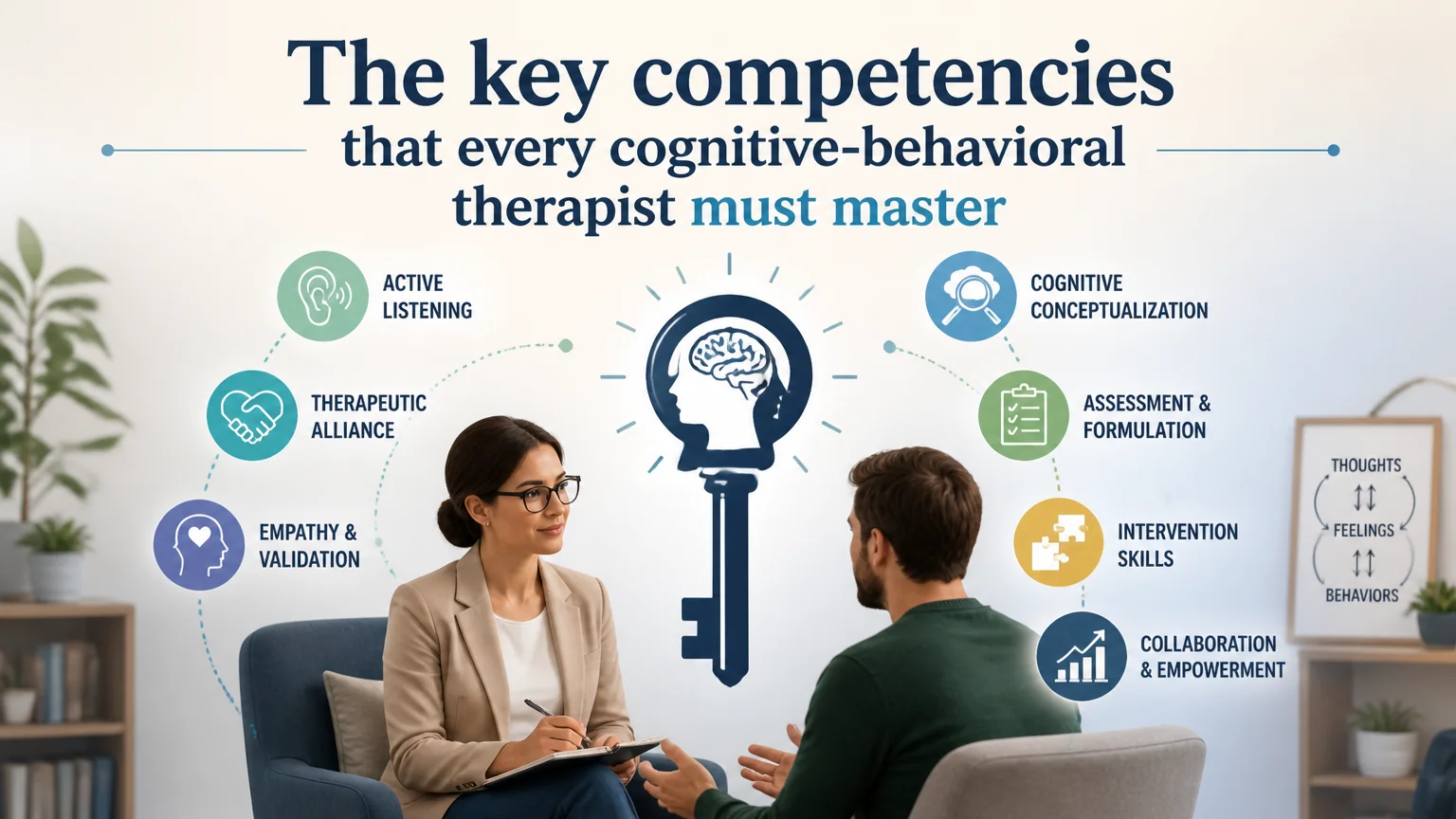
Specializing in CBT not only means mastering a set of techniques; it involves adopting a way of thinking and working that focuses on functional analysis of the problem, clear psychoeducation, active collaboration with the patient and continuous evaluation of progress. It is a common language among professionals from multiple fields, which opens doors in different work environments.
One of the main reasons to commit to CBT is its empirical backing. Cognitive-behavioral interventions have abundant research supporting their efficacy and effectiveness in real-world contexts. This foundation allows you to work with confidence, justify your clinical choices and communicate results clearly to patients, teams and organizations.
CBT provides tools that can be applied from the first session: thought records, activity scheduling, exposure with response prevention, cognitive restructuring, skills training, among others. The structure and use of measurable goals reduce ambiguity and increase the sense of progress for patients and professionals. This improves adherence and makes it easier to communicate the value of treatment.
CBT adapts well to diverse profiles and multiple contexts, from private practices to hospitals, schools and companies. It also integrates smoothly with other evidence-based approaches, such as contextual therapies (e.g., Acceptance and Commitment Therapy), trauma-focused work centered on exposure, or psychoeducational group programs.
CBT fosters a culture of continuous training and supervision. Being in constant update, it teaches you to evaluate new evidence, refine skills and maintain a reflective practice. This opens specialization pathways such as child and adolescent CBT, anxiety disorders, treatment-resistant depression, chronic pain, sleep, addictions or crisis intervention.
Working in private practice remains one of the most attractive destinations. CBT allows you to build a clear and differentiated offer, with goal-based programs, session packages and follow-up using metrics. In addition, the modular format makes it easier to communicate your proposal to patients and referrers.
Many mental health services seek professionals experienced with CBT protocols for their efficiency and ability to work interdisciplinary. In day hospitals, eating disorder units or pain services, CBT integrates with psychiatry, internal medicine and rehabilitation.
The growth of mental health platforms, insurers and startups has increased demand for therapists with a cognitive-behavioral orientation. CBT translates well to online protocols, therapist-guided programs and blended solutions that combine sessions with digital resources.
Wellness, risk prevention and organizational development areas demand professionals capable of designing programs for stress management, anxiety and healthy habits. CBT provides practical and measurable tools that align with business indicators.
In schools and universities, CBT applies to educational guidance, anti-bullying programs, exam management, social skills and prevention of risk behaviors. It is also useful in work with families and teachers through psychoeducation and brief intervention protocols.
If you are drawn to academia, CBT offers a fertile field to research outcomes, mechanisms of change and cultural adaptation of interventions. Teaching and clinical supervision are natural career paths after gaining experience.
Some subspecialties require advanced CBT due to its efficacy and structure: trauma and PTSD, OCD, eating disorders, chronic pain, psycho-oncology, clinical neuropsychology, sleep, sexuality and addictions. These areas combine individual work, family involvement and coordination with medical teams.
Demand for professionals skilled in CBT remains high because of its effectiveness, clarity of results and compatibility with care models that prioritize brief, measurable interventions. In addition, the expansion of online care and mental health programs in companies broadens hiring and collaboration opportunities.
Choosing your training well makes the difference between knowing isolated techniques and mastering a coherent practice. Look for programs that combine theory, supervised practice and competency assessment, and that offer experience with real cases. Value content updates, the faculty's track record and the possibility of continuing with advanced pathways.
The combination of clarity in your offer, technical quality and a consistent patient experience is the basis for sustainable growth. Starting with a specific focus and expanding later is usually more effective than trying to cover everything from the start.
Specializing in CBT is a commitment to a clear, practical and measurable approach that aligns well with the current needs of patients, teams and organizations. It gives you versatility, opens multiple career paths and invites continuous improvement based on evidence. With solid training, adequate supervision and intentional practice, you can build a career with real impact, visible results and sustained growth in a market that increasingly values quality and clarity in psychological intervention.
Search
Popular searches