For Onlinecourses55
|
2026-03-06
For Onlinecourses55
|
2026-03-06

Emotional coaching online advantages and how to choose the best coach - emotional coach
The flexibility of online emotional coaching can significantly enhance your personal development journey. Consider advancing your skills by enrolling in an insightful course that teaches modern emotional management strategies designed for today's fast-paced environment.
Online emotional coaching is a process of professional accompaniment aimed at helping people identify, manage and transform their emotions to achieve personal goals or improve their well-being. Unlike therapy, coaching tends to focus on the present and the future, on designing concrete actions and on empowering resources. The online modality takes advantage of video calls, messaging and digital tools to facilitate sessions from anywhere, with the advantage of flexibility and continuity.
The experience of working with a professional through the screen offers multiple practical and emotional benefits. The following are the most relevant advantages, both for those with a tight schedule and for those seeking convenience and continuity.
You can connect from home, the office or anywhere with privacy. This reduces travel time and makes it easier to maintain regular sessions, which is key to progress.
Distance eliminates geographical barriers, which increases the possibility of finding a coach with the specialization and focus you need, even if he or she does not live in your city.
Online platforms allow sessions to be scheduled at less conventional times, ideal for those who work shifts or have family responsibilities.
By eliminating travel and some associated expenses, costs can be more competitive. In addition, virtual offerings often include more affordable packages or short sessions.
Being in your own environment during the session can make you feel safer and more open, making it easier to explore difficult emotions with fewer barriers.
If you move or travel, you can continue the process without interruption, which helps to sustain progress and avoid setbacks.
This format is useful for people seeking to improve emotional management for various reasons: stress, anxiety, relational conflicts, decision making, bereavement, professional changes or simply to grow personally. It is also appropriate for those who wish to combine it with therapy, professional coaching or training programs.
Choosing the right person is fundamental. There is no single criterion, but rather a sum of elements that guarantee safety, ethics and effectiveness. The following are the key points to evaluate before committing to a coach.
Check specific training in emotional coaching or related areas (psychology, body therapy, emotional intelligence). Certifications from recognized organizations are a guarantee, although practical experience is also a determining factor.
Look for professionals who have worked with cases similar to yours. Specialization in specific areas (grief, anxiety, emotional leadership) increases the probability of finding appropriate tools.
Ask for information about how they work: whether they offer exercises between sessions, written resources, recordings or follow-up messages. A clear and structured methodology makes it easier to measure progress.
Human connection is key. Take advantage of initial sessions or brief meetings to see if you feel heard, respected and motivated. Mutual trust enhances change.
Make sure their schedule and platform (video, phone, chat) fit your needs. Also check the policy on session cancellations and rescheduling.
There should be clarity on pricing, session length and possible additional costs. Avoid long commitments without a first assessment or trial session.
Ask for testimonials or examples of changes achieved (respecting confidentiality). Other people's opinions will give you a realistic idea of what to expect.
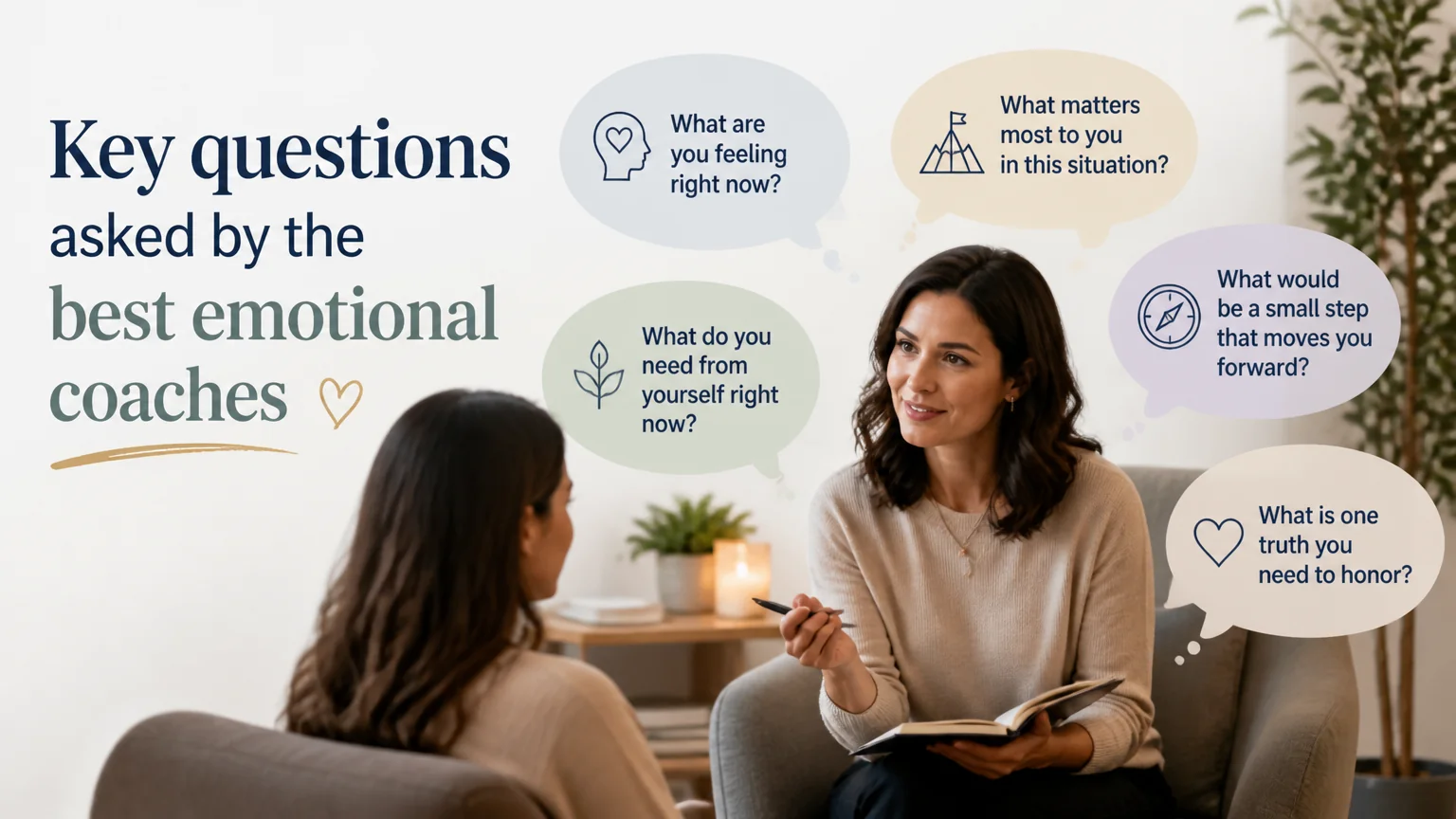
Preparing questions helps you evaluate if the practitioner is the right one for you. Here is a handy list to use for the first contact.
What is his or her background and what does he or she specialize in?
What approach does he/she use and what tools does he/she apply to the process?
How long and how often do you recommend sessions?
How do you measure progress and what results are realistic?
Do you offer trials or introductory sessions? What is your cancellation policy?
How do you handle confidentiality in the digital environment?
The first few meetings usually focus on setting clear goals, exploring your recent history and recognizing emotional patterns. The professional will ask you open-ended questions to understand your priorities and propose an initial plan with practical tasks. It is normal to feel vulnerable; a good coach offers you a safe and concrete space to move forward step by step.
Some simple practices enhance the impact of the sessions and accelerate emotional learning.
Find a place without interruptions, with a good connection and where you feel comfortable. This facilitates concentration and honest expression.
Practices and exercises are the engine of change. Doing them consistently multiplies the results.
If something doesn't work or you don't feel comfortable with a technique, say so. The relationship is collaborative and adaptations improve fit.
Write down progress, recurring emotions and situations that generate difficulties. Reviewing it at each session facilitates follow-up.
Emotional change is progressive. Celebrating small victories reinforces motivation and sustains the process in the long run.
Choosing emotional accompaniment in online format can be a very beneficial decision if it is done judiciously. Value training, methodology, personal connection and transparency. With clarity in objectives and commitment between sessions, the process can transform the relationship with your emotions and open new possibilities in the personal and professional.
Search
Popular searches