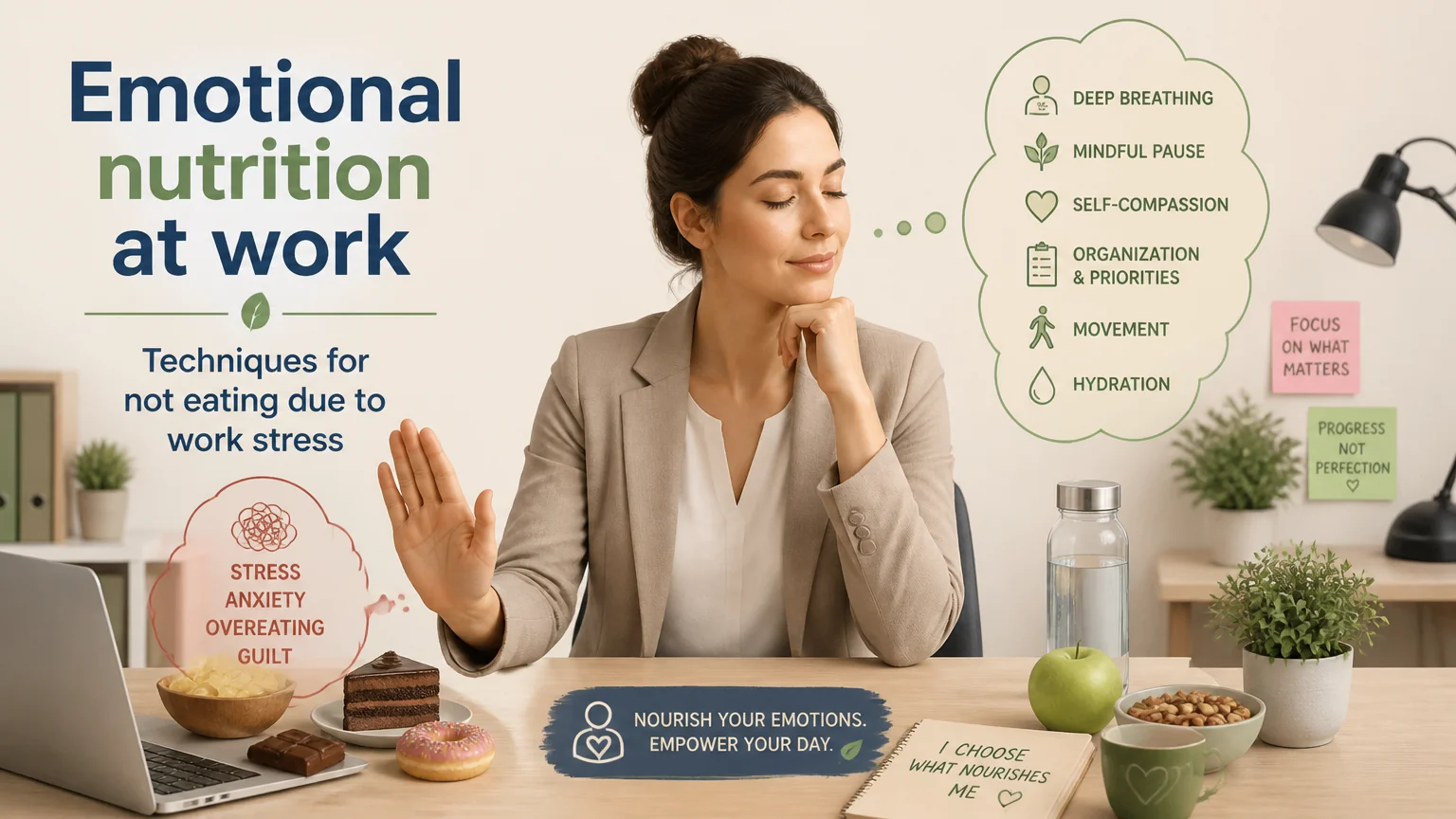
Are you emotionally hungry? quick test to identify it now - emotional nutrition
When emotions dictate our eating patterns, it can become challenging to maintain a healthy relationship with food. If you're ready to break this cycle, we invite you to explore the course dedicated to understanding and managing emotional eating that offers personalized insights and effective strategies.
Feeling an intense desire to eat without being physically hungry can be confusing and frustrating. Many people have experienced times when food appears as an immediate comfort in the face of strong emotions: stress, boredom, loneliness, or sadness. Recognizing when it is a bodily need and when it is an emotional response is the first step to regaining control and making more conscious decisions about eating.
What is emotional hunger?
Emotional hunger arises in response to internal states rather than physiological signals. It is not a warning from the body of a lack of energy, but a temporary strategy to manage uncomfortable feelings. Often food functions as a distraction, a way to calm down or a ritual that restores a sense of momentary security. It is not a conscious intention to sabotage health: it usually appears automatically, associated with learned habits and the relationship that each person has with food from childhood and experience.
Differences between physical hunger and emotional hunger
- Origin: Physical hunger appears gradually and comes from bodily signals (empty stomach, energy drop). Emotional hunger is usually sudden and appears in response to a thought or feeling.
- Desire: Physical hunger accepts varied and nutritious choices. Emotional hunger demands something specific, for example sweet, salty or very fatty foods.
- Control: Physical hunger is satisfied with reasonable portions and leads to satiety. Emotional hunger can lead to eating large quantities without real satisfaction and feeling guilty afterwards.
- Pace: Physical hunger respects schedules and eating patterns. Emotional hunger is unpredictable and can arise outside of meals.
- Emotional state: Physical hunger is not necessarily accompanied by mood swings. Emotional hunger is usually linked to intense emotions such as anxiety, sadness or boredom.
Common signs of emotional hunger
Detecting these signs helps to differentiate what is going on and choose more helpful actions. Some common clues are:
- Immediate desire for something specific (e.g., chocolate or potato chips).
- Eating without paying attention, on autopilot, while doing something else.
- Feeling guilty or regretful after eating.
- Eating to avoid dealing with a stressful emotion or situation.
- Eating even when the body does not need energy (no physical hunger).
- Recurrent use of food as a reward or comfort.
Quick test to identify it now
Mentally answer yes or no to the following questions. If most of them are yes, it is likely that what you are feeling is emotional hunger.
- Did the urge to eat come on suddenly instead of gradually increasing?
- Do you crave a specific food rather than any nutritious option?
- Do you feel emotionally upset (anxious, sad, bored) just before you want to eat?
- Do you tend to eat without conscious effort, for example in front of the TV or while working?
- Do you eat even after having eaten recently or without much time having passed since your last meal?
- Do you feel that food momentarily "calms" you from an uncomfortable emotion?
- Does guilt or regret appear after eating?
- Do you seek food as a reward or comfort after a difficult day?
- Do you eat to avoid talking or thinking about something that is bothering you?
- Do hunger swings coincide with times of stress or emotional exhaustion?
Interpretation: if you answered yes to 6 or more questions, the need is most likely emotional. Between 3 and 5 suggests a mix of factors; less than 3 indicates that there is probably more of a physical influence on the appetite.
What to do if it is emotional hunger
Immediate strategies
- Pause for 10 minutes before eating. Taking a deep breath or a short walk can help the urge go down.
- Identify the emotion: name it without judgment (e.g., "I'm bored" or "I feel anxious"). Putting words to it reduces the intensity.
- Hydrate: sometimes thirst is mistaken for hunger. Drinking water can calm the urge.
- Distract yourself with a brief activity you enjoy: calling a friend, stretching, or listening to music.
- If you decide to eat, choose small portions and eat mindfully, savoring each bite.
Long-term strategies
- Establish regular eating routines that include protein, fiber and healthy fats to reduce physical hunger peaks that make emotional eating easier.
- Develop alternatives to manage emotions: exercise, journaling, relaxation techniques or hobbies that reduce stress.
- Learn to recognize triggers: keep a brief record of when and why you eat to identify emotional patterns.
- Practice mindfulness applied to food: eat slowly, without screens and listening to your body's signals.
- Reduce accessibility to foods that you tend to consume emotionally: not having them at hand makes automatic consumption less likely.
When to seek professional help
If food has become the main way to deal with emotions, if you feel that you lose control of your intake frequently or if there are physical or psychological consequences (rapid weight gain, isolation, depression), it is advisable to seek support. A nutrition professional, psychologist or therapist specializing in EDs (eating disorders) can help you explore root causes, teach you effective tools and design a personalized plan that addresses both eating and emotions.
Recognizing that food can hide emotions is not a weakness, it's an opportunity to get to know yourself better and create healthier responses. With small breaks, consistent habits and, if necessary, professional accompaniment, it is possible to reduce episodes of emotional eating and regain a more balanced and respectful relationship with food and with oneself.
 For Onlinecourses55
|
2026-09-10
For Onlinecourses55
|
2026-09-10