For Onlinecourses55
|
2026-11-02
Human resources management in smes: practical and cost-effective solutions - human resources management
To successfully implement effective HR practices in small and medium enterprises, our course on practical human resources strategies focuses on solutions that are both cost-effective and easy to integrate. Dive in to see tangible results!
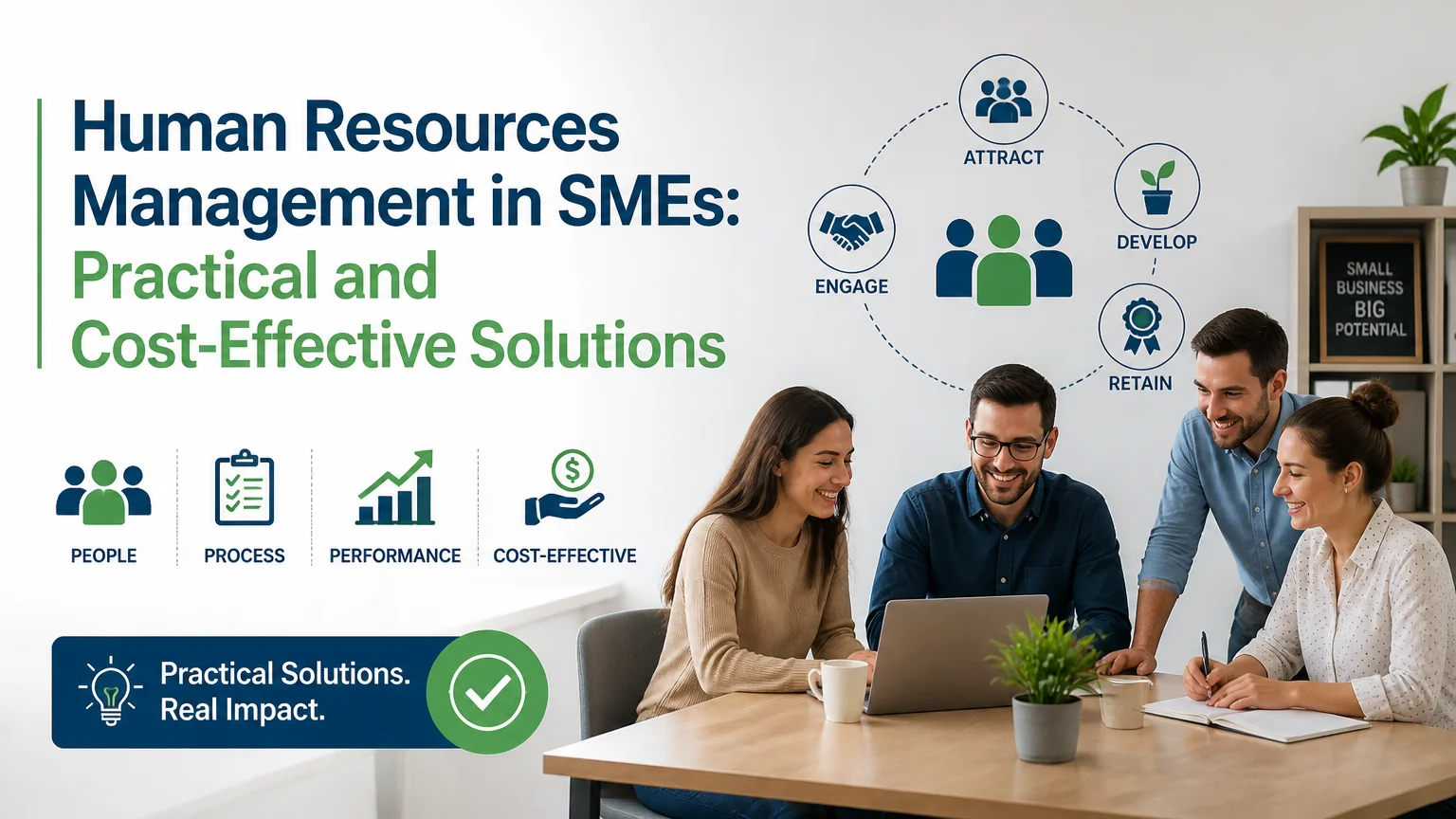
In SMEs, human resources is not just an administrative function—it is the heart that drives daily operations and adaptation to change. Proper management improves productivity, reduces turnover, and creates an environment where people want to stay. For many SMEs, however, a lack of budget or time turns personnel management into an ad hoc task. That’s why it’s best to focus on practical, scalable, and cost-effective solutions that address specific problems without requiring large investments or complex structures.
Before implementing solutions, it’s essential to understand what’s really causing problems within the company. A quick assessment can be conducted in just a few weeks by combining observation, internal surveys, and conversations with team leaders. Key questions: Is there high turnover? Are employees dissatisfied with training? Do hiring processes take too long? Are there frequent conflicts? Prioritize the problems that directly affect operations and costs: turnover, absenteeism, and low productivity are usually the most urgent.
SMEs gain efficiency when they document and standardize key HR processes. There’s no need for a 200-page policy manual: practical guidelines for hiring, onboarding, performance evaluation, and termination are sufficient. Standardization reduces errors, streamlines communication, and makes it easier for anyone to perform tasks when the manager is absent. Additionally, having clear processes conveys professionalism and fairness to employees.
Hiring well doesn’t always mean spending a lot. Use free or low-cost channels tailored to the candidate profile: professional networks, industry groups, and internal referrals often yield good candidates. Design competency-based selection processes with structured questions and short practical tests that reflect real-world tasks. The interview should assess both technical and cultural fit; two brief interviews can replace a lengthy process. Additionally, consider clear probationary periods to reduce the risk of a bad hire.
Training doesn’t require a large budget when approached creatively. Prioritize what adds immediate value: training on internal processes, customer service, or essential technical skills. Take advantage of free or low-cost resources: online microcourses, webinars, manufacturer materials, and cross-training among employees. Promote internal sessions where someone shares practical knowledge: it’s inexpensive, improves collaboration, and strengthens the sense of belonging.
Retention in small and medium-sized businesses depends more on relationships, role clarity, and recognition than on high salaries. Policies such as transparent salary reviews, reasonable schedule flexibility, growth opportunities, and regular recognition foster strong loyalty. Implement regular one-on-one meetings to address concerns and create simple development plans. Often, small gestures—publicly acknowledging achievements, offering flexible schedules, allowing micro-vacations—have a big impact on satisfaction and retention.
You don’t need an expensive ERP system to automate HR tasks. There are affordable or freemium tools that handle basic payroll, candidate tracking, absence management, and documentation. Prioritize solutions that easily integrate or export data and don’t require complex administration. Starting with one or two tools that address specific bottlenecks (for example, a simple system for managing absences and documents) is usually more effective than trying to digitize everything at once.
Measuring results is essential to knowing whether your actions are working. In small and medium-sized businesses, it’s best to focus on a few actionable metrics: time to hire, voluntary turnover rate, absenteeism rate, basic employee satisfaction, and training plan completion rate. These KPIs allow you to adjust your approach quickly. Conduct simple quarterly reviews and share results with leaders to foster accountability and drive continuous improvement.
A quick and practical plan can follow these steps: 1) Conduct a rapid assessment in 2–3 weeks; 2) Prioritize 2–3 critical issues; 3) Document essential processes; 4) Implement a basic tool (absence management or recruitment); 5) Launch a micro-training and mentoring program; 6) Schedule one-on-one meetings and provide regular recognition; 7) Measure results and make adjustments every quarter. Keep actions small, measurable, and with clear accountability.
People management in small and medium-sized businesses can be effective without major investments. With a realistic assessment, standardized processes, competency-based hiring, practical training, retention measures, and affordable technology tools, an SME can transform its human resources management and improve operational results. The most important thing is to start with clear priorities, simple actions, and measuring the impact to iterate quickly.
Search
Popular searches