An Introduction to Nutrition in the Nutrition Course
Learn to design balanced, nutritious, tasty diets by life stage, read nutrition labels, plan for weight loss and exercise, and help prevent common diseases.
Watch Video For Onlinecourses55
|
2026-11-27
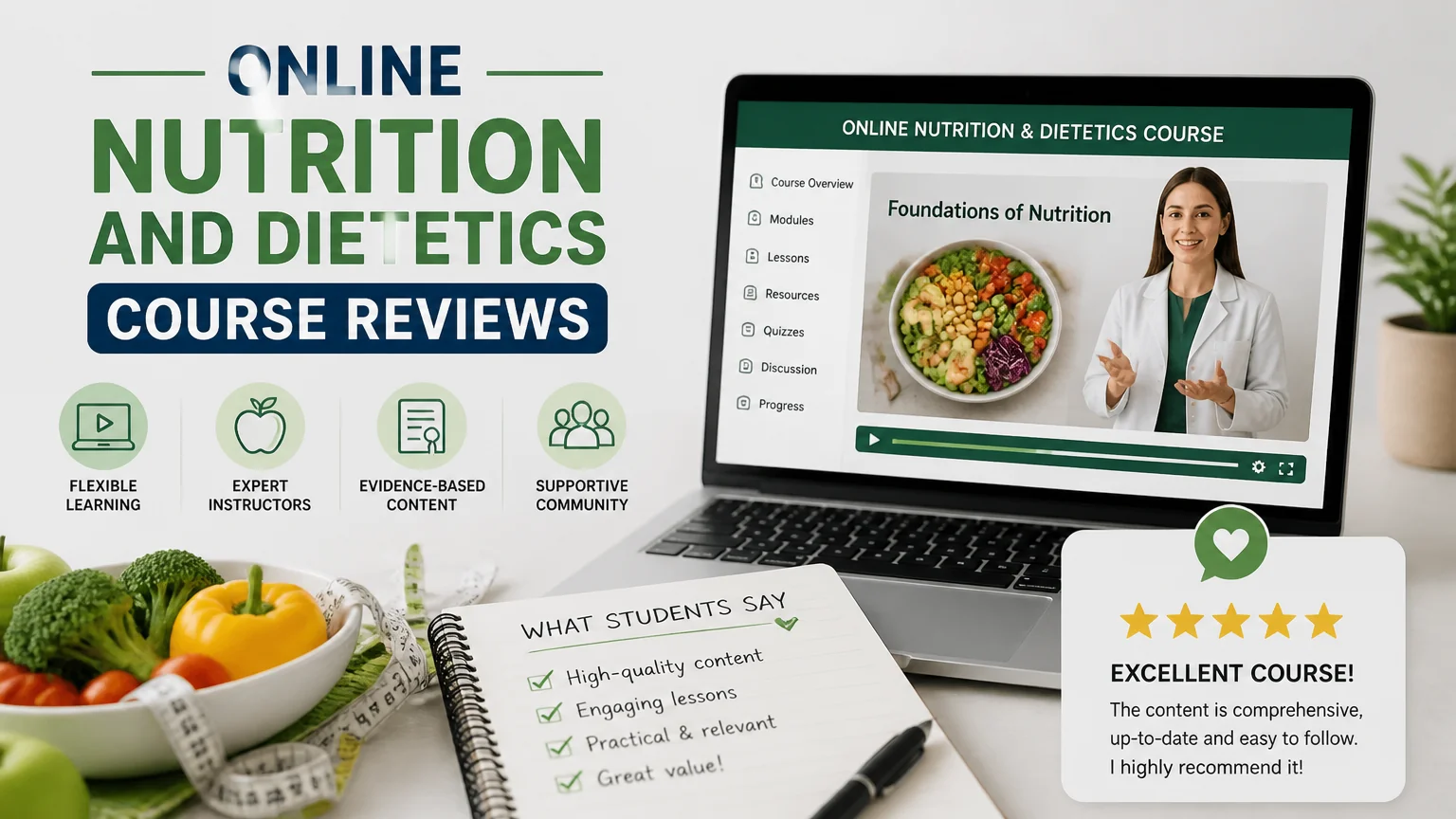
Online nutrition and dietetics course: reviews and ratings guide
If you ever questioned the effectiveness of online education in nutrition, a thorough course in dietetics will help clarify how informative and transformative this learning pathway can be.
Have you ever wondered if an online nutrition and dietetics course really works? In a world where information about health and food abounds (and sometimes confuses), the idea of professional online training can seem appealing but also raise doubts. Is it enough to truly make a difference? Do you learn the same as in an in-person course? Let's break it all down and analyze real opinions so you can make the best decision.
Good question! Why get into this field? Well, there are several compelling reasons, and not just because of the avocado and kale we see on Instagram.
More and more people are concerned about their health and are actively seeking to improve their diet. It's no longer just about "being thin," but about feeling good, having energy, and preventing diseases. This means that the demand for nutrition and dietetics professionals is constantly increasing. It's as if, suddenly, everyone realized that we are what we eat (and it's true!).
From working in hospitals and clinics to advising elite athletes or creating nutrition content on social media, the opportunities are varied and exciting. You can be the nutritionist for a soccer team, a consultant for a healthy eating company, or even create your own online business. The sky's the limit!
Not all courses are the same, that's clear! So, what should we look for to ensure we are investing our time and money in something worthwhile?
This is the starting point. Make sure the course is accredited by a recognized institution. This ensures that the program meets quality standards and that your degree will be valued in the job market. Think of it as the quality seal that gives you the peace of mind that you're not getting a raw deal.
A good course should cover all the fundamental aspects of nutrition and dietetics: from biochemistry and physiology to diet therapy and sports nutrition. It should be like a complete map of the human body and how food interacts with it. If you see that important topics are missing, run away!
Investigate who the course instructors are. Do they have practical experience in the field? Are they leaders in their area? A good teacher not only teaches you theory but also inspires you and gives you practical day-to-day advice. They are like the expert guides who accompany you on your adventure through the world of nutrition.
One of the great advantages of online courses is flexibility. You should be able to study at your own pace, from anywhere and at any time. This is especially important if you have a job or other responsibilities. Imagine studying in your pajamas from your couch!
Now let's get down to business: what do people who have already taken these courses say? We are going to analyze both the positive opinions and the challenges that can be found.
Many students highlight the convenience of being able to study from home, the quality of the materials, and the possibility of connecting with other students through online forums and groups. They also mention how the course has helped them change their own diet and improve the health of their families. It's as if they had found the key to unlock a healthier and happier life.
Not everything is rosy. Some students complain about the lack of face-to-face interaction with professors and the need to be very disciplined to avoid procrastination. It is also important to consider that some online courses may require in-person internships to obtain certification. It's as if motivation and organization were the secret ingredients for success in an online course.
To give you a clearer idea, let's analyze some popular online courses and the opinions they have generated.
[Here would be a detailed description of a specific course, including its curriculum, price, professors, etc. Then, real student opinions, both positive and negative, would be added.] For example, we could say that this course focuses on sports nutrition and that students highlight the experience of the faculty, but some complain about the high price.
[Similar to the previous one, but with another different course, focusing on a different area such as child nutrition or diet therapy.] This course, for example, could be more generalist and receive mixed opinions, with some students praising the breadth of the syllabus and others criticizing the lack of depth in some topics.
[A third example, perhaps a course more specialized in vegetarian or vegan nutrition.] Here we could mention that this course is highly valued for its practical approach and the active student community, but some point out that it requires prior knowledge of biology and chemistry.
With so many options available, how do you choose the course that best suits your needs?
What do you want to achieve with the course? Do you want to change your professional career? Do you want to improve your personal health? Do you want to specialize in a specific area of nutrition? Being clear about your goals will help you filter the options and find the course that really interests you. It's like drawing a map before embarking on a journey.
Don't stick with the information the course gives you. Look for opinions from other students, compare different programs, contact the professors to ask questions. The more you investigate, the more informed you will be and the better you can make your decision. It's like being a detective searching for the truth.
The prices of online nutrition and dietetics courses can vary widely. Take your budget into account and look for options that fit it. You can also look for scholarships or financing programs. Don't go into debt to study, there are many affordable options!
The future of online nutrition and dietetics is promising. Technology is allowing the creation of more interactive, personalized, and accessible courses.
Virtual reality, artificial intelligence, and adaptive learning are transforming the way we learn online. Imagine being able to practice in a virtual laboratory or receive a personalized curriculum based on your knowledge and skills. The education of the future is just around the corner!
Nutrition is a constantly evolving field. Therefore, it is essential that you stay updated on the latest discoveries and trends. Participate in online conferences, read scientific journals, follow experts on social media. Never stop learning!
Ultimately, an online nutrition and dietetics course can be an excellent option if you are looking for flexibility, convenience, and access to quality training. However, it is important to research thoroughly, choose an accredited course, and be prepared to dedicate time and effort to your studies. If you are willing to commit, it can be an investment that changes your life! Are you encouraged to try?
Do I need to have prior knowledge to take an online nutrition and dietetics course? It depends on the course: Some courses are for beginners, while others require basic knowledge of biology and chemistry. Carefully read the course description to see if you meet the requirements.
Can I work as a nutritionist with an online degree? Yes, but it is important that the course is accredited and that you meet the legal requirements to practice the profession in your country.
How much time do I need to dedicate to the course? It depends on the course and your learning pace: Some courses require a few hours a week, while others are more intensive.
What kind of support do online courses offer? Most courses offer technical and academic support through forums, email, or chat. They also usually have online tutoring with professors.
How can I know if an online course is of quality? Investigate the course's accreditation, curriculum, the experience of the professors, and the opinions of other students: You can also contact the institution offering the course to ask them questions.
Do you prefer learning by watching and listening? Expand your knowledge with these free videos related to this topic.
Learn to design balanced, nutritious, tasty diets by life stage, read nutrition labels, plan for weight loss and exercise, and help prevent common diseases.
Watch VideoLearn what nutrients are, how macronutrients and micronutrients are classified, functions, food components and groups, tips for a healthy, balanced diet.
Watch VideoLearn what proteins and amino acids are, their functions and biological value, age-based requirements, and the health risks of deficiency or excess in detail.
Watch VideoSearch
Popular searches


